

More news on this day
Wine tourism across the United Kingdom is entering a new phase in 2026, as vineyards in England and Wales expand tours, tasting rooms and overnight stays to meet growing demand from domestic and international visitors.
Get the latest news straight to your inbox!
Wine Tourism Surges Across the UK
Recent industry data shows that visits to UK vineyards have risen sharply in the past two years, with WineGB reporting around 1.5 million vineyard visits in 2023 and tourism now contributing a significant share of producer revenue. Publicly available information indicates that this trend is continuing into 2025 and 2026, supported by new cellar doors, food-led experiences and accommodation on site.
Analysts of the sector highlight that sparkling wine remains the flagship style for many English producers, but still wines are gaining ground as warmer growing seasons and maturing vineyards broaden the country’s offering. Reports indicate that visitors are increasingly seeking out vineyard tours that combine detailed explanations of winemaking with a strong sense of landscape and local food culture.
Tourism bodies such as VisitEngland and VisitBritain have begun to position wine country breaks alongside more established rural escapes, noting that vineyard visits appeal both to dedicated wine enthusiasts and to travellers who might normally choose countryside walking, coastal weekends or heritage attractions. Training initiatives developed with industry groups are encouraging vineyards to refine experiences, with more emphasis on accessibility, sustainability and year-round programming.
Chapel Down and Kent: Gateway to English Wine Country
Kent continues to be one of the most accessible starting points for visitors keen to explore English wine. Publicly available coverage describes Chapel Down, based near Tenterden, as the country’s largest wine producer, with close to 1,000 acres under vine and a broad portfolio of sparkling and still wines. The estate already runs a busy calendar of tours and tutored tastings, and 2026 is expected to build on popular harvest and seasonal experiences introduced in 2024 and 2025.
Reports indicate that Chapel Down’s visitor offer typically includes guided walks through the vineyards, an introduction to traditional-method sparkling production and comparative tastings of key cuvées. Food has become a central draw, with on-site dining and collaborations with local producers helping position the estate as a full-day destination rather than a short stop.
Across the wider county, tourism organisations highlight a cluster of vineyards within easy reach of London, including estates that pair tastings with woodland pavilions, lakeside settings and event spaces. According to recent regional promotions around English Wine Week, Kent producers are investing in new food and wine events and enhanced visitor facilities, suggesting that 2026 travellers can expect more structured experiences and bookable packages rather than ad hoc drop-ins.
Sussex Sparkling Stars: Nyetimber, Ridgeview and Gusbourne
The chalk and greensand slopes of Sussex remain at the centre of the UK’s premium sparkling wine story, with several estates receiving high-profile international recognition in the run-up to 2026. In 2025, Nyetimber in West Sussex won major awards at the International Wine Challenge, including Champion Sparkling Wine and Sparkling Winemaker of the Year, underlining the quality that visitors can now taste at its public events.
While Nyetimber has historically focused on a mix of open days and ticketed events rather than a daily visitor centre, published coverage suggests a steady expansion of hosted tastings and seasonal experiences. For 2026, wine lovers can expect limited-capacity gatherings where guided flights of award-winning wines are paired with views over historic vineyard parcels.
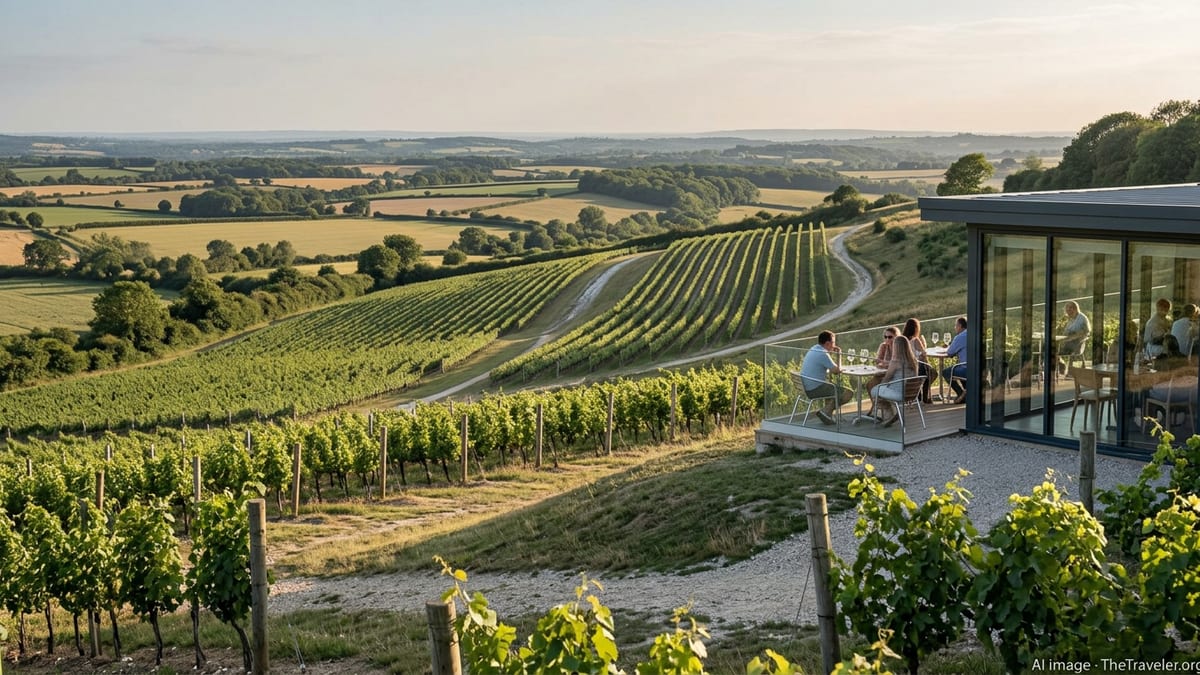
Nearby, producers such as Ridgeview and Gusbourne have developed dedicated visitor hubs that are frequently cited in travel and wine media as benchmark experiences. Reports describe glass-fronted tasting rooms overlooking neatly aligned vines, curated food pairings that foreground local cheeses and charcuterie, and options to book in-depth vineyard walks with a focus on geology and climate. Several estates now offer overnight stays in converted barns or lodges, allowing guests to watch sunrise and sunset over the South Downs with a glass of sparkling in hand.
Hambledon and the South Downs: Heritage Meets Modern Cellar Doors
In Hampshire, Hambledon Vineyard has become a key stop for travellers interested in both the history and the future of English wine. Publicly available information describes Hambledon as England’s oldest commercial vineyard, with roots in the mid twentieth century and a long association with traditional-method sparkling wine. Its position on the chalk slopes of the South Downs has attracted attention from wine writers who compare the terroir to parts of Champagne.
Recent visitor-focused investments at Hambledon include an expanded cellar door, a restaurant and a contemporary tasting room with panoramic views of the vines. Booking pages for 2025 and 2026 highlight immersive estate tours that lead guests through vineyard blocks, underground cellars and production areas, before concluding with guided tastings of current releases. Many itineraries are structured to suit half-day or full-day visits, reflecting demand from weekend travellers arriving from London and the south coast.
Regional tourism features also point to a growing network of wine-themed experiences across the South Downs, from heritage rail journeys that link to family-run vineyards to country house hotels that have planted their own vineyards in collaboration with established producers. For 2026, these partnerships are expected to translate into more integrated packages, where visitors can stay on an estate, join a blending workshop or vertical tasting, and explore the surrounding national park on foot or by bicycle.
Emerging Regions in Wales and Beyond
While the south of England currently dominates UK wine tourism, Wales and other emerging regions are beginning to appear more prominently in destination marketing for 2026. National tourism campaigns highlight that Welsh vineyards are capitalising on varied microclimates and a mix of still and sparkling styles, with several estates offering intimate tastings, local food pairings and small guest accommodations set among rolling hills.
Published commentary on Britain’s broader drinks tourism scene notes that visitors are increasingly combining wine with distillery tours, craft breweries and farm-to-table restaurants in a single trip. In rural Wales, this often means pairing a vineyard visit with coastal walks or heritage sites, catering to travellers seeking more than a purely wine-focused itinerary.
Industry observers suggest that as English Wine Week and similar campaigns extend their reach, itineraries that link vineyards in Kent, Sussex and Hampshire with newer sites in Wales and the West Country will become more common. For 2026 planners, this opens up the prospect of longer touring routes across the UK, with tastings that trace shifting styles, grape varieties and landscapes from one region to the next.
Planning a 2026 Vineyard Trip
Travel and industry guides advise that the most popular UK vineyards now operate primarily on a pre-booked basis, especially at weekends and during peak seasons such as English Wine Week in June and the harvest period in September and October. For 2026, visitors are encouraged to check opening times, tour schedules and available experiences well ahead of travel, as many estates cap group sizes to protect the quality of tastings and minimise impact on ongoing vineyard work.
Observers of the sector also note a stronger focus on sustainability and inclusivity across leading estates. This can include wildlife-friendly planting between vine rows, solar power for winery operations, EV charging for visitors and clear information about step-free access or alternative tour formats. For wine lovers planning a trip in 2026, these details are becoming part of the decision-making process alongside wine styles and price.
With more vineyards than ever welcoming guests and national tourism bodies actively promoting wine country breaks, 2026 is shaping up to be a defining year for UK vineyard travel. From Kent’s large estates to boutique Sussex sparkling producers and emerging Welsh sites, the country now offers a depth of wine experiences that can anchor everything from a day trip to a week-long exploration.