

More news on this day
Portsmouth rail users are being warned to brace for a major six-day shutdown on key commuter routes this spring, as extensive engineering works trigger rail replacement buses, diverted services and the prospect of significant delays for thousands of passengers.
Get the latest news straight to your inbox!
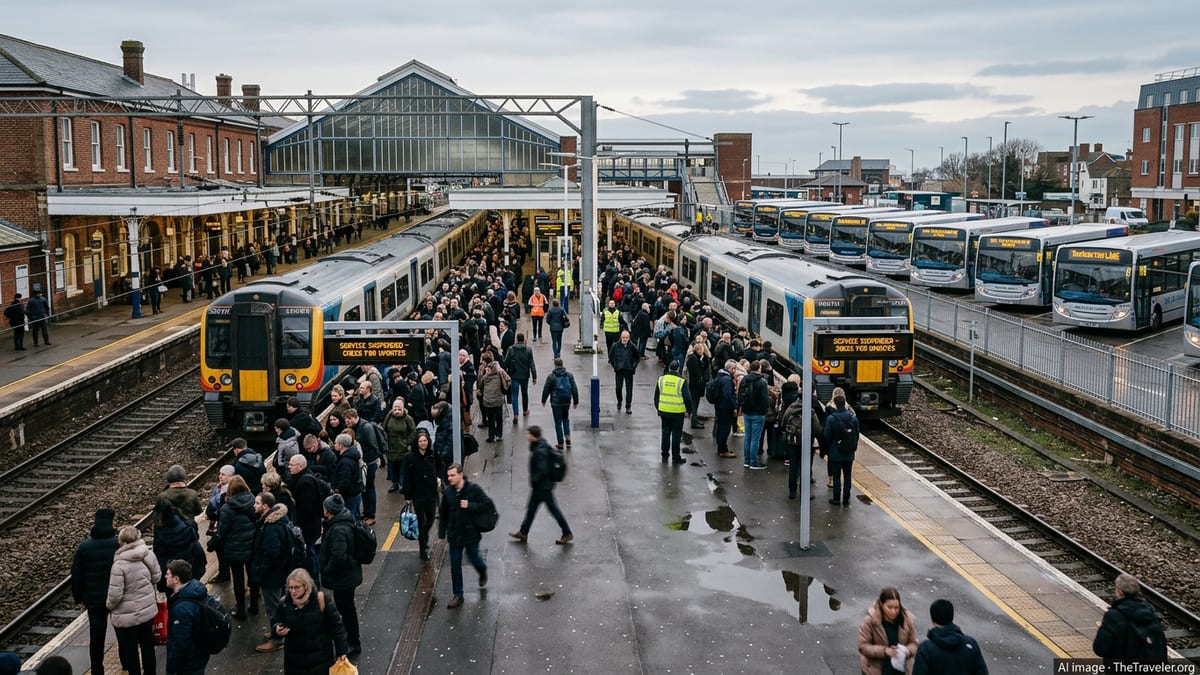
Six-Day Closure to Cut Key Portsmouth Links
Recent rail industry updates and operator notices indicate that Portsmouth-area commuters face a fresh wave of disruption, with a confirmed six-day suspension of regular train services on parts of the network serving the city. The shutdown forms part of a wider programme of works on the south coast and Wessex routes aimed at renewing ageing infrastructure and preparing lines for future capacity upgrades.
The closure is expected to affect services into and out of Portsmouth around one of the busiest leisure and holiday travel periods of the year. On sections of line between Fareham and Portsmouth Harbour, and on connections north and west towards London and the Solent, trains will be replaced by buses for several consecutive days. Rail planning documents and engineering summaries show that the shutdown has been timed to coincide with a period when operators can access the track continuously, allowing multiple projects to be bundled into the same blockade.
While earlier disruption in February focused on the Portsmouth Direct Line between Petersfield, Havant and Guildford, the latest phase targets routes that directly feed the city’s main stations at Portsmouth & Southsea and Portsmouth Harbour. For many commuters, this will mean no through trains to key hubs on certain days, with journeys extended by bus connections, diversions via alternative corridors or a combination of both.
Industry briefings suggest that although the closure is finite, the cumulative effect across the south coast will be substantial, particularly when combined with other planned works on neighbouring lines during March and early April 2026.
Why Portsmouth’s Railway Is Shutting Down Again
The six-day shutdown is part of a long-running series of engineering interventions designed to modernise the Wessex route, including track, signalling and structures on approaches to Portsmouth. Network-wide investment plans highlight the corridor from Fareham to Havant and Portsmouth Harbour as a priority, with projects focused on renewing the historic Landport viaduct, replacing worn rail and improving the resilience of junctions and bridges around the city.
Recent reports on the Portsmouth Direct Line underline how operators and infrastructure managers have increasingly opted for concentrated closures rather than repeated short blockades. By closing lines for several consecutive days, engineers are able to deliver packages of work in one go, from track renewals and ballast replacement to bridge refurbishments and drainage upgrades. This approach has already been used for earlier nine-day blocks between Petersfield and Havant, and similar logic now applies to the latest six-day phase affecting services into Portsmouth itself.
Publicly available information from Great Western Railway and Network Rail shows that, during the shutdown window, trains between Fareham and Portsmouth Harbour will be suspended, with buses running in their place. At the same time, other operators serving the wider Solent area are adjusting timetables to reflect diversions and capacity constraints elsewhere on the network, including on the busy trunk route between London and the south coast.
The upgrade drive also links into a broader national programme to improve reliability after several years of punctuality challenges. Wessex route investment documents stress that the work near Portsmouth is intended to reduce unplanned failures and emergency repairs, ultimately cutting the kind of last-minute cancellations that have become familiar to regular commuters.
What Commuters and Visitors Can Expect
For passengers, the headline impact will be the absence of direct trains on key days, particularly for those travelling between Portsmouth, Fareham and onward destinations. During the six-day closure, journey planners are being updated to show rail replacement buses on affected stretches, with journey times extended by at least 20 to 40 minutes in many cases, and potentially longer during peak road traffic around Portsmouth and the M27 corridor.
Portsmouth’s role as both a commuter hub and a gateway for leisure travel means the disruption will be felt widely. Daily travellers to workplaces in Southampton, London, Guildford and Brighton face altered departure times, changes of train at unfamiliar interchange points, and the possibility of standing on more crowded services as demand is funnelled onto fewer routes. Visitors heading for the Historic Dockyard, Gunwharf Quays or cross-Channel and Isle of Wight connections will also need to factor in extra time to reach ferry terminals from replacement bus drop-off points.
Published guidance from operators stresses the importance of checking journeys shortly before travel, as timetables during engineering periods can change at short notice. Some long-distance services that usually run through Portsmouth may start or terminate earlier, while others divert away from the city altogether, requiring passengers to transfer to local stopping services or buses for the final leg of their journey.
For those who rely on first and last trains, such as shift workers in healthcare, hospitality or logistics, the most challenging element may be gaps in late-evening and early-morning connections. Replacement buses do not always mirror the full rail timetable, so passengers are being urged, via operator notices and travel media, to confirm whether early or late services are available on specific dates.
Timing, Travel Alternatives and Wider Knock-On Effects
The six-day shutdown is scheduled close to the Easter period, overlapping with a separate major closure on the West Coast Main Line between London Euston and Milton Keynes. While that particular blockade targets intercity routes in and out of the capital from the north, it increases overall pressure on the national rail system during the same holiday window, as traveller flows are redistributed and operators cope with reduced flexibility to reroute services.
In the Portsmouth area, alternative options vary depending on the route. Some passengers may be able to use Southern services via Chichester on days when those lines are running normally, while others heading towards London can divert via Southampton Central, using Great Western Railway or South Western-branded services where space is available. Local bus networks around Fareham, Havant and Portsmouth provide further connections, but journey planners indicate that these routes can be slower and subject to road congestion.
National rail planning documents and regional upgrade plans point out that bundling multiple projects into single blocks is intended to reduce the overall number of disruptive weekends. However, for passengers making essential journeys during the specific six-day window, the concentration of work can feel particularly severe, especially when combined with other regional roadworks and ferry timetable adjustments around the Solent.
Travel analysts observing the south of England corridor note that sustained investment in infrastructure is reshaping traditional patterns of movement. As routes around Portsmouth are upgraded and new rolling stock is introduced on neighbouring lines, future timetables are expected to offer improved frequency and reliability. In the short term, though, the price of that improvement is yet another period of severe disruption for one of the country’s busiest coastal cities.
How to Prepare if You Are Travelling via Portsmouth
Publicly available journey-planning advice for the affected period emphasises early preparation. Passengers are encouraged to check revised timetables repeatedly in the days leading up to travel, as late adjustments can occur once detailed engineering schedules are finalised. Booking advance tickets remains possible on many routes, but the usual connections and seat preferences may not be available where trains are diverted or truncated.
For commuting, travel reports advise allowing additional time not only for the rail replacement leg but also for queues when boarding buses, especially at key hubs such as Fareham and Portsmouth & Southsea. Travellers carrying luggage for ferries or cruises are being urged to build in generous margins to avoid missed departures, as bus connections operate according to rail engineering schedules rather than shipping timetables.
Where possible, some employers and education providers are expected to encourage remote working, flexible hours or alternative attendance patterns during the shutdown. Although these arrangements are not universal, they can help spread peak demand and reduce crowding on the reduced rail and bus capacity that remains in operation.
For visitors, tourism bodies and local media outlets are highlighting that Portsmouth remains fully open, with road, coach and ferry links operating, even as the rail network temporarily constricts. The message is that the city’s attractions, waterfront and historic sights are still accessible, provided visitors plan ahead, check their travel options carefully and remain alert to short-notice changes during the six-day shutdown window.