

More news on this day
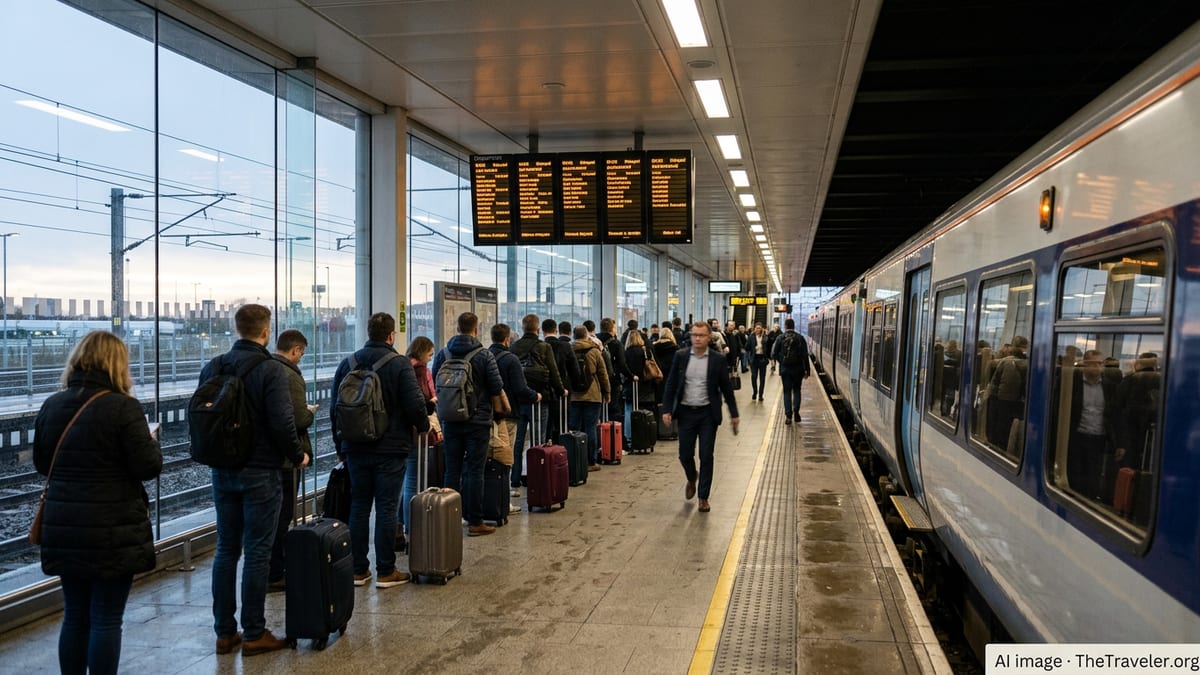
Hundreds of travellers heading to and from London Stansted Airport have faced severe disruption after major problems on rail routes serving the airport led to widespread train delays, cancellations and reliance on hastily arranged replacement buses.
Get the latest news straight to your inbox!
Major Disruption On Key Rail Links To Stansted
Reports from recent days indicate that train services connecting London Stansted Airport with London and regional cities have been hit by significant disruption, with cancellations and extended delays affecting large numbers of passengers. Travellers have described services being withdrawn at short notice, heavily altered timetables and confusion over alternative routes as they tried to reach early morning and late night flights.
Publicly available information from rail operators shows that services on the Greater Anglia and Stansted Express corridors, which provide the main rail link between the airport and central London, have been particularly affected. In some cases, scheduled trains have been replaced entirely by buses between Stansted Airport and intermediate stations such as Broxbourne, with connecting rail services continuing from there into London.
The disruption has not been confined to London-bound travellers. Routes linking Stansted with Cambridge and the Midlands have also seen timetable changes, including the withdrawal of some direct services to cities such as Birmingham on certain days, forcing passengers to make additional connections or switch to alternative lines. Journey planners have shown gaps in direct services and unusual connection patterns, underlining the scale of the disruption across the wider network.
Travel discussion forums and rail user communities have highlighted that the problems have persisted on multiple dates rather than being limited to a single incident. Some passengers have reported arriving at Stansted by bus after their planned trains were cancelled, while others have spoken of needing to rebook flights or make last minute changes to itineraries when lines were blocked or heavily reduced.
Knock-On Effects For Flights And Airport Operations
The impact on airport operations has been significant. Stansted relies heavily on rail for passenger access, particularly for early morning departures used by low-cost carriers. When trains are cancelled or heavily delayed, passengers can find themselves arriving at the terminal much later than planned, with a heightened risk of missing check in or security cut off times.
Published coverage about previous disruption at the airport shows that rail problems can quickly translate into crowded terminal spaces, long queues at security and knock on delays for flights where a high proportion of booked customers are stuck en route. Missed departures can then feed into rebooking pressures on later flights, especially for short haul routes with multiple daily services.
Travel advice shared by consumer groups and experienced travellers has consistently urged passengers using Stansted to factor in additional contingency time when rail disruption is likely, particularly during periods of engineering work or when severe weather affects lines in and out of London. The latest issues reinforce that guidance, with some passengers reporting that even an extra hour built into their plans was not enough to absorb long rail delays.
For airlines, disruption on the rail network adds another layer of uncertainty to already complex operations. While flights may be running to schedule, the practical reality is that a significant number of passengers can fail to reach the airport in time, creating empty seats on some departures and spikes in demand for others as people attempt to salvage their trips.
Replacement Buses, Alternative Routes And Passenger Confusion
In response to the disruption, rail operators have deployed rail replacement buses on several stretches of track serving Stansted, particularly between the airport and Broxbourne when engineering work or signalling issues affect that section. These buses typically connect with regular rail services further down the line, allowing passengers to continue into London Liverpool Street or other destinations.
However, accounts from recent travellers suggest that the shift to buses has not always been smooth. Some have described long waits for coaches to arrive, limited capacity leading to full vehicles leaving people behind, and uncertainty about where exactly to board at both the airport and at suburban stations. For those with large luggage or travelling with children, the transfer from train to bus and back again can be especially challenging.
Rail forums and social media posts indicate that alternative routes via different London terminals or via Cambridge have been recommended in some cases, but these options can be complicated for infrequent users. Passengers unfamiliar with the geography of the network have reported confusion about ticket validity, where to change trains, and whether longer itineraries would still get them to the airport before check in closed.
Timetable changes have added to this uncertainty. On some dates, journey planners have shown the last direct services to certain regional cities disappearing, replaced by itineraries requiring extra changes or extended travel times. For travellers arriving late at night into Stansted, the prospect of complex multi leg rail journeys or late night bus connections can be particularly stressful.
Ongoing Infrastructure Changes And Ticketing Developments
The disruption comes against a backdrop of wider infrastructure and ticketing changes on routes serving Stansted. Government announcements and operator statements outline plans to extend contactless pay as you go ticketing across parts of the Greater Anglia network, including services to the airport, although implementation has experienced delays linked to system testing and software issues.
Project documentation indicates that Greater Anglia’s contactless rollout, covering Stansted among other stations, has been pushed back from earlier target dates, with full implementation now expected later than initially planned. While these ticketing upgrades are intended to simplify travel in the long term, the staggered rollout and shifting dates have created a period of uncertainty for regular users trying to understand which forms of payment are valid on which segments of their journey.
At the same time, wider capacity and infrastructure projects around Cambridge and the broader East of England network are continuing, affecting timetables and the pattern of services that pass through key junctions. The combination of planned engineering work, evolving station infrastructure and intermittent operational problems has left the Stansted rail corridor particularly exposed to disruption.
For passengers, this environment makes advance planning more complex. Travel experts often suggest checking journey planners repeatedly in the days leading up to departure, signing up for operator alerts, and considering flexible ticketing options that allow changes if services are altered at short notice. The current wave of disruption around Stansted underlines the importance of that advice.
What Travellers Can Do Now
With reports indicating that disruption on some services is ongoing, travellers with upcoming flights from Stansted are being urged by publicly available travel guidance to build in generous margins when relying on rail. For early morning departures, some journey planners currently show gaps or replacements on the first trains of the day, making it prudent to consider earlier connections or overnight stays closer to the airport where feasible.
Passenger advocacy groups emphasise that those affected by severe train delays or cancellations may be eligible for compensation under established rail refund schemes, particularly when services arrive significantly later than advertised. However, this compensation typically covers only the rail portion of a journey and does not automatically extend to costs associated with missed flights or additional accommodation, reinforcing the need for travel insurance that covers missed connections.
In practical terms, travellers are advised to monitor real time updates from rail operators on the day of travel, have a clear backup plan involving buses, coaches or shared road transport, and allow extra time for security and check in once they reach the terminal. Given the recurring rail issues, many are temporarily favouring earlier trains and less complex itineraries over tight connections that leave little room for error.
As rail networks continue infrastructure work and operators adjust timetables, the reliability of train access to Stansted Airport is likely to remain under close scrutiny from both travellers and the wider travel industry. For now, the experience of recent days serves as a reminder that reaching a flight can be as challenging as boarding it, especially when critical rail links run into trouble.