


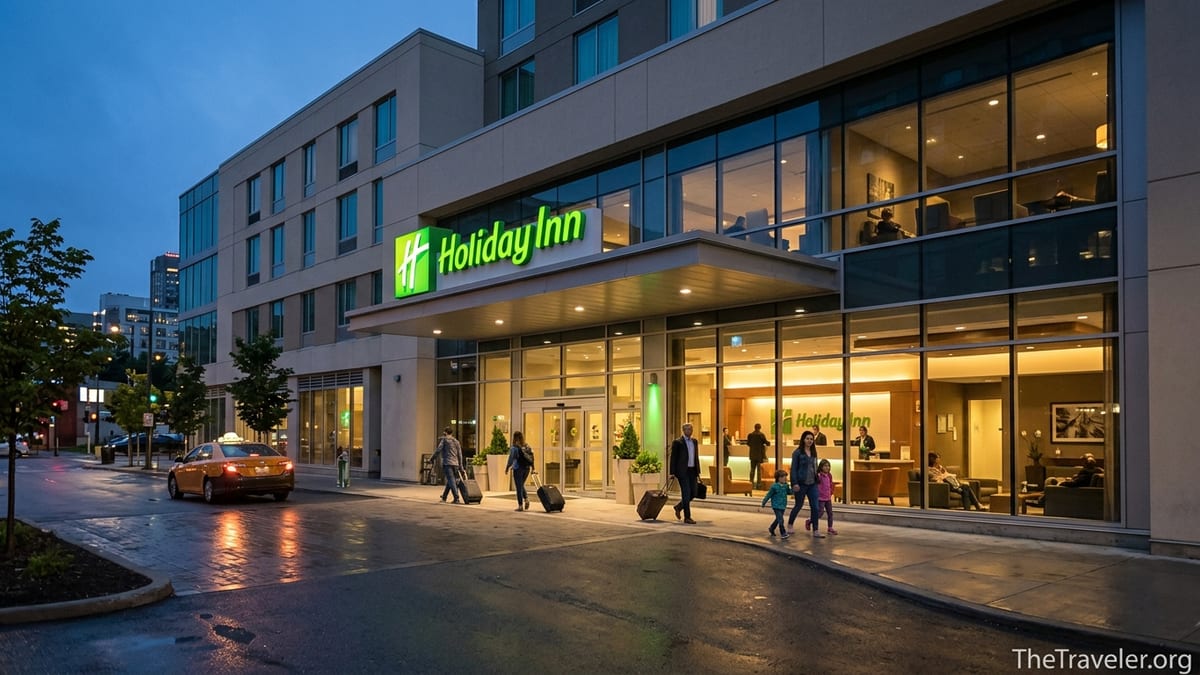
For many travelers, the green and white Holiday Inn sign is as familiar as a boarding pass or a taxi rank outside the airport. From family road trips across the United States to work conferences in Europe or layovers in Asia, Holiday Inn has become one of the most recognizable hotel names in the world. Its evolution from a roadside motel concept in 1950s Memphis to a global upper midscale staple under IHG Hotels & Resorts helps explain why the brand still resonates so strongly with business travelers and families alike in 2026.
Get the latest updates straight to your inbox!
A Brand Built Early, Big and Consistent
Holiday Inn was founded in 1952 in Memphis, Tennessee, with a simple idea: offer clean, predictable accommodation at a fair price for the growing number of American families traveling by car. That clarity of purpose, arriving just as the interstate highway system expanded, helped the chain scale rapidly across the United States and then abroad. By the early 1970s, Holiday Inn already operated more than a thousand properties worldwide, which made it one of the first truly global hotel brands. That head start matters today because for older generations, Holiday Inn often evokes childhood vacations, and for younger travelers, it is a name they have heard their entire lives.
Today Holiday Inn is part of IHG Hotels & Resorts and sits in the upper midscale segment with more than 1,000 hotels worldwide and additional properties in the development pipeline. The brand is no longer associated with basic motels on the edge of town, but with full-service hotels that usually include a restaurant, bar, meeting space and often a pool. In cities like London, Sydney, or Chicago, Holiday Inn flags are commonly seen near major train stations, airports, and business districts. This combination of long history, large footprint and fairly consistent positioning helps explain why a traveler landing in an unfamiliar city is likely to recognize and consider Holiday Inn alongside competitors such as Hampton by Hilton or Quality Inn.
Consistency does not mean every hotel looks the same. Holiday Inn has gone through several design and branding refreshes, especially after IHG took full control of the brand. Older properties have been renovated or removed from the system, while new builds showcase updated lobbies, brighter guest rooms and more flexible public spaces. Yet the core promise remains familiar: a mid-priced, reliable stay with certain minimum standards that travelers know they can expect almost anywhere the sign appears.
A Truly Global Footprint That Matches How People Travel
One reason Holiday Inn remains so recognizable is sheer visibility. IHG reports that the Holiday Inn family sits at the heart of its global “Essentials” and midscale portfolio, with hundreds of thousands of rooms when Holiday Inn is considered alongside Holiday Inn Express and Holiday Inn Resort. You see the brand on the edges of motorways in the United Kingdom, near industrial hubs in Germany, close to convention centers in the United States, and in growing secondary cities across Asia and the Middle East. For a traveler comparing hotel options on a major booking platform, Holiday Inn often appears in results for everything from an overnight airport stay in Toronto to a week-long beach trip in Vietnam.
Concrete examples show how this plays out in real life. A family driving from Atlanta to Orlando might break the journey at a Holiday Inn just off Interstate 75 in Florida, choosing it because parents stayed with the brand as children. A consultant flying from New York to Frankfurt for meetings may pick the Holiday Inn near Frankfurt Airport for a one-night layover, comfortable that check-in will be efficient, Wi-Fi will work without fuss, and there will be a bar serving food late. In China or India, domestic business travelers often see Holiday Inn as a dependable step up from basic local hotels, especially in provincial capitals where high-end luxury brands may not yet be present.
Geographic spread also reinforces brand recognition through repetition. Frequent travelers who belong to the IHG One Rewards loyalty program often encounter Holiday Inn properties in markets where other IHG brands, such as Kimpton or Hotel Indigo, are not yet available. Redeeming points for a weekend in a regional city like Lyon, Nagoya or Charlotte may naturally lead them to choose a Holiday Inn because it is the most convenient IHG option. Over time, this repeated exposure on different continents and trip types makes the logo, room layout and service style deeply familiar, even if the exact hotel changes.
Family-Friendly Policies That Travelers Actually Use
Another key reason Holiday Inn stands out is its explicit focus on families. The brand is strongly associated with the “Kids Stay and Eat Free” promise in many markets, which allows up to two children below a certain age to stay free when sharing a room with adults and to eat for free from a specific children’s menu when an adult orders a main course. In practical terms, this can make a meaningful difference on a week-long family vacation, where two kids having breakfast and dinner in the hotel restaurant each day might otherwise add a large extra cost.
Consider a typical summer road trip in the United States. Two parents and two children driving from Dallas to Colorado Springs might plan three stops over four nights. If they book Holiday Inn properties along the route where kids stay and eat free, the savings on breakfasts and simple dinners like pasta, grilled chicken or burgers can easily run into the low hundreds of dollars over the week compared with paying full menu prices for every child’s meal. That kind of tangible value builds loyalty, especially for repeat travelers who come to rely on the policy whenever they see the Holiday Inn sign.
The family focus extends beyond pricing. Many Holiday Inn hotels still feature indoor pools in cooler climates and outdoor pools or splash pads in warmer regions, making them attractive for children who need to burn off energy after a day in the car. Some resort-branded properties, such as lakeside or beachfront Holiday Inn Resorts in the United States and Europe, add children’s clubs, games rooms or small playgrounds, turning the hotel itself into part of the holiday experience. When parents can check into a familiar brand and know there will be space for kids to swim, eat simple food and relax, the brand becomes a default choice for future trips.
These practical benefits have also kept Holiday Inn competitive against newer midscale rivals. While many chains now emphasize lifestyle design and Instagram-friendly lobbies, Holiday Inn leans into very concrete promises: beds that are good enough for a proper night’s sleep after six hours of driving, on-site parking that makes arriving late at night easier, and portion sizes that keep children full without requiring parents to study a complex small-plates menu. For numerous families, those basics matter more than design-led spaces.
Design Evolution and the Open Lobby Concept
Even as it focuses on practicality, Holiday Inn has invested in modernizing the look and feel of its hotels. One of the most visible examples is the “Open Lobby” concept that has been rolled out to many properties in Europe and beyond. Instead of separating reception, bar, restaurant and lounge into distinct spaces, the Open Lobby blends them into a single, flexible area with different zones for eating, working and relaxing. Guests might check in at one end, then move a few steps to a coffee bar or sit down at a communal table with power outlets to answer emails.
For travelers, this design shift is more than cosmetic. A solo business traveler staying at a Holiday Inn near a motorway junction in northern England might arrive after dark, grab a quick dinner from the all-day menu, then spend an hour catching up on work at a high-top communal table while still feeling part of a social space rather than an empty restaurant. A family could order pizzas or burgers to a low table near the TV area, with children watching a film while parents enjoy a glass of wine nearby. This kind of flexible, informal layout mirrors how people spend time at home and has become a point of differentiation from older, more formal midscale hotels.
Room design has evolved in parallel. Newer Holiday Inn guestrooms typically emphasize good lighting, firm mattresses, simplified controls and easy-to-clean surfaces. Travelers are likely to find multiple USB charging points, a reasonably sized work desk, reliable Wi-Fi included in the rate and blackout curtains that make it easier to sleep after a long flight. Bathrooms in many new-build properties favor walk-in showers over bathtubs, reflecting changing preferences, while some family rooms add sofa beds or connecting door options to accommodate parents and children. While individual properties vary, especially in older conversions, the broad direction is toward brighter, more contemporary rooms that still feel straightforward rather than luxurious.
By pairing this kind of updated hardware with the brand’s long-standing promises around value and family friendliness, Holiday Inn maintains relevance for today’s travelers. Guests who may remember slightly tired properties from a decade ago increasingly encounter fresher spaces that feel closer to newer competitors, yet they still retain the reassuring familiarity of a well-known brand.
The Power of IHG One Rewards and Brand Synergy
Holiday Inn does not exist in isolation. As part of IHG Hotels & Resorts, it helps anchor a portfolio of about twenty brands that range from luxury labels like InterContinental and Regent to extended-stay concepts such as Staybridge Suites and midscale brands like Holiday Inn Express. For travelers, this means that staying at a Holiday Inn feeds into a broader loyalty ecosystem. Points earned during a three-night conference stay at a Holiday Inn near a convention center in Chicago can later be redeemed for a family weekend at a Holiday Inn Resort in Florida or even at a higher-end Kimpton property in a major city.
The IHG One Rewards program amplifies Holiday Inn’s visibility because the brand supplies a large share of the group’s total room count. A frequent guest who prefers IHG for work trips is likely to see Holiday Inn appear often in availability searches, especially in regional business hubs, airport clusters and roadside locations where IHG may not offer many luxury or boutique options. Over time, this reinforces recognition: even if the traveler later books an InterContinental for a special occasion, their day-to-day experience with the group may be centered on Holiday Inn.
From IHG’s perspective, Holiday Inn also works as a flexible conversion brand when independent hotels or smaller chains choose to join a major system. This helps the brand grow in markets where building from scratch is slower or more expensive. Guests might encounter a hotel that was once a local independent property, now operating under the Holiday Inn flag with standardized bedding, reservation systems and loyalty recognition layered onto an existing building. This approach allows Holiday Inn to maintain or increase scale without relying solely on new construction.
Holiday Inn’s position within the portfolio also clarifies its identity compared with sister brands. Holiday Inn Express, for example, tends to focus on limited service and free breakfast, targeting quick overnight stays with lower operating costs, while standard Holiday Inn hotels are usually full-service with restaurants and meeting rooms. That means a traveler might choose Express for a simple roadside night and a mainline Holiday Inn for a work event or family holiday. This internal differentiation reduces confusion and helps the Holiday Inn name stay meaningful rather than generic.
Positioning in a Crowded Midscale Market
The global midscale and upper midscale hotel segments are among the most competitive in hospitality, with major players such as Hilton, Marriott, Choice Hotels and Radisson all operating brands aimed at similar price-sensitive yet quality-conscious travelers. In this crowded field, Holiday Inn has the advantage of age, scale and strong parent backing, but it must still differentiate itself from rivals like Hampton by Hilton, Fairfield by Marriott, Country Inn & Suites and Quality Inn. Those brands often compete on similar price ranges, typically attracting business travelers on moderate corporate budgets, sports teams, families on road trips and tour groups.
Holiday Inn’s recognition partly stems from being one of the earliest chains to standardize the mid-range experience on a global scale. While newer lifestyle brands emphasize bold design or social media appeal, Holiday Inn leans on a reputation for predictability and a slightly more traditional full-service structure. A sports team traveling to a regional tournament might book a block of rooms at a Holiday Inn because they know there will usually be on-site catering options for group meals, a meeting room they can convert into a gear storage space, and parking large enough for buses, even if the décor is less trendy than a newer lifestyle hotel.
At the same time, Holiday Inn competes on perceived value. Room rates can vary widely by city and season, but in many markets the brand positions itself just below upscale full-service competitors. For example, in a secondary European city during a midweek shoulder season, a standard Holiday Inn room may be priced roughly in line with or slightly above local limited-service brands but below big downtown four-star properties. Travelers who want a reliable restaurant for dinner, a staffed front desk around the clock and more robust meeting facilities often see this as a worthwhile tradeoff.
The brand’s challenges are also part of its story. Because many Holiday Inn hotels are franchised and some sit in older buildings, guest experiences can vary. A newly built property near an airport with fresh design and attentive management may feel almost like an upscale hotel, while an unrenovated roadside Holiday Inn in a lower-demand area might feel dated. Yet even where décor lags, the core elements that travelers expect from the brand, such as clean bedding, working Wi-Fi, a front desk that can handle late-night arrivals and predictable food options, typically remain in place. This baseline reliability is one of the key reasons the name endures.
The Takeaway
Holiday Inn’s enduring recognition is not a matter of advertising alone. It stems from a combination of early mover advantage, global scale, family-friendly policies that travelers can actually use, and continuous if sometimes understated upgrades to design and service. For many people, the brand anchors a lifetime of travel memories: first childhood road trips, then business conferences, then family vacations of their own. Its presence across continents, highways, airports and city centers keeps it visible at almost every stage.
In an era where new hotel brands promise curated experiences and highly specific aesthetics, Holiday Inn focuses on something more fundamental: giving guests a good enough place to sleep, eat and regroup at a reasonable price point, backed by a global loyalty program and a parent company with the resources to keep investing in product refreshes. That formula may not be the most glamorous in hospitality, but it is precisely what makes the green and white sign so instantly recognizable. For travelers planning their next trip in 2026, Holiday Inn remains a brand that is easy to spot, easy to understand and, for many, still easy to choose.
FAQ
Q1. Is Holiday Inn considered a budget or midscale hotel brand?
Holiday Inn is typically positioned in the upper midscale segment, usually offering full-service features like a restaurant, bar and meeting space rather than bare-bones budget amenities.
Q2. How many Holiday Inn hotels are there worldwide?
Holiday Inn operates more than a thousand hotels worldwide, with additional properties in the pipeline, and the broader Holiday Inn family accounts for a significant share of IHG’s total rooms.
Q3. What is the difference between Holiday Inn and Holiday Inn Express?
Holiday Inn hotels are generally full-service, with on-site restaurants and event space, while Holiday Inn Express properties focus on limited service and typically include breakfast in the rate.
Q4. Do kids really stay and eat free at Holiday Inn?
In many markets Holiday Inn offers Kids Stay and Eat Free for children under a certain age sharing a room with adults and ordering from a designated children’s menu, although exact details and availability vary by hotel and country.
Q5. Is Holiday Inn a good choice for business travelers?
Yes, many Holiday Inn properties cater to business guests with features like free Wi-Fi, work desks, meeting rooms, business centers and locations near airports, office parks or convention centers.
Q6. Are all Holiday Inn hotels owned by IHG?
Most Holiday Inn properties are franchised or managed by third-party operators, but they all operate under IHG’s brand standards, reservation systems and loyalty program.
Q7. How does Holiday Inn compare with competitors like Hampton or Fairfield?
Holiday Inn sits in a similar midscale or upper midscale space as brands like Hampton by Hilton or Fairfield by Marriott, often competing on reliability, family-friendly features and full-service amenities.
Q8. Can I earn and use IHG One Rewards points at Holiday Inn?
Yes, stays at Holiday Inn usually earn IHG One Rewards points, which can be redeemed at Holiday Inn and other IHG brands, subject to the program’s terms and conditions.
Q9. Are Holiday Inn hotels suitable for long stays?
Holiday Inn can work for longer stays, especially if you want a full-service hotel, but IHG also offers extended-stay brands like Staybridge Suites and Candlewood Suites that may be better suited to very long visits.
Q10. Are there significant differences between older and newer Holiday Inn properties?
Yes, newer and recently renovated Holiday Inn hotels often feature the Open Lobby concept, updated guestrooms and more contemporary design, while older properties may feel more traditional but still follow core brand standards.