


More news on this day
Thousands of passengers faced severe disruption at Germany’s busiest airports today as 1,264 flight delays and 70 cancellations piled up across major hubs including Frankfurt, Munich and Berlin, affecting services operated by Lufthansa, Ryanair, easyJet, British Airways, KLM and several other European carriers.
Get the latest news straight to your inbox!
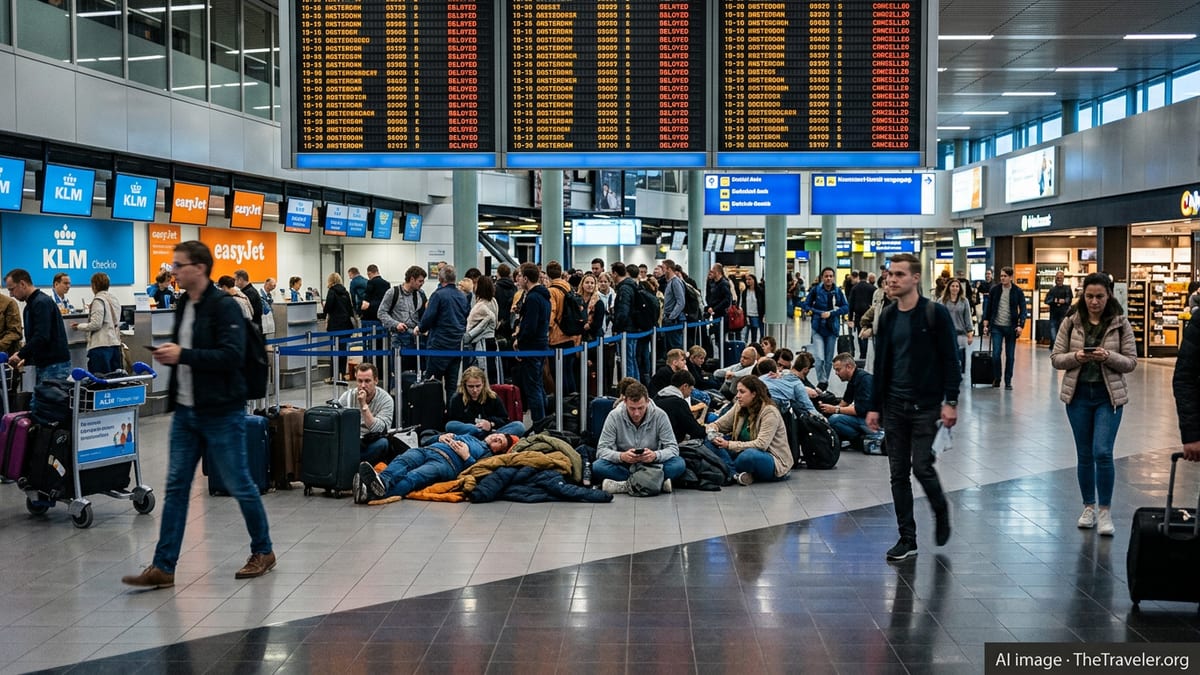
German Hubs Struggle With Heavy Operational Disruption
The latest disruption is concentrated at Germany’s principal aviation gateways, with Frankfurt, Munich and Berlin Brandenburg among the hardest hit. Operational data and live flight-tracking information show widespread knock-on effects across both departures and arrivals, with many services now running hours behind schedule.
Frankfurt Airport, the country’s largest international hub, is experiencing a particularly dense cluster of late-running flights and cancellations. Munich, a key transfer point for Southern and Eastern Europe, is also reporting mounting delays that are rippling across onward connections. Berlin Brandenburg and other regional airports such as Hamburg and Düsseldorf are seeing fewer cancellations but a sharp increase in late operations.
Industry monitoring platforms and airport-status feeds indicate that the disruption is not confined to a single time window. Instead, irregular operations have been building through the morning and into the afternoon, suggesting a combination of congested airspace, residual schedule strain from recent weather events and staffing or turnaround challenges on the ground.
Passenger flows through these hubs are being strained as a result. Transfer passengers are particularly affected, with missed connections triggering rebookings onto later services and increasing pressure on already busy peak-period departures.
Major European Airlines Among Those Most Affected
The high number of delayed and cancelled flights is touching a wide range of European airlines, but publicly available information shows that Lufthansa and its group partners remain at the center of the disruption due to their dominant presence at Frankfurt and Munich. Earlier in June, data-focused analyses highlighted how operational strains and episodic storms had already pushed Germany’s largest carrier into multiple days of irregular operations, and today’s figures suggest that pattern is intensifying again.
Low-cost giant Ryanair is also facing a notable share of delays at German airports, reflecting its sizable intra-European network and dense schedules on leisure and city routes. easyJet, which maintains strong bases at Berlin and other nearby hubs, is contending with late rotations that are cascading across its point-to-point network as aircraft arrive late and depart behind schedule.
Legacy carriers such as British Airways and KLM are likewise caught in the congestion, particularly on feeder and shuttle routes linking London and Amsterdam with German hubs. Reports indicate that several short-haul services are departing late or being held on the ground while slot restrictions and knock-on effects from earlier delays are managed.
Additional disruption is being recorded among other European and regional airlines that rely on German airports for both origin and connecting traffic. With aircraft and crews already tightly scheduled for the busy summer season, even relatively small operational challenges are translating quickly into wider network issues.
Passengers Face Long Queues, Missed Connections and Rebookings
For travelers, the statistical totals of 1,264 delays and 70 cancellations mean very tangible problems on the ground. Airport departure halls and transit areas at Frankfurt, Munich and Berlin are experiencing long queues at check-in, security and airline service counters as customers seek clarifications, rebookings and information on their rights.
Transfer passengers are particularly vulnerable, as even moderate delays on inbound legs can be enough to cause missed connections at large, complex hubs. Social media posts and traveler reports from recent weeks at these same airports described missed onward flights, overnight stays and complicated re-routing via alternative European hubs, patterns that are likely being repeated during the current disruption.
The knock-on effects can extend well beyond Germany’s borders. When short-haul legs between German cities and neighboring countries run late or are cancelled, long-haul passengers may find themselves stranded far from their ultimate destination. In previous episodes of disruption this year, some travelers reported being rerouted on alternative carriers such as Air France-KLM or other Star Alliance partners when original connections through Frankfurt or Munich fell apart.
Hotel capacity around major German airports is also likely to come under pressure if irregular operations continue into the evening. Tour operators and corporate travel managers often need to scramble to secure last-minute rooms for affected clients when flights are cancelled at short notice or when new itineraries require overnight stays.
Weather, Congested Skies and Structural Strain Contribute
While the precise causes behind each individual delay or cancellation vary, the wider pattern fits into a summer season already marked by structural strain in European aviation. Recent storm systems moving across central Europe have repeatedly disrupted traffic flows, leading to temporary ground stops, diversions and extended holding patterns that ripple through schedules for hours.
Eurocontrol’s recent performance summaries for May and June 2026 highlight growing average arrival delays across the European network, citing weather, airspace congestion and capacity constraints as recurring drivers. Germany’s busiest airports feature prominently in these assessments, with Frankfurt and Munich often singled out as nodes where local disruptions can quickly spread through airline networks.
In parallel, publicly available airline schedules and planning updates show that some carriers have already trimmed frequencies on selected domestic and intra-European routes in an attempt to build more resilience into operations. Lufthansa, for example, has adjusted parts of its summer timetable and reduced some high-frequency short-haul services, while low-cost competitors continue to run dense, utilization-heavy schedules across the continent.
Despite these measures, the combination of high seasonal demand, tight staffing in some operational roles and increasingly volatile weather has left little room for error. When multiple issues occur on the same day at several hubs simultaneously, compounded disruption such as today’s becomes more likely.
What Stranded Travellers Can Do Next
Consumer-rights organizations and specialist compensation platforms point out that passengers affected by severe delays or cancellations on flights departing from or arriving in the European Union may be protected by EU air passenger legislation. Under this framework, travelers on qualifying flights can be entitled to assistance at the airport, reimbursement or re-routing, and, in some cases, financial compensation, depending on the cause and length of the disruption and the flight distance.
Publicly accessible guidance advises passengers to retain boarding passes, booking confirmations and any written notices or emails concerning schedule changes, as these documents can be important if a claim is pursued at a later stage. Travelers are also frequently encouraged to document additional expenses such as meals, ground transport or hotel stays that arise directly from a delay or cancellation.
Airlines usually offer self-service tools in their apps or on their websites that allow affected customers to check updated schedules, confirm rebookings or join standby lists. However, during heavy disruption, online systems can become overloaded, leading many passengers to seek help at staffed service counters or via phone support, which can result in lengthy wait times.
Industry observers note that, given the elevated level of disruption already visible early in the peak summer season, passengers with trips routed through Frankfurt, Munich, Berlin or other major German airports may wish to build in longer connection times, monitor flight status closely before departing for the airport and consider flexible booking options that make adjusting travel plans easier if further operational turbulence develops.