


More news on this day
Air travel across Europe faced another day of heavy disruption on June 28, as operational data pointed to at least 160 flight cancellations and 3,298 delays affecting services in Spain, the Netherlands, England, Greece, Hungary, Denmark and several other countries, hitting major carriers including Iberia, KLM, Aegean and Ryanair at key hubs such as Amsterdam, Athens, Madrid and Prague.
Get the latest news straight to your inbox!
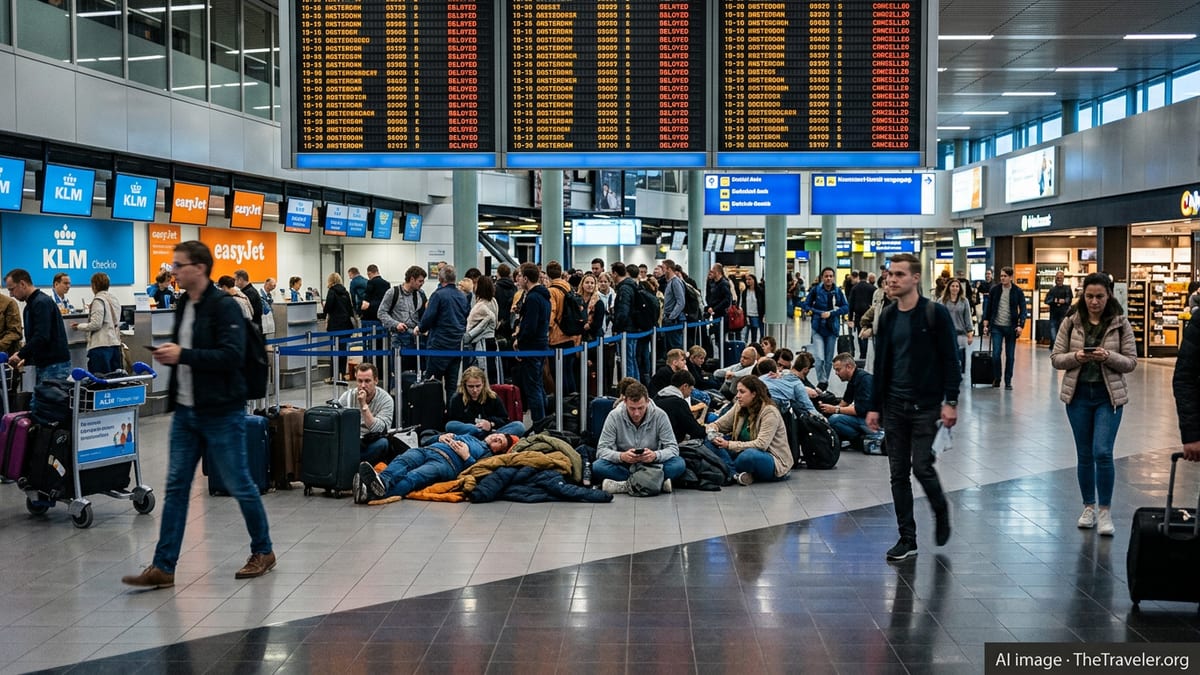
Storms, Congested Skies And Structural Strains Converge
Reports from flight tracking platforms and regional media indicate that the latest wave of disruption was driven by a combination of severe thunderstorms over northwest Europe, lingering capacity and staffing constraints in southern Europe, and the knock on effect of earlier delays feeding through busy weekend schedules. Air traffic restrictions introduced over southeast England and parts of northern Europe as storm systems moved across the region sharply reduced available airspace and forced aircraft to hold or reroute.
Thunderstorms in and around London contributed to widespread disruption at Heathrow and Gatwick, where hundreds of departures and arrivals were delayed and dozens canceled, pushing back connections across the broader European network. With Eurocontrol highlighting a recent uptick in air traffic flow management delays linked to convective weather, the latest episode appears to fit a pattern in which even short lived storm systems can cascade into large scale timetable changes when traffic is already close to summer peaks.
Further south, network analysis published in recent weeks has pointed to persistent capacity and staffing challenges at key area control centers in Spain and Greece, particularly around Barcelona, Madrid and Athens. These structural strains have left limited margin to absorb additional pressure when weather or technical issues emerge, making long sequences of small delays more likely to tip into significant schedule disruption for airlines and airports across the region.
Eurocontrol’s recent flash briefings show that Spain and Greece have together accounted for a substantial share of en route delays so far this year, with average minutes of delay per flight rising compared with 2025. The latest figures on cancellations and delays suggest that the current episode is amplifying these underlying trends, rather than representing an isolated incident.
Key Hubs From Amsterdam To Athens Under Pressure
The impact of the disruption has been especially visible at some of Europe’s most important connecting hubs. Operational data compiled today highlights significant delays and a cluster of cancellations at Amsterdam Schiphol, where KLM’s dense wave based schedule is sensitive to even minor timetable shocks. Delays to inbound aircraft quickly reduced the carrier’s flexibility to turn aircraft around for onward services, while airspace restrictions over the North Sea further limited options for recovery.
In southern Europe, Athens International and Madrid Barajas also recorded elevated levels of disruption, adding to an already challenging month for both airports. Recent coverage of Spanish operations has pointed to heavy knock on delays at Madrid and Barcelona linked to a mix of stormy weather, tight air traffic control capacity and strong seasonal demand, particularly on leisure routes. Athens, meanwhile, has been highlighted in network performance reports as a recurring hotspot for en route delays tied to capacity and staffing constraints.
Central European hubs such as Prague also featured among the airports experiencing a spike in delayed flights, reflecting their role as both origin points and waypoints for travelers heading between western Europe and holiday destinations in the eastern Mediterranean. With many flights operating close to full in the busy summer build up, schedule compression left little slack for airlines to rebook passengers on later services when earlier flights were canceled.
Smaller airports in Denmark, Hungary and across parts of central and northern Europe registered fewer outright cancellations but saw elevated delay figures as aircraft and crews circulated through the disrupted network. As is often the case in such situations, secondary cities felt the impact through late departing or late arriving flights that had originated from heavily affected hubs earlier in the day.
Airlines From Iberia To Ryanair Grapple With Knock On Effects
The disruption has spread across a wide range of carriers, touching both full service and low cost operators. Data and published coverage on the day’s operations indicate that Iberia, KLM, Aegean and Ryanair were among the airlines most exposed, alongside other major European brands including Lufthansa Group, easyJet, British Airways, SAS, Swiss and several regional affiliates. Many of these airlines concentrate operations at a small number of hub airports, which makes them particularly vulnerable when those locations become bottlenecks.
KLM, which operates a tightly timed network from Amsterdam, has been highlighted repeatedly in performance analyses as facing increasing turnaround and air traffic flow management pressures as summer traffic grows. Similar patterns have been flagged for Iberia in Spain, where Barcelona and Madrid area control centers have generated rising minutes of delay per flight, affecting both domestic and long haul services. Aegean, based in Greece, has also appeared in recent network briefings as a carrier frequently impacted by congestion around Athens and Makedonia control centers.
Ryanair, operating one of the highest frequency point to point networks in Europe, often has more flexibility to reallocate aircraft and crews than hub based rivals, but flight tracking and passenger compensation platforms have recorded a steady stream of delayed and canceled services on peak travel days. With operations spanning many of the most affected airports from Dublin and London to Madrid, Athens and central European bases, the low cost carrier is particularly exposed when storms or ATC restrictions hit several parts of the network at once.
Legacy carriers and leisure airlines alike face difficult recovery choices after such a widespread event. Some have consolidated lightly booked late evening rotations to free up aircraft and crews for early morning departures the following day, while others have focused on maintaining long haul connections and trimming short haul frequencies where alternative options exist. These adjustments, while operationally necessary, can further inconvenience passengers on shorter routes who find their flights retimed or removed from schedules at short notice.
Passengers Face Long Queues, Missed Connections And Complex Rights
For travelers, the most visible effects have been long queues at check in and customer service desks, crowded departure lounges, and extended waits at baggage belts as delayed aircraft arrive in clusters. Social media posts and local media coverage from airports in Spain, the Netherlands and the United Kingdom describe passengers waiting hours for updates, with some missing onward connections to destinations in North America, the Middle East and across the Mediterranean.
Under European Union and United Kingdom passenger protection rules, travelers on many of the affected services may be entitled to assistance, rerouting or refunds, and in some circumstances financial compensation. The precise entitlements depend on factors including the departure or arrival airport, the operating airline, the length of the delay on arrival and whether the underlying cause is considered within the airline’s control. Severe thunderstorms and air traffic control restrictions can qualify as extraordinary circumstances in some cases, which typically limits eligibility for cash compensation while still requiring airlines to provide care such as meals and accommodation.
Consumer advocates often advise passengers caught in large disruption events to retain boarding passes and receipts for essential purchases, to check their flight’s status with both the airline and independent flight tracking tools, and to submit claims in writing where they believe they may be covered by EU or UK regulations. With multiple factors contributing to the latest disruption, from weather to structural capacity issues, outcomes may vary widely between individual claims even on the same day.
Travel insurance can provide an additional layer of protection, although policies differ significantly in how they treat delays and cancellations. Some offer fixed payouts after minimum delay thresholds, while others focus on reimbursing specific costs such as extra hotel nights or missed prepaid tours. Passengers are typically encouraged to review policy terms carefully and, where necessary, seek clarification from their insurer on how large scale air traffic disruption is handled.
Summer Outlook: Persistent Fragility In Europe’s Air Network
The scale of today’s cancellations and delays highlights the fragile balance in Europe’s air transport system as peak summer demand approaches. Eurocontrol’s recent traffic and punctuality updates show overall volumes running modestly above last year, with daily flights frequently exceeding 34,000 and air traffic flow management delays per flight rising compared with 2025. Capacity and staffing constraints at several key control centers, particularly in France, Spain and Greece, remain a significant driver of network level disruption.
While airlines have trimmed some planned capacity and adjusted schedules in an effort to build more resilience, the combination of strong leisure demand, concentrated hubs and increasingly volatile weather patterns continues to test the system. Periodic thunderstorms, heat related constraints and airspace flow restrictions can quickly erode the limited buffers that carriers and air navigation service providers have been able to create.
For the coming weeks, operational data and planning briefings suggest that travelers should be prepared for further episodes of widespread disruption on busy days, especially around major holiday departures, long weekends and periods of unsettled weather. Airports such as Amsterdam, Athens, Madrid, Barcelona, London and key Scandinavian and central European hubs are likely to remain focal points for pressure when conditions deteriorate.
Industry observers note that improvements in air traffic management technology, incremental staffing increases and more conservative scheduling may gradually reduce the scale of such events over time, but emphasize that, for now, Europe’s air travel network remains vulnerable to sharp swings in performance when multiple stress factors align, as they did today.