


More news on this day
Trenitalia has begun testing heat-mitigating window films on selected Frecciarossa high speed trains, exploring whether new glazing technology can keep interiors cooler while cutting the energy required for air conditioning across one of Europe’s busiest premium fleets.
Get the latest news straight to your inbox!
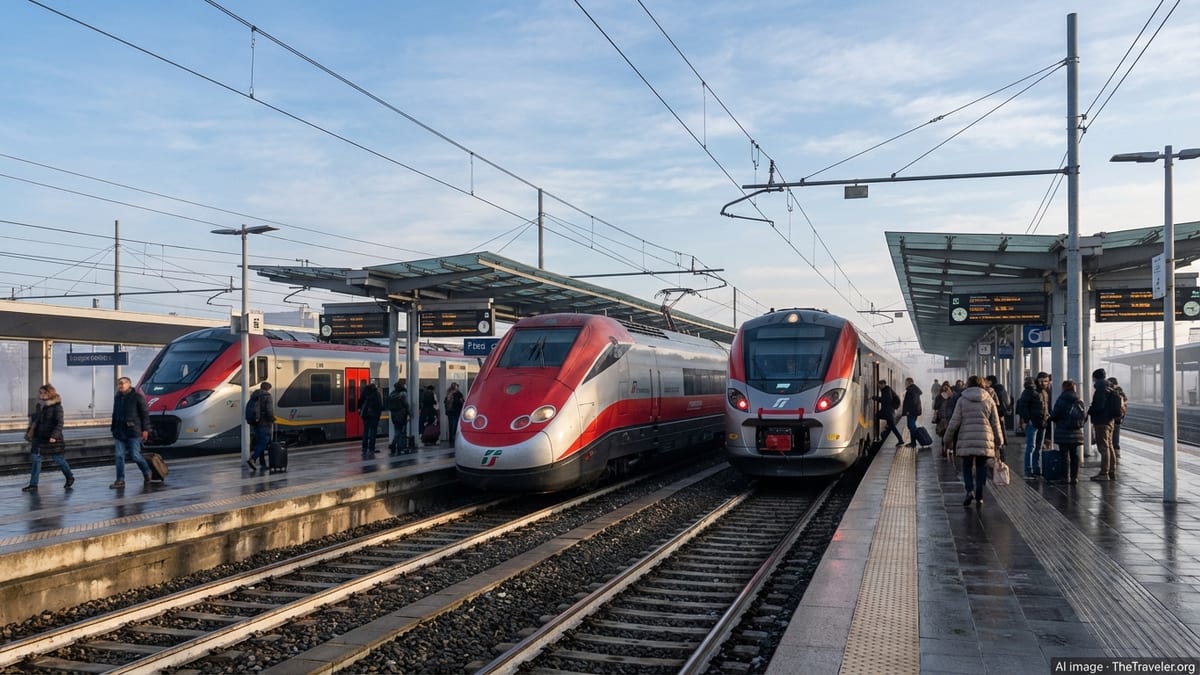
Focus on passenger comfort in hotter European summers
The trial comes as rail operators across southern Europe review how rising summer temperatures affect onboard comfort. Reports indicate that Trenitalia is prioritising high traffic Frecciarossa routes where prolonged sun exposure can push carriage temperatures up, particularly in panoramic seating areas. By applying specialist films to existing windows, the operator aims to reduce solar gain without altering the trains’ distinctive exterior design.
Publicly available information on the project suggests that the films are engineered to block a significant share of infrared radiation while preserving visible light, so passengers can still enjoy views along Italy’s main high speed corridors. That approach aligns with broader trends in rail vehicle design, where glazing is being rethought to balance natural light, exterior visibility and improved thermal performance.
Frecciarossa services connect major Italian cities and run across borders into France, meaning the fleet regularly encounters intense summer conditions on long daytime journeys. Any reduction in cabin heat build-up is expected to translate into more stable onboard temperatures, particularly in end cars and upper-deck sections that are most exposed to direct sun.
Potential energy savings for air conditioning systems
Beyond comfort, the window film tests are closely tied to Trenitalia’s energy efficiency and emissions goals. Sustainability reports from the wider Ferrovie dello Stato Italiane group highlight ongoing efforts to lower traction and auxiliary energy consumption across the long distance fleet, including the flagship Frecciarossa 1000 sets. Improving the thermal performance of windows offers a way to reduce the cooling load without changing core train systems.
In high speed operation, air conditioning units must work continuously to maintain a narrow temperature range in large, densely occupied cars. If the films can significantly cut solar heat ingress, onboard systems may draw less electrical power, especially on long daytime runs during heatwaves. Even modest percentage reductions in cooling demand can add up across thousands of train-kilometres each day.
According to published coverage of similar projects in the transport and buildings sectors, advanced window films can be tuned to reflect or absorb part of the solar spectrum while still appearing clear to the eye. Applied to rolling stock, that could allow operators to avoid heavier tinted glass or visible exterior coatings that might affect branding or passenger perception.
How the trial is being evaluated on the Frecciarossa fleet
The current initiative is understood to focus on a subset of the Frecciarossa fleet, enabling Trenitalia to compare treated and untreated vehicles in regular commercial service. Data collected over the testing period is expected to include interior temperature profiles, air conditioning performance, and passenger feedback on light levels and visibility through the modified windows.
By trialling the technology first on high speed units, Trenitalia can observe how the films behave under demanding conditions that combine rapid temperature changes, variable sun angles and high cruising speeds. The results will help determine whether the treatment is extended fleet-wide or adapted for other train types within the operator’s long distance and regional services.
Technical assessments are likely to look at durability, ease of installation and maintenance implications, such as cleaning routines and resistance to scratching. Operators also tend to assess how retrofit films interact with onboard telecommunications, passenger Wi-Fi and mobile reception, since some coatings can partially interfere with radio signals if not carefully specified.
Part of a wider sustainability and innovation strategy
The window film experiment fits within a broader programme of environmental initiatives across the Ferrovie dello Stato Italiane Group. Public sustainability documentation outlines investments in more efficient rolling stock, the use of alternative fuels on non-electrified routes and upgrades to onboard systems to reduce energy use. Within that context, improving the thermal properties of existing trains is a comparatively low impact intervention that may yield rapid results.
Frecciarossa 1000 sets are already promoted as a high efficiency option for intercity and international travel, and the operator has emphasised their role in shifting passengers from air and road to rail. Enhancing onboard comfort during increasingly hot summers can support that positioning, especially among leisure travellers choosing between high speed trains and short haul flights on Italy’s north–south axis.
Industry observers note that rail operators across Europe are looking at similar measures, from upgraded HVAC hardware to redesigned interiors that manage heat and glare more effectively. Trenitalia’s trial may therefore carry implications beyond Italy, providing a reference point for other high speed networks evaluating cost effective retrofits for their own fleets.
What the trial could mean for future passengers
For travellers, the most noticeable change on treated Frecciarossa coaches is expected to be a cooler, more stable cabin environment on sunny days, with fewer hot spots near large windows. If successful, the project could reduce the temperature contrast between seats in direct sunlight and those in shaded areas, making it easier for crews to maintain a single setpoint that feels comfortable across the carriage.
Passengers with window seats may see only a subtle shift in how intense sunlight appears, rather than a dramatic dark tint. Because the films are designed to keep visible light transmission high, daylight levels should remain suitable for reading, working and sightseeing, even as heat from the sun is reduced.
As evaluation continues, the experience of travellers on the trial trains is likely to inform any large scale rollout. Feedback on perceived comfort, reflections on screens and the clarity of the outside view will all play a role in determining whether the films become a standard feature on Frecciarossa services in the coming years.