


More news on this day
UAE residents are watching regional developments closely after President Donald Trump signaled a pause in new strikes on Iran while talks continue over reopening the Strait of Hormuz, raising fresh questions about air travel, transit routes and summer holiday plans.
Get the latest news straight to your inbox!
Pause in Strikes, But Region Remains Volatile
Recent public statements indicate that the United States has temporarily halted new large-scale strikes on Iran while regional and international mediators explore outlines of a wider deal to end the current phase of the conflict. Coverage from major international outlets describes this pause as conditional and closely tied to progress on negotiations over Iran’s military posture and shipping lanes in the Gulf.
The potential agreement under discussion is reported to include commitments aimed at reopening the Strait of Hormuz and reducing the risk of further missile exchanges. Travel industry analysts note that any easing of tensions in this maritime corridor would be welcomed by airlines and insurers, which have been contending with higher operating costs, changing routings and elevated security assessments.
Despite the pause, aviation risk specialists caution that the broader conflict is not resolved. The past months have seen missile and drone activity across parts of the region, periodic closures of airspace and warnings about possible disruptions. For travelers in the UAE, the current environment is best described as calmer than in recent weeks, but still subject to sudden change.
How UAE Airspace and Routes Are Being Managed
Publicly available flight tracking data and airline statements show that UAE airspace remains open, with Dubai and Abu Dhabi continuing to function as major hubs. However, some routings have been adjusted to avoid sensitive areas near Iran and the Strait of Hormuz, particularly at certain altitudes and along traditional air corridors that pass closer to the zone of recent military activity.
According to industry briefings, international carriers operating through the Gulf have relied on risk assessments from commercial aviation safety firms, global insurers and state-issued notices to airmen. These assessments influence which waypoints pilots use, how high they fly and whether particular routes along the Gulf’s northern edge are temporarily avoided or only used under specific conditions.
For passengers, most of these changes are invisible, reflected in slightly longer flight times or altered flight paths shown on in-seat maps. Nonetheless, sustained tension around the Strait of Hormuz has kept airlines in a defensive posture, with contingency plans ready for further rerouting or schedule thinning if the security picture worsens again.
Flight Schedules, Cancellations and Transit Considerations
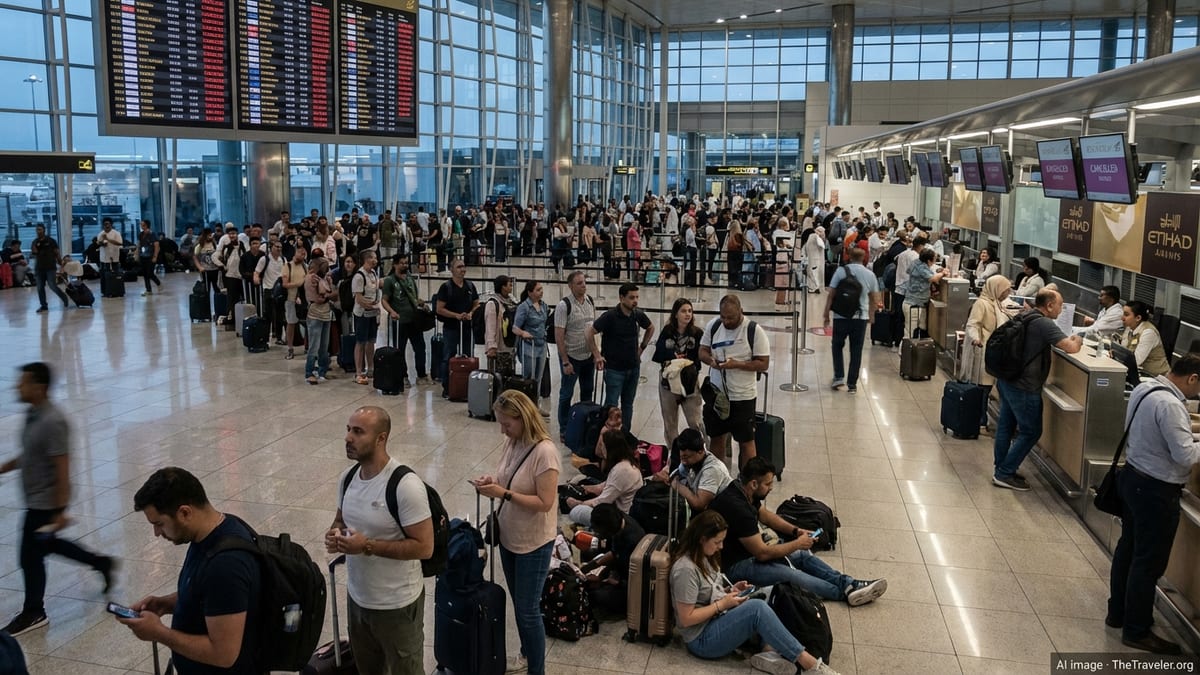
While UAE airports are operating at near-normal capacity, some carriers serving the wider region have modified schedules in recent weeks, particularly for routes touching conflict-adjacent destinations. Published travel advisories and media reports highlight periods of short-notice cancellations or delays when missile attacks, air defense activity or temporary airspace restrictions have spiked.
Travel experts note that flights directly linking the UAE with European and Asian cities have generally remained more resilient than services into certain neighboring states more exposed to active military exchanges. Nonetheless, passengers connecting through Dubai or Abu Dhabi to destinations closer to Iran or other hotspots may encounter more frequent retimings or aircraft changes.
Residents planning summer breaks are advised by travel consultants to pay close attention to airline notifications and to allow extra connection time for itineraries involving secondary airports around the Gulf. Flexible tickets, travel insurance that explicitly covers geopolitical disruption and up-to-date contact details with airlines are increasingly seen as practical safeguards in the current climate.
Government Guidance and Security Alerts
Several foreign ministries, including those of Western countries with large expatriate communities in the UAE, have recently refreshed their regional security alerts. Public advisories circulating this weekend warn of the possibility of sudden flight cancellations, temporary airspace closures and disruptions linked to any renewed escalation between the United States and Iran.
These notices typically do not instruct residents to avoid the UAE itself, which continues to be described as a comparatively secure hub with robust airport infrastructure and air defense systems. Instead, they focus on the risk profile of travel through or near conflict-affected areas, maritime chokepoints and countries more directly involved in the current fighting.
Travelers are being urged in open-source guidance to monitor news developments and to register with consular services when staying abroad for extended periods. For UAE-based residents, that may mean ensuring consular contact information is current before embarking on regional trips or cruises that transit the Gulf and nearby waters.
What UAE Residents Should Watch in the Coming Days
Analysts tracking the situation identify three main variables for UAE travelers in the short term: whether the announced pause on new U.S. strikes holds, whether Iran proceeds with any fresh ballistic or drone activity in the Gulf, and how quickly concrete steps are taken toward reopening the Strait of Hormuz to normal commercial traffic.
If negotiations over the strait progress and reported parameters for a wider deal solidify, airlines and insurers may gradually relax some of the most conservative routing assumptions. That could translate into smoother schedules and fewer last-minute changes for passengers using UAE hubs, though such adjustments are likely to lag behind diplomatic announcements until a sustained period of stability is observed.
Conversely, any renewed cycle of strikes or high-profile incidents at sea could prompt rapid responses from carriers and aviation authorities, including diversions, suspensions of certain routes or tightened security screening. Travel planners in Dubai and Abu Dhabi say they are building these contingencies into advice for clients, emphasizing that conditions remain fluid even amid talk of de-escalation.
For now, most residents can continue to fly in and out of the UAE as planned, while staying alert to updates from airlines and official travel advisories. The pause in strikes has reduced immediate fears of a wider airspace shutdown, but the balance between diplomacy and renewed confrontation will determine how stable Gulf travel remains through the rest of the season.