


Thessaloniki is one of Greece’s great food cities, a port where Balkan, Ottoman, Jewish and Asia Minor influences meet around tables piled with plates to share. Spend a day here and you will pass from flaky bougatsa at dawn to a late-night gyros on the waterfront, with market tastings, ouzo-and-meze sessions and long seafood dinners in between. This guide focuses on real places and experiences that travelers can use to plan their eating, from traditional markets like Kapani and Modiano to Ladadika tavernas, pastry shops and local food tours.
Get the latest updates straight to your inbox!
Bougatsa: Thessaloniki’s Essential Breakfast
If there is one food that defines mornings in Thessaloniki, it is bougatsa: layers of crisp phyllo wrapped around creamy custard, tangy cheese or minced meat. You will see people walking down Egnatia or Tsimiski streets balancing paper-wrapped wedges dusted with powdered sugar and cinnamon, often with a plastic cup of iced coffee in the other hand. A portion usually costs around 2 to 4 euros, which makes it an easy, budget-friendly way to start your day.
For a traditional experience, head up to Ano Poli and seek out Bougatsa Bantis, a family shop that has been stretching its own phyllo by hand for decades. The cream-filled version here is rich but not heavy, served straight from the oven and cut into small squares with quick strokes of a knife. Down in the center near the markets, historic Serraikon sells bougatsa based on recipes that trace back to the city of Serres, with both sweet and savory options. These are places where locals queue before work, so an early morning visit gives you a window into everyday life.
Modern cafes have also started riffing on the classic. In the area around Navarinou and along Pavlou Mela Street, some brunch spots serve “bougatsan,” a mash-up of croissant and bougatsa, often filled with custard and topped with praline or pistachios. Expect to pay a bit more, roughly 4 to 6 euros, and sit down for a more leisurely breakfast with coffee service and table seating. For many visitors, trying both a traditional slice and an inventive twist offers a good sense of how Thessaloniki’s pastry scene balances heritage and trend.
Timing matters with bougatsa: most of the best shops bake through the night and sell out by early afternoon. Plan to go before 11:00 if you want the widest choice and the crispiest texture. If you are starting a day of sightseeing at the Roman Forum or the churches of Ano Poli, using a bougatsa stop as your first anchor point is an easy and delicious strategy.
Gyros, Souvlaki and Casual Street Food
While souvlaki and gyros are ubiquitous across Greece, Thessaloniki’s versions are generous and often come with small local touches. Around Aristotelous Square and the adjacent streets, you will find grill houses where a pork or chicken gyros wrap typically costs 3 to 4 euros. Portions tend to be large, with fries tucked inside the pita along with tomato, onion and either tzatziki or a simple yogurt sauce. Many places stay open until late at night, serving theater-goers and bar crowds alike.
Locals often point visitors toward central spots such as Giros tis Aristotelous or small psitopoleia near the waterfront for consistently good wraps and skewers. These are informal counters where you order at the till, wait while the meat is carved and then carry your paper-wrapped gyros to a standing table or nearby bench. The atmosphere is noisy and fast, with staff calling out orders in Greek and English and the smell of grilled meat drifting out into the street.
Beyond the standard pork gyros, look out for soutzoukaki-style meatballs, kebab-style minced meat skewers and sausage plates on the menus of simple grill houses. Many offer mixed platters for two, usually in the 15 to 20 euro range, which come piled with different cuts of meat, fries and salad. These are good value if you are hungry after walking along the seafront promenade or exploring the White Tower and nearby museums.
Vegetarians are not left out of this scene. Increasingly, casual places in the center offer pita wraps filled with grilled halloumi, grilled vegetables or even falafel, though these options are still less common than in Athens. If you see pre-prepared salads and vegetable dishes displayed behind glass, do not hesitate to ask for a wrap built from these components. Staff are generally flexible and used to adapting orders for visitors.
Markets: Kapani, Modiano and Daily Food Life
Thessaloniki’s central markets are the heart of its food culture. Kapani Market, also known as Agora Vlali, is the oldest open public market in the city and sits just a short walk uphill from Aristotelous Square. Stalls overflow with seasonal vegetables, greens, olives, cheeses, spices and fresh fish, while side alleys hold butchers, bakeries and tiny cafes. Prices are aimed at locals, so you can buy a bag of ripe tomatoes or figs for a couple of euros, or pick up small quantities of olives and nuts to snack on throughout the day.
Visiting in the morning is best, when deliveries arrive and the atmosphere is most intense. Fishmongers call out the day’s catch from the Thermaikos Gulf, from glistening sardines and anchovies to mussels and larger fish that restaurants buy whole. Many travelers enjoy simply walking the narrow lanes, taking photos and tasting as they go. Some spice sellers will offer pinches of oregano or mountain tea to smell, and deli counters may let you sample a cube of kefalotyri or a slice of salami before you buy.
Just beside Kapani is the historic Modiano Market, a covered market built in the early 20th century by architect Eli Modiano. After a long period of decline and renovation, it has re-emerged as a bright food hall that mixes traditional butchers and fishmongers with contemporary eateries and bars. Here you can sit at a counter for a meze plate and a glass of wine, buy local cheeses and charcuterie to take away, or order modern street food alongside classic Greek dishes. Prices are slightly higher than in Kapani, reflecting the design and sit-down service, but still reasonable compared to restaurant dining.
For travelers, these markets double as informal food tours you can do on your own. Buy a koulouri sesame ring from a bakery just outside, then wander through the market with it in hand. Pick up a small container of olives, a chunk of feta and a couple of peaches, and you have the makings of a picnic you can enjoy later on the waterfront. It is practical, budget-friendly and gives you direct contact with the produce that underpins Thessaloniki’s restaurant scene.
Meze, Tavernas and Ladadika Nights
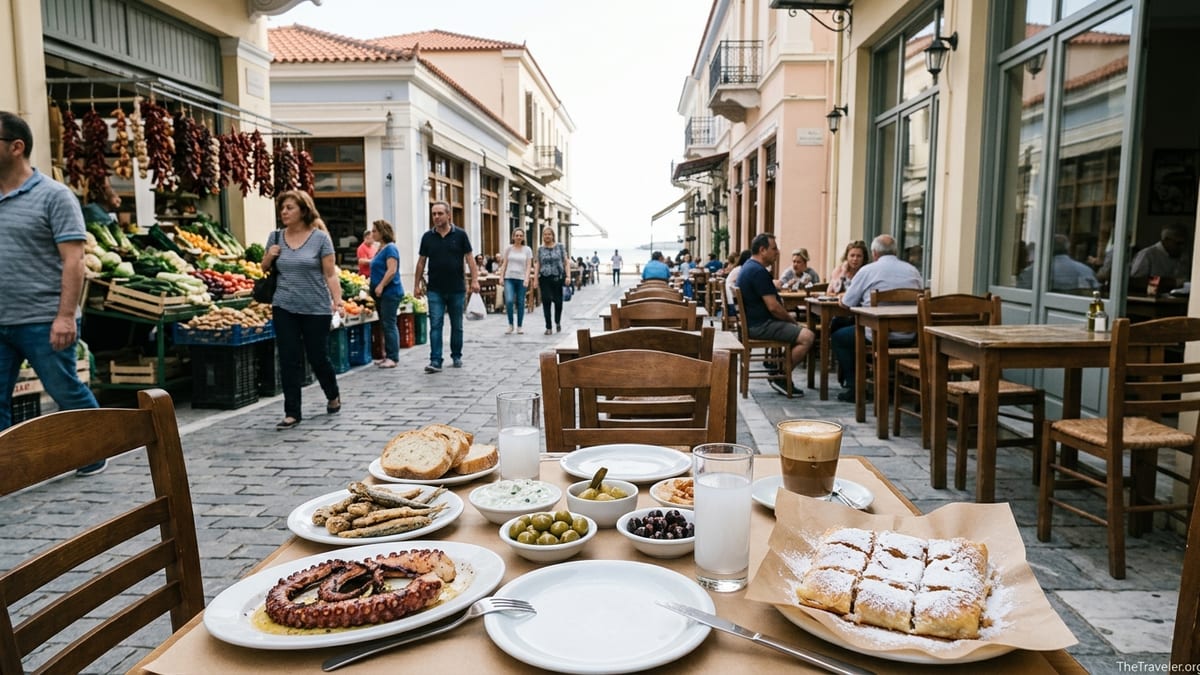
Evenings in Thessaloniki are often organized around meze, the Greek tradition of ordering many small plates to share, usually with drinks. Meze culture is particularly strong here, thanks to the city’s mix of Macedonian, Pontic and Asia Minor influences. In practical terms, this means you can sit down with friends at an ouzeri or taverna, order a bottle of ouzo or tsipouro and then gradually fill the table with plates of grilled octopus, fried zucchini, spicy cheese dip, beans in tomato sauce and seasonal salads.
Ladadika, the historic district of former warehouses just inland from the port, is one of the most popular areas for this style of dining. Many of the colorful neoclassical buildings have been converted into tavernas with wooden tables spilling onto cobbled streets. Restaurants range from simple spots where set meze menus cost around 15 to 20 euros per person to more modern places with creative takes on classics. You will see both printed menus and chalkboards listing daily specials, often including whatever fish or vegetables are in season.
Beyond Ladadika, the city center is dense with meze-focused venues. Places near Athonos Square and around the Roman Forum serve grilled sardines, fava bean puree, saganaki cheese and local sausages at modest prices, often under 6 or 7 euros per dish. It is common for kitchens to send out a complimentary plate of fruit or a small dessert at the end of the meal, especially if you have ordered several dishes and drinks. This hospitality is part of the culture, and tipping around 5 to 10 percent is appreciated if service has been good.
To get the most out of meze dining, plan on sharing everything and ordering in stages rather than all at once. Start with a couple of cold dishes, then add grilled items and perhaps one or two cooked stews or oven dishes. This approach lets you pace the meal and avoid ending up with too much food on the table. It also allows you to adjust based on appetite and budget as the evening unfolds.
Seafood from the Thermaikos Gulf
Thessaloniki looks directly onto the Thermaikos Gulf, and seafood is central to its cuisine. Local mussels are a particular specialty, farmed in the gulf and served in tavernas either steamed with garlic and herbs, baked with feta and tomato or fried into crisp, golden morsels. Plates of mussels typically cost around 8 to 12 euros depending on preparation and portion size, and are often among the first dishes recommended by staff when you ask what is local.
In the center and in Ladadika you will find dedicated fish tavernas offering the full range of Greek seafood classics: grilled whole fish priced by the kilo, small fried fish like gavros and marides, octopus cooked over charcoal, and shrimp saganaki baked in tomato sauce and feta. Prices can vary widely depending on the type and size of fish, so it is standard practice to ask the staff to show you the fish first and quote a price per kilo. Many travelers choose smaller fish or mixed platters to keep costs manageable, often spending 20 to 30 euros per person for a full seafood dinner with drinks.
For a more waterfront atmosphere, head east toward Kalamaria and the marina areas, where restaurants line the seafront with terraces looking over the water. This is where locals go for Sunday lunches and special occasions. Here too, mussels from the gulf and grilled fish dominate the menus, alongside simple salads and seasonal vegetable dishes. Reservations are sensible on weekends and warm evenings, especially if you want an outdoor table with a view.
Even if you are not planning a full seafood meal, consider ordering at least one fish or shellfish dish as part of a meze spread. Sharing a plate of grilled octopus or fried anchovies alongside meat and vegetable dishes is an easy way to experience the maritime side of Thessaloniki’s cuisine without committing to a more expensive fish taverna.
Sweets, Pastries and Coffee Culture
Thessaloniki has a serious sweet tooth. Beyond bougatsa, the city is known for syrupy pastries and rich breads that reflect its multicultural past. One emblematic dessert is trigono Panoramatos, triangular pastries filled with thick cream and drenched in syrup, originally associated with the Panorama suburb but now found in patisseries across the center. A single piece is usually enough for two people to share and costs around 2 to 3 euros.
You will also encounter trays of baklava, galaktoboureko, ravani and kadaifi in pastry shops around Tsimiski, Mitropoleos and in the side streets near Agia Sofia. Many locals buy sweets by the kilo to take home or as gifts, but most patisseries are perfectly happy to sell you a single piece on a small plate to eat on site. Some have a few tables where you can sit with a coffee and watch the city go by, while others are strictly takeaway.
Coffee culture here is intense and constant, from early morning until late evening. Iced coffee in various forms is particularly popular. You will see people carrying plastic cups of freddo espresso or freddo cappuccino while strolling along the seafront promenade. Prices in central cafes range from around 3 to 4 euros for a freddo or a properly made Greek coffee served in a small cup. Many places also offer specialty roasts and pour-over methods, especially in younger neighborhoods around Navarinou and Valaoritou.
For travelers, this strong coffee culture is useful because it provides natural breaks throughout the day. After a morning in the markets, sit at a cafe near Aristotelous Square for a freddo and a small sweet. In the late afternoon, when the heat builds, duck into a side-street cafe for a cold brew or iced latte before continuing to the museums or the upper town. The pace in Thessaloniki encourages lingering, and no one will rush you away from your table as long as you have ordered something.
Local Food Tours and How to Taste More in Less Time
For visitors with limited time, joining a guided food tour can be an efficient way to sample a broad range of Thessaloniki’s specialties in a few hours. Several local operators run small-group morning tours that start near Aristotelous Square and weave through Kapani and Modiano markets, stopping at bakeries, deli counters and small tavernas. Typical prices range from about 40 to 70 euros per person, usually including all tastings and occasionally a light lunch with wine or ouzo.
On these tours you might try a breakfast bougatsa, sample three or four types of olives, taste local cheeses and cured meats, and sit down for a plate of meze dishes such as dolmadakia, tzatziki and grilled peppers. Guides usually explain the background of each dish and the city’s history, pointing out landmarks and hidden spots that are easy to miss on your own. Many also provide practical tips on where to return later for a full meal, tailored to your tastes and budget.
Even if you prefer to explore independently, you can structure your own mini food tour by focusing on one neighborhood at a time. For example, devote a morning to the markets, starting with coffee and bougatsa, moving through Kapani and Modiano for tastings, then finishing with a simple meze lunch nearby. In the evening, shift to Ladadika or the waterfront for a different atmosphere, perhaps combining a sunset walk along the promenade with dinner at a taverna that specializes in dishes you did not try earlier.
To keep expenses predictable, decide in advance how many sit-down meals and how many snack-style tastings you want each day. Thessaloniki can be very affordable if you rely on market snacks, bakery items and a few well-chosen taverna meals, but costs can rise quickly if every stop turns into a full dinner. Mixing guided experiences with self-directed grazing gives you both depth and flexibility.
The Takeaway
Thessaloniki rewards travelers who arrive hungry and curious. From the crackle of hot bougatsa at breakfast to late-night gyros and long seafood dinners, the city’s food scene reflects centuries of migration and trade, yet remains deeply rooted in daily life. Markets like Kapani and Modiano show you where ingredients come from, while Ladadika’s tavernas, waterfront fish restaurants and inner-city meze houses reveal how locals like to eat and socialize.
If you focus on a few key experiences, you will leave with a strong sense of place: a morning in the markets, at least one meze-heavy evening with ouzo or wine, a seafood meal that highlights the Thermaikos Gulf, and time for sweets and coffee in between. Whether you join a guided food tour or follow your own path from bakery to taverna, Thessaloniki offers enough variety and warmth to satisfy both seasoned food travelers and first-time visitors to Greece.
FAQ
Q1. What is the best time of day to visit Kapani and Modiano Markets?
The markets are liveliest in the morning, roughly between 9:00 and 13:00, when fish and produce are freshest and most stalls are open.
Q2. How much should I budget per day for food in Thessaloniki?
If you mix bakery breakfasts, casual gyros or meze lunches and one sit-down dinner, a typical traveler might spend around 25 to 40 euros per day on food.
Q3. Are Ladadika restaurants very expensive?
Ladadika has a range of prices. Simple tavernas can be good value, while more stylish restaurants charge more. Checking menus outside before sitting down is standard practice.
Q4. Do I need to book restaurants in advance?
For popular Ladadika and waterfront seafood spots, reservations are wise on Friday and Saturday nights or for large groups. On weekdays, you can usually walk in, especially if you arrive early.
Q5. Is Thessaloniki easy for vegetarians and vegans?
Yes, if you choose carefully. Many meze dishes are vegetable-based and bakeries offer cheese and spinach pies, though fully vegan options are still less common. It helps to mention your needs clearly.
Q6. What is a fair tip in tavernas and cafes?
Tipping is not obligatory but appreciated. Leaving around 5 to 10 percent in restaurants and rounding up the bill or leaving small change in cafes is considered polite.
Q7. Can I drink tap water in Thessaloniki?
Tap water is generally considered safe to drink in Thessaloniki, and many locals use it daily. Some visitors prefer bottled water for taste, which is widely available and inexpensive.
Q8. Are food tours suitable for children?
Most small-group food tours welcome older children who are comfortable walking and trying new foods. It is best to check in advance with the operator about age limits and pacing.
Q9. What should I wear when visiting markets and tavernas?
Dress is casual. Comfortable shoes are important for the uneven surfaces in markets and old streets. In the evening, smart-casual clothing fits well in most restaurants.
Q10. How can I avoid tourist traps in the city center?
Look for places with a mix of locals and visitors, menus in Greek as well as English, and staff who are not aggressively pulling people in. Asking residents or your accommodation for recommendations is usually reliable.