


More news on this day
A pause in new United States strikes on Iran announced by Donald Trump has eased immediate fears of wider escalation, but air travel across the Gulf remains fragile, with UAE residents urged to stay alert to changing flight schedules, advisories and insurance conditions.
Get the latest news straight to your inbox!
What Trump’s Pause on Iran Strikes Actually Means
Donald Trump has publicly indicated that he will hold off on ordering new strikes on Iran after regional partners outlined parameters for a potential framework to wind down the months long conflict. Recent coverage of his latest statements suggests that Washington is seeking space for diplomatic contacts while maintaining the ability to resume military action if talks stall or new attacks occur.
The pause follows a period of intensive air operations and missile exchanges involving Iranian territory, U.S. assets and targets in neighboring states. Reports from international newswires and regional outlets describe a pattern in which large, highly visible strikes are followed by short windows of de escalation, during which markets, airlines and insurers reassess risk before the next decision point in Washington or Tehran.
Analysts cited in public reporting stress that this is a pause, not a formal ceasefire. Iranian forces retain ballistic and drone capabilities, and U.S. forces continue to operate in and around the Strait of Hormuz, one of the world’s most important oil and shipping arteries. For travelers, that means aviation and maritime risk models remain elevated, even if tonight’s headlines sound calmer than those of previous days.
Current Status of Flights To and From the UAE
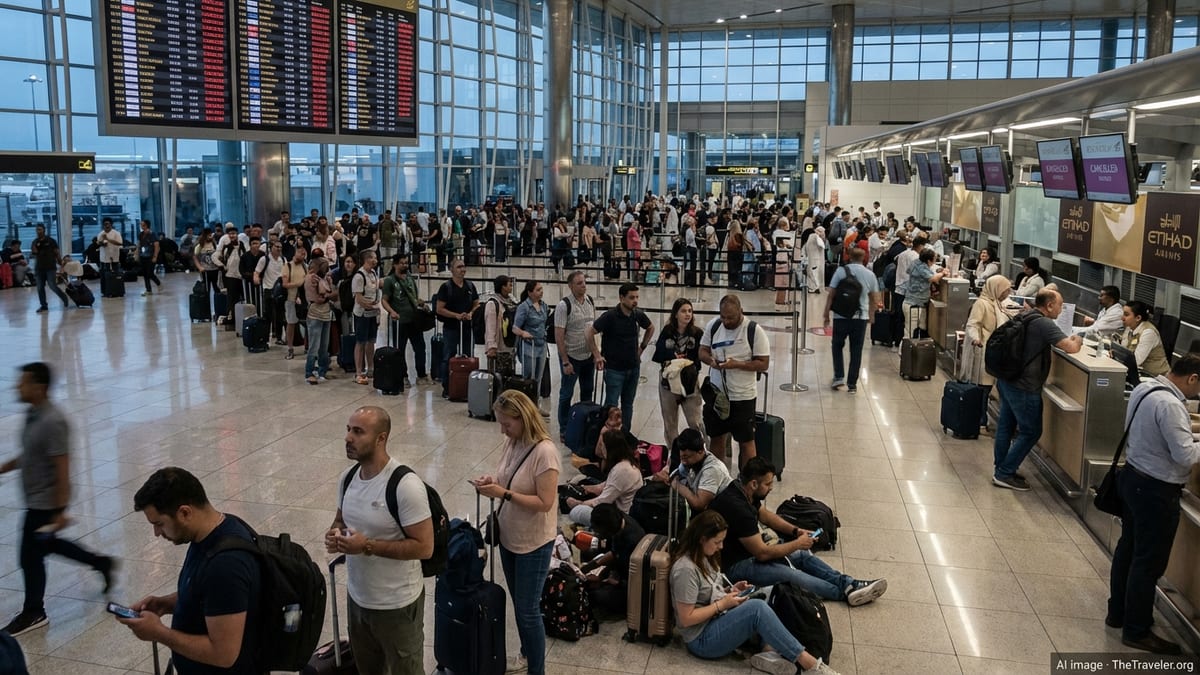
Publicly available airport and airline information shows that major UAE hubs such as Dubai International and Abu Dhabi International have resumed near normal operations after earlier shutdowns and temporary ground stops triggered by the sharpest spikes in regional tension. Previous closures and restrictions followed Iranian missile and drone launches across the Gulf and related U.S. and allied strikes, which prompted widespread rerouting and delays.
Dubai International, one of the world’s busiest international airports, has already demonstrated how quickly conditions can change. Earlier in the conflict, airspace closures forced large numbers of cancellations and diversions, temporarily paralyzing traffic through the hub before capacity was gradually restored. Similar patterns were reported at Abu Dhabi and at airports across the wider Middle East as airlines responded to changing security assessments.
In recent days, Gulf based carriers have adjusted flight paths to avoid the most sensitive airspace while keeping long haul routes to Europe, North America, Africa and Asia largely intact. Some regional services into Iran and neighboring states have been reduced, suspended or rerouted, depending on the carrier and destination. Timetables published by airlines indicate that schedules out of the UAE remain busy, but travelers are experiencing longer flight times on certain sectors because of detours around high risk zones.
Operationally, residents should be prepared for last minute gate changes, rolling delays and occasional cancellations if military activity spikes again or if new security notices are issued. Even when airports remain open, air traffic control restrictions, crew duty time limits and aircraft rotation issues can disrupt services throughout the day.
Airspace Restrictions, Advisories and Safety Assessments
During the most intense phases of the crisis, several Middle Eastern states, including the UAE, temporarily restricted portions of their airspace to civil aviation, prioritising military and emergency movements. International aviation regulators and flight tracking data documented wide detours around Iran, the Strait of Hormuz and parts of Iraq as carriers sought to keep commercial traffic away from potential strike corridors.
The United States and other governments have repeatedly updated security notices for the region, sometimes within hours, warning of possible missile activity, drone launches or air defense engagements that could pose a risk to civil aircraft. These advisories do not always close airspace outright but can lead airlines to voluntarily alter routes or cancel flights when risk thresholds are exceeded.
Today’s pause in U.S. strikes does not automatically lift those advisories. Risk assessments used by airlines, insurers and safety regulators typically lag political announcements, waiting for evidence that hostile activity has subsided and that command and control systems on all sides are stable. As a result, routes over or near Iran may remain restricted for some time, and contingency plans for sudden closures are still very much in place.
For residents of the UAE, this means that even routine trips can be affected by developments far from the departure gate. A fresh missile launch, a drone incident near a shipping lane or a new round of retaliatory strikes could prompt rapid changes in routing that lengthen journeys or push some flights off the schedule entirely.
Practical Advice for UAE Residents With Upcoming Travel
Travel specialists and aviation analysts who track the region’s conflict related disruptions are broadly aligned on one point: flexibility is essential. Public guidance from carriers and embassies during recent waves of cancellations has consistently urged travelers to monitor their booking status, keep contact details updated and allow ample time at the airport for additional screening or schedule changes.
Passengers flying in the next days are advised to check their flight status several times in the 24 hours before departure, including shortly before leaving for the airport. Many airlines serving the UAE have been using text and email alerts to notify customers of delays, aircraft swaps and terminal changes, but these systems depend on having accurate contact information in the booking.
Travel insurance is another key consideration. Policy documents available from major insurers show that coverage for war, terrorism and government ordered airspace closures varies widely. Some policies exclude such events entirely, while others may cover additional accommodation, rebooking fees or partial refunds. Residents planning non essential trips may wish to review policy language carefully or seek products that explicitly address conflict related disruptions.
For those who must travel to or through higher risk destinations, contingency planning is important. That can include identifying alternative routings that avoid affected airspace, carrying essential medications and documents in hand luggage in case of unexpected overnight stays, and budgeting extra time and funds for potential disruptions.
Looking Ahead: How Stable Is the Travel Outlook?
Recent reporting on the wider conflict portrays a landscape in which bursts of diplomacy and temporary pauses in military activity alternate with sudden escalations. The decision by Trump to pause new strikes on Iran fits this pattern, providing short term relief but leaving underlying disputes unresolved and military assets still in place.
Aviation data from earlier phases of the war suggest that once a major hub like Dubai stabilises operations after a shock, airlines move quickly to restore capacity and capture demand from both residents and transit passengers. Tourism boards and hotel groups in the UAE have been keen to emphasise resilience, highlighting rising occupancy once travel corridors reopen and marketing the country as a safe haven relative to more directly exposed conflict zones.
At the same time, the legacy of recent closures, intercepted projectiles and high profile evacuations has made many travelers more cautious. Online forums and travel communities reflect a mix of confidence in UAE security measures and concern about being stranded if airspace closes suddenly. This ambivalence is likely to persist as long as tensions between Washington and Tehran remain high and as long as intermittent military activity continues across the region.
For now, the practical message for UAE residents is straightforward: flying remains possible and, in many cases, busy, but the margin for disruption is higher than in calmer times. Until there is a durable political settlement, anyone booking trips through the Gulf’s busiest hubs should treat travel plans as flexible, not fixed.