


More news on this day
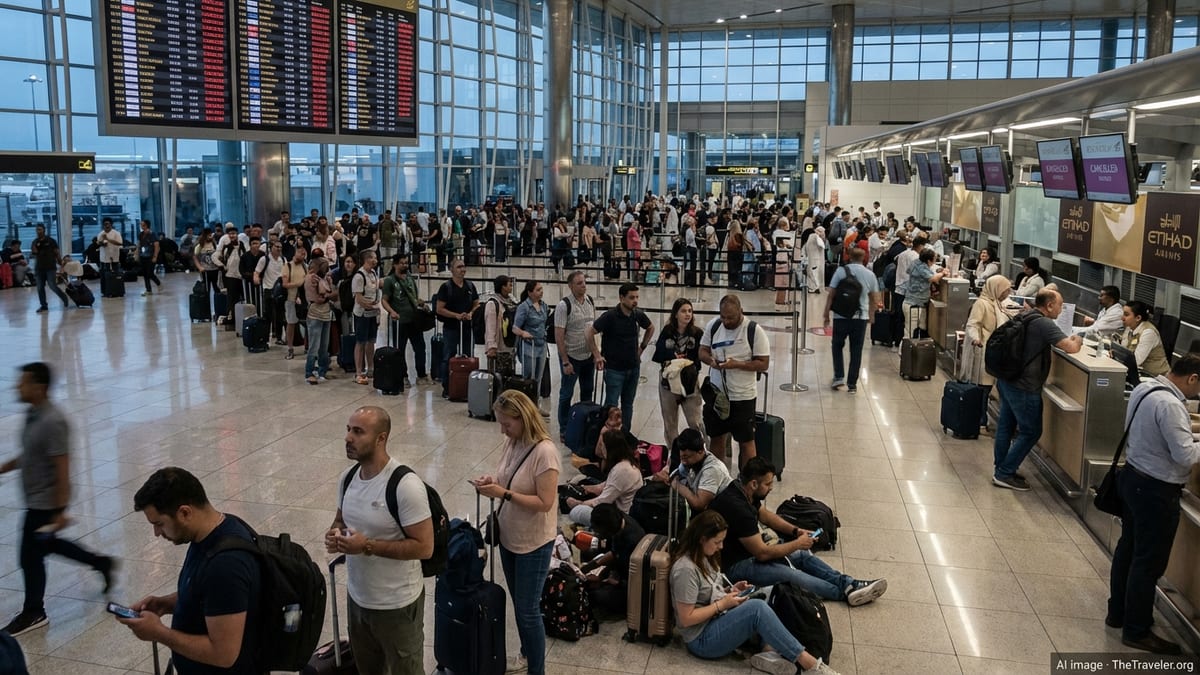
A pause in planned United States strikes on Iran has eased immediate fears of a wider regional escalation, but residents and travelers in the United Arab Emirates are still navigating a rapidly changing air travel landscape marked by heightened security advisories, evolving airline schedules and persistent concerns about Gulf airspace safety.
Get the latest news straight to your inbox!
Trump’s Pause Shifts Focus From Conflict To Containment
Recent public statements indicate that United States President Donald Trump has agreed to halt new strikes on Iran after regional partners outlined parameters for renewed negotiations. Coverage of the decision describes it as part of a broader attempt to move from active confrontation toward a framework that could eventually curb attacks on shipping and infrastructure around the Strait of Hormuz, one of the world’s busiest energy corridors.
The pause follows months of strikes and counterstrikes between US and Iranian forces that have rattled Gulf states and disrupted commercial aviation. Earlier episodes of tension saw airspace closures, diversions and cancellations across multiple Middle Eastern hubs, including the UAE, as airlines adjusted routings away from areas considered at heightened risk of missile or drone activity.
While the latest decision has reduced expectations of an immediate escalation, analysts quoted in regional coverage caution that the situation remains fragile. The underlying dispute over Iran’s missile program, its regional network of allied armed groups and control of strategic waterways continues to pose potential risks to aviation and maritime trade.
Airspace Risk Level Remains Elevated Over The Gulf
Publicly available information from government travel advisories and aviation safety notices shows that risk assessments for parts of Middle Eastern airspace, including the Gulf region, remain higher than normal. Notices to air operators have highlighted threats from potential long range missile and drone activity, as well as the possibility of miscalculation in congested skies used by both civil and military aircraft.
Previous US Iran standoffs have prompted international regulators to warn airlines against flying over specific conflict zones near Iran’s southern coast and the Strait of Hormuz. Industry reporting during those episodes documented a shift in traditional Europe Asia routes, with carriers adding flight time and fuel costs to skirt restricted or cautionary areas. Similar patterns have been reported during the current crisis, with carriers adjusting routings to reduce exposure.
For the UAE, which serves as a global aviation hub through airports in Dubai and Abu Dhabi, any sustained elevation in regional airspace risk translates directly into operational and economic pressure. Even when the country’s own airspace remains open, increased caution around neighboring flight information regions can force re routings that ripple through schedules, connection banks and cargo flows.
How Emirates, Etihad And Other Carriers Are Responding
Recent Gulf based news coverage indicates that major UAE carriers have already taken a series of precautionary steps in response to the wider US Iran confrontation. Reports describe temporary suspensions or trimming of frequencies on some short haul Gulf routes, including services to Bahrain and Kuwait, along with selective cancellations on high density regional sectors where demand has softened or operational risks have risen.
At the same time, long haul flights to Europe, Asia and North America have largely continued to operate, albeit in some cases on adjusted routings that avoid the most sensitive corridors near Iranian airspace. These changes can add flying time and minor delays, but they are designed to maintain global connectivity while aligning with international safety guidance.
Industry analysts note that airlines typically revise schedules in phases during periods of geopolitical uncertainty. Initial steps often focus on routes closest to an active conflict zone, followed by broader timetable adjustments if demand weakens or regulatory constraints tighten. UAE based carriers have signaled through published statements and timetable updates that they will keep reviewing their networks as the security picture evolves.
What UAE Residents And Travelers Should Do Now
For residents and visitors in the UAE, the pause in US strikes on Iran removes the prospect of an immediate sharp escalation, but it does not eliminate the possibility of sudden changes to air travel. Public guidance from travel and aviation authorities stresses the importance of checking flight status directly with airlines before heading to the airport, since schedules can shift at short notice in response to new security assessments.
Travelers with imminent departures are advised by consumer advocates and travel industry experts to monitor airline notifications and airport announcements closely, keep contact details updated in booking profiles and allow extra time for check in and security. In some cases, airlines may offer free rebooking or flexible change options on affected routes, although policies vary by carrier and fare type.
Residents planning trips in the coming weeks may wish to factor in the potential for routing changes and longer flight times on certain corridors, particularly services transiting near the Gulf’s conflict sensitive areas. Travel planners suggest considering travel insurance products that explicitly cover disruption linked to geopolitical events, while carefully reviewing policy exclusions related to war or civil unrest.
Outlook: Cautious Optimism With Persistent Uncertainty
Diplomatic efforts, including reported talks mediated by regional partners such as Oman, have introduced a measure of cautious optimism that broader hostilities between the United States and Iran might be contained. Commentaries in regional media point to the economic self interest of Gulf states, which depend heavily on open sea lanes and functioning aviation hubs, as a powerful incentive to sustain de escalation.
However, past experience in the region shows that temporary pauses in confrontation do not always lead to lasting calm. Isolated incidents, misinterpretations of military movements or attacks by non state actors can quickly reignite tensions and trigger renewed airspace warnings. For travelers using UAE airports, that means the current environment is best viewed as a period of reduced but not resolved risk.
For now, publicly available information suggests that the UAE remains committed to keeping its airports operating as normally as conditions allow, while airlines continue to adjust their operations in line with evolving security assessments. Passengers are likely to see a mix of steady long haul services, targeted regional schedule changes and a continued emphasis on flexibility as the region waits to see whether the latest pause in US Iran strikes marks a turning point or merely another brief lull in a protracted standoff.