


More news on this day
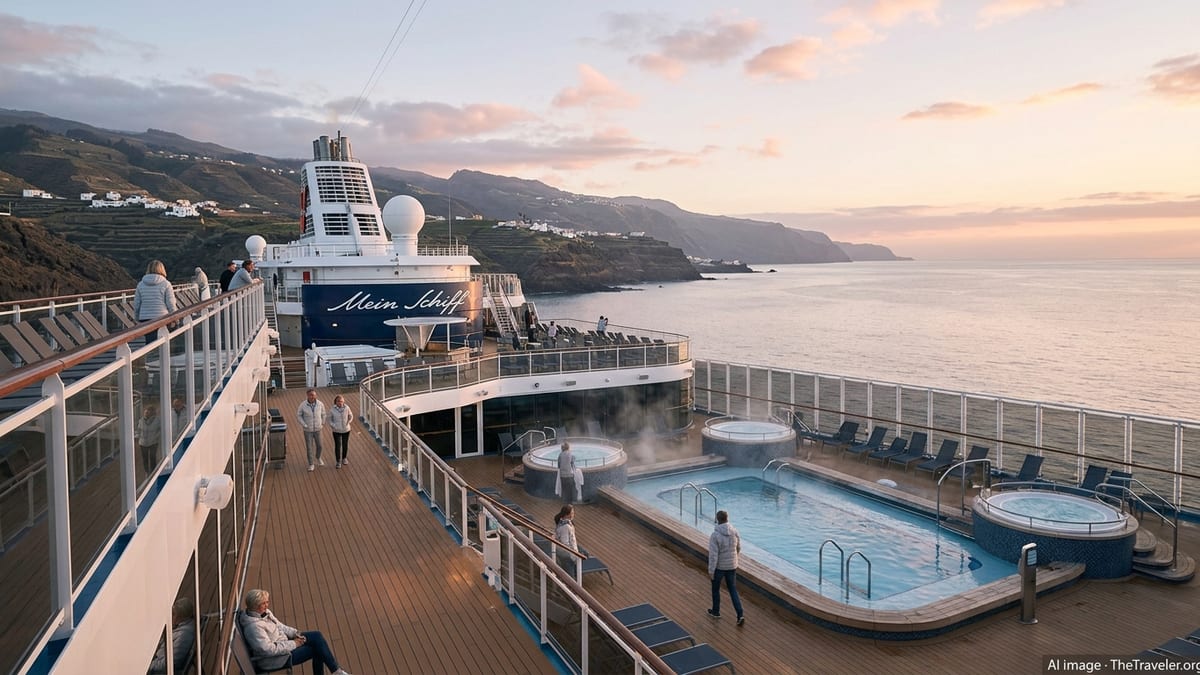
TUI Cruises has taken delivery of the new Mein Schiff Flow, a large InTUItion class vessel built by Italian shipbuilder Fincantieri, marking a major capacity and branding milestone for the German-focused cruise line as it accelerates its fleet expansion in 2026.
Get the latest news straight to your inbox!
A Massive Newbuild Anchors TUI’s Growth Strategy
Publicly available information from European shipbuilding and cruise industry reports indicates that Mein Schiff Flow is the second vessel in TUI Cruises’ InTUItion class and one of the largest ships ever built for the brand, at around 161,000 gross tons and capacity for several thousand passengers. The ship has been constructed at Fincantieri’s yards as part of a two-ship agreement intended to give TUI a new generation of large, resort-style vessels tailored to the German-speaking market.
The delivery adds significant capacity to the Mein Schiff fleet, which has expanded steadily over the past decade with both newbuilds and acquisitions. The introduction of the InTUItion class, starting with Mein Schiff Relax in 2025 and now Mein Schiff Flow, is widely viewed in industry coverage as the backbone of the company’s future fleet, positioning the line more directly against Europe’s big contemporary players.
Company reports suggest that TUI Cruises now fields a fleet of eight ocean-going ships under the Mein Schiff banner, with Mein Schiff Flow representing one of the most substantial single jumps in berth numbers in the brand’s history. Analysts tracking order books for new cruise ships note that the vessel places TUI firmly in the global league of operators introducing next-generation tonnage aimed at both loyal and first-time cruisers.
While detailed passenger counts may vary depending on configuration, shipyard documentation and cruise media summaries indicate that the InTUItion class roughly matches or exceeds the size of many mainstream international competitors, underscoring the scale of TUI Cruises’ latest investment.
Design Focused on Space, Comfort and Quiet Premium Atmosphere
Descriptions of the Mein Schiff Flow’s layout emphasize a continuation of the Mein Schiff brand’s focus on generous space per passenger and a relaxed, premium atmosphere rather than an ultra-high-density, high-adrenaline resort concept. Industry previews reference an expanded selection of suites and junior suites, along with a wide choice of indoor and outdoor lounges intended to disperse crowds and maintain a calm onboard vibe.
According to shipyard materials and fleet brochures, the new ship introduces a range of redesigned public areas, including multi-level pool decks, wellness zones and family-friendly spaces that are configured to separate active and quiet areas more clearly than on earlier classes. The intention, as outlined in TUI Cruises’ own positioning for the InTUItion class, is to evolve the familiar Mein Schiff experience while attracting new, younger and more international guests.
The ship’s restaurants and bars also reflect this balancing act between continuity and innovation. Trade coverage highlights a mix of established Mein Schiff culinary concepts with several new venues that lean into contemporary European dining trends and flexible, informal service. The overall approach appears aimed at guests who value modern design and varied choices but still prefer a more laid-back environment than the busiest mega-ships on the market.
Cabin categories span from standard balcony accommodations to large family units and high-end suites with expanded private outdoor space. This broad spectrum is designed to appeal to couples, multigenerational groups and longer-stay guests who may choose extended itineraries in the Mediterranean or Caribbean once the ship’s full deployment program is rolled out.
Low-Emission Technology and Efficiency at the Core
Technical specifications published by Fincantieri and referenced in TUI Group financial documents show that the InTUItion class, including Mein Schiff Flow, is built around liquefied natural gas as its primary fuel, supplemented by a suite of energy-efficiency measures. The ships are described as ultra-eco-friendly, with advanced waste-heat recovery systems, optimized hull design and smart energy-management tools that monitor performance in real time.
The use of LNG, while still under discussion among environmental groups, is generally viewed within the industry as a meaningful step toward lower emissions of sulfur oxides and particulates compared to traditional heavy fuel oil. The vessel is also reported to be equipped for shore power connections in ports that provide it, enabling engines to be shut down during longer stays to reduce local air pollution.
In addition to propulsion and fuel choices, the ship incorporates modern wastewater treatment systems and enhanced garbage-handling facilities, in line with tightening regulations for cruise operations in sensitive coastal regions. These technical installations support TUI Cruises’ broader sustainability messaging, which positions the Mein Schiff fleet as being progressively modernized with more efficient hardware.
Observers note that the combination of LNG capability, digital efficiency tools and a new hull platform tailored to current regulatory expectations should help Mein Schiff Flow operate within increasingly strict emissions frameworks for European and international waters. The ship is expected to serve as a test bed for further refinements that could extend across future orders.
New Itineraries in a Competitive European Market
Although final, long-range schedules continue to evolve, published coverage focusing on Mein Schiff Flow and TUI Cruises’ wider deployment strategy suggests that the ship will initially concentrate on Mediterranean sailings, likely from Palma de Mallorca and other well-established hubs. Sample itineraries referenced by trade partners include week-long and slightly longer voyages calling at Spanish, French and Italian ports, with some routes extending to North Africa when conditions allow.
Additional reports from European travel retailers indicate that the ship will later transition into seasonal programs that could include Canary Islands, Caribbean or repositioning voyages, following the pattern of other recent Mein Schiff newbuilds. These deployments target both German-speaking guests who prefer familiar departure points and international travelers seeking a German-style cruise experience with broad onboard language support.
The timing of Mein Schiff Flow’s arrival places TUI Cruises squarely in a busy phase of new capacity entering the European market, where rivals are also adding large, technically advanced ships. Analysts point out that securing attractive berths and prime sailing dates will be critical as ports juggle multiple big-ship arrivals, particularly in marquee destinations such as Barcelona, Civitavecchia for Rome and Marseille.
Nonetheless, the combination of high-profile hardware, tailored itineraries and strong distribution through TUI’s extensive tour-operator and retail network is expected to give the new ship a solid platform in a crowded field. Early indications from booking channels monitored by trade media point to robust interest in the vessel’s first seasons.
Implications for the Mein Schiff Brand and Future Fleet Plans
The arrival of Mein Schiff Flow follows the 2025 debut of sister ship Mein Schiff Relax, together signaling a new phase for the brand’s development. TUI Group’s most recent annual reporting highlights cruise as a key area of growth, with the InTUItion class singled out as central to sharpening the brand profile and securing a stronger foothold among higher-spending guests in the German-speaking market.
Cruise industry overviews of order books show that TUI Cruises is one of several European players investing heavily in large, LNG-capable ships, a trend that reflects both demand growth and pressure to modernize older tonnage. Against this backdrop, Mein Schiff Flow serves as a visible symbol of the brand’s intention to compete not only on itinerary design and service but also on hardware quality and environmental performance.
For travelers, the expansion means greater choice across the Mein Schiff program, with more balcony cabins and suites, additional seasonal departures and an expanded range of cruise lengths. For ports and destinations, the arrival of a ship of this scale intensifies the need to manage visitor flows, develop shore power infrastructure and coordinate with multiple lines operating new large vessels.
Market watchers will now be focused on how quickly TUI Cruises can fill the added capacity at sustainable pricing levels, and whether the strong early interest in Mein Schiff Flow translates into enduring demand. The ship’s performance in its first Mediterranean seasons is likely to inform future decisions about further large newbuilds for the brand and may influence broader strategic choices across the TUI Group’s cruise portfolio.