

More news on this day
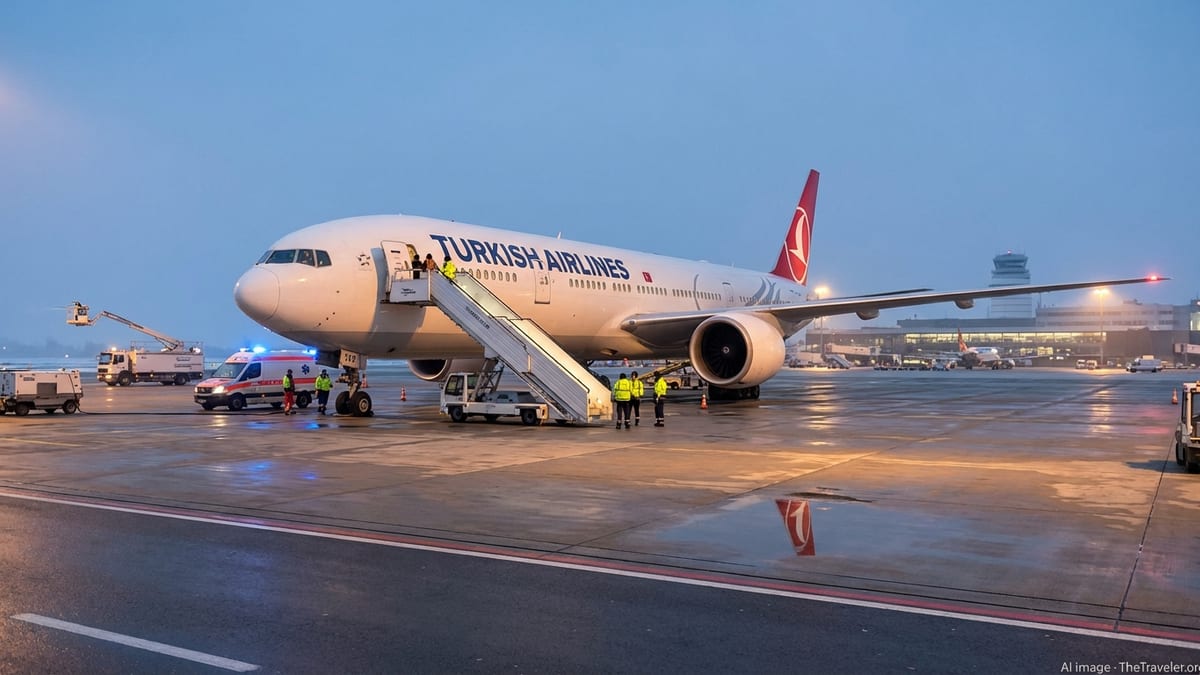
Passengers on Turkish Airlines flight TK75 from Istanbul to Vancouver faced an unexpected diversion on Thursday when the Boeing 777-300ER made an emergency landing in Vienna following a mid-air incident that prompted the crew to declare a general in-flight emergency.
Emergency Declared Over Central Europe
Flight TK75 departed Istanbul Airport on February 26 slightly behind schedule, beginning what is normally a roughly 12-hour journey to Vancouver. About two hours into the flight, as the aircraft cruised over Central Europe, the crew transmitted the 7700 transponder code, an internationally recognized signal indicating a general emergency and the need for priority handling from air traffic control.
Tracking data for the Istanbul to Vancouver route shows that Thursday’s service, operated by a Boeing 777-300ER registered TC-LJJ, broke off its northwesterly course across Europe and turned toward Austria. The wide-body jet began a descent consistent with a diversion rather than a routine step-climb or navigation change, drawing attention from flight-tracking enthusiasts as the emergency code appeared on public radar platforms.
According to early operational reports, the crew opted to divert to Vienna International Airport, one of the region’s most capable hubs for handling long-haul emergencies. The decision reflected standard airline procedures that favor large, well-equipped airports with sufficient runway length, rescue and firefighting capability, and medical facilities when an unscheduled landing is required.
Local aviation observers noted that emergency services at Vienna were placed on heightened readiness ahead of the arrival, in line with established protocols whenever an inbound aircraft has declared an emergency in the air.
Safe Landing in Vienna and Reports of a Medical Issue
The aircraft touched down safely in Vienna later on Thursday, with no immediate reports of injuries related to the diversion itself. Ground crews met the Boeing 777 on arrival, and the jet was guided to a remote stand while emergency and airport personnel completed initial inspections and assisted with disembarkation as needed.
While Turkish Airlines has yet to release a detailed public statement specifying the exact trigger for the diversion, early indications from aviation community discussions and air traffic sources point to a medical situation on board. In such cases, captains are trained to prioritize the condition of the affected passenger or crew member and to coordinate with medical professionals on the ground when deciding whether to continue or divert.
Vienna’s role as a major European hub made it a logical choice. The airport regularly handles long-haul wide-body traffic and can accommodate rapid medical interventions, including immediate ambulance transfers from the airside ramp to city hospitals. For passengers, the priority in these circumstances is ensuring the fastest possible assistance for the person in distress, even if it means significant disruption to their own travel plans.
Following the safe landing, airline operations teams typically begin arranging care for the affected individual alongside rebooking, hotel accommodation, and onward travel for other passengers whose itineraries have been disrupted by the diversion.
Operational Impacts on the Istanbul–Vancouver Route
The diversion of TK75 to Vienna is likely to have ripple effects on Turkish Airlines’ long-haul schedule, particularly on the growing Istanbul–Vancouver corridor. Flight records show that the route, which has been operating regularly through February with Boeing 777-300ER aircraft, is subject to tight turnaround windows at both ends, leaving limited buffer for unplanned events.
An aircraft forced to land several hours short of its destination may require technical checks, additional crew duty-time assessments, and newly arranged flight permissions before it can continue. In some cases, the remainder of the journey is operated later the same day or the following day, while in others a replacement aircraft and crew are dispatched. Passengers already in transit often face missed connections onward from Vancouver, resulting in further rebooking and potential overnight stays.
At large hubs like Istanbul, such incidents can also mean schedule shuffling for other long-haul services as the airline reallocates aircraft and crews to keep as much of the network running on time as possible. In peak travel seasons, these reactive adjustments become even more complex, with high load factors leaving little spare capacity across the fleet.
Travelers scheduled on upcoming TK75 departures are generally advised to monitor their booking details closely and check for operational updates, as diversion-related knock-on effects can impact departure times in the days following a significant incident.
Passenger Experience and Growing Focus on Safety Communication
For those on board TK75, the diversion to Vienna likely involved a period of uncertainty as the crew managed the emergency while keeping passengers informed. Modern airline procedures emphasize transparent, calm communication from the flight deck and cabin crew during unexpected events, acknowledging that real-time updates can substantially reduce anxiety among travelers.
In practice, a declared in-flight emergency does not necessarily indicate that an aircraft itself is in immediate danger. Aviation experts regularly point out that the 7700 code is designed to secure priority routing and support services from air traffic control, whether the issue is a technical fault, severe turbulence, smoke in the cabin, or a serious medical problem involving an individual passenger.
In recent years, the industry has placed increasing emphasis on explaining these nuances to the traveling public. Airlines and airports have expanded their use of digital channels and post-incident communications to clarify what occurred and to reassure passengers about safety standards, especially when dramatic-sounding terms like “emergency landing” make headlines.
For frequent flyers, diversions such as Thursday’s TK75 event serve as a reminder that one of the strengths of the global aviation system lies in its ability to quickly reroute aircraft to appropriate airports and mobilize support services when conditions on board demand immediate action.
Broader Context for Turkish Airlines and Vienna as a Diversion Hub
Turkish Airlines, one of the world’s largest carriers by international destinations served, routinely operates a wide network of long-haul flights over Europe, North America, Asia, and Africa from its Istanbul hub. Operating such an extensive schedule means that occasional diversions, although disruptive, are an anticipated part of airline operations, with internal procedures and regional partnerships in place to manage them efficiently.
Vienna, situated strategically in Central Europe, has become a frequent alternate airport in contingency planning for flights crossing the region. Its long runways, robust emergency services, and well-developed connections to regional hospitals and hotels make it a favored diversion point for carriers whose routes intersect Central and Eastern European airspace.
Thursday’s emergency landing of TK75 underscores how these contingency plans function in practice. When the crew identified a situation serious enough to warrant a 7700 declaration, air traffic controllers were able to coordinate a rerouting and priority landing, while airport teams in Vienna prepared to receive a fully loaded intercontinental wide-body jet on short notice.
As Turkish Airlines reviews the circumstances surrounding the diversion and passengers continue their journeys to Canada and beyond, the incident will likely be studied internally as part of the airline’s ongoing safety and service evaluations, contributing to the continual refinement of procedures that govern one of the world’s busiest international route networks.