


More news on this day
A fresh attack on a Saudi Arabian airport that killed two people and injured dozens more has sparked a wave of updated travel warnings, raising difficult questions for international visitors and transit passengers who rely on the kingdom as a major air hub.
Get the latest news straight to your inbox!
Deadly strike targets Abha and Riyadh airports
According to publicly available information from Saudi Arabia’s General Authority of Civil Aviation, the latest incident involved coordinated strikes on Abha International Airport in the southwest and King Khalid International Airport serving the capital Riyadh. Reports indicate that two people were killed at Abha, both foreign residents, and that dozens of others were injured across the two facilities, including Saudi nationals and expatriates of several nationalities.
Saudi aviation authorities described the event as one in a recent series of attacks directed at civilian aviation infrastructure, part of a broader escalation linked to Yemen’s Houthi movement and regional tensions. Earlier in October, a separate barrage targeting Riyadh’s main airport killed more than a dozen people and wounded hundreds, leading to temporary suspension of flights and diversions to other Gulf gateways.
International reporting notes that the Abha airport strike involved projectiles reaching the terminal area and landside facilities, while the Riyadh incident was associated with debris and blast damage around the passenger complex. Images carried by regional media show shattered glass, damaged facades and emergency responders moving travelers away from affected zones.
These attacks follow years of intermittent strikes on southern Saudi airports close to the Yemen border. However, the recent pattern has increasingly centered on large hubs, including Riyadh and Jeddah, which play a critical role in connecting long haul traffic between Europe, Asia, Africa and North America.
Travel advisories tighten after new casualties
In the wake of the latest fatalities, a number of governments have revised their guidance for travel to and through Saudi Arabia. The United States retains a “reconsider travel” level advisory that highlights the risk of missile and drone attacks on airports and other critical infrastructure, and notes that attacks can occur with little or no warning. Updated language in recent months has added specific caution regarding the use of major airports and photographing missile or drone activity.
The United Kingdom’s foreign travel advice for Saudi Arabia was updated in October with fresh references to the threat environment around King Khalid International Airport and to the ongoing risk of terrorism targeting aviation. The guidance advises against all travel to certain areas near the Yemen border and urges heightened vigilance at airports nationwide, including during transits that require remaining airside.
Regional outlets report that the United States embassy in Riyadh has instructed U.S. government employees to obtain special authorization before using airports in Riyadh, Jeddah and Dammam. Security alerts distributed to American citizens in the kingdom have recommended avoiding affected airport areas following attacks and reconfirming flights before departure due to potential closures and delays.
Australia and several European countries have also issued or reaffirmed cautions referencing recent airport incidents, warning that further missile or drone strikes could result in sudden airspace restrictions, extended security checks, and significant schedule disruptions for commercial airlines operating in and out of Saudi territory.
Impact on airlines, hubs and connecting passengers
Saudi Arabia has invested heavily in transforming its airports into global transit hubs, particularly Riyadh and Jeddah, which together handle tens of millions of passengers per year. The recent string of attacks has forced carriers and airport operators to adjust operations, including temporary suspension of departures, rerouting of flights, and use of remote stands or alternative terminals away from exposed areas.
Tracking data cited in international coverage after earlier October attacks showed dozens of flights canceled or diverted at Riyadh and Jeddah, with knock-on delays affecting routes between Europe and Asia that rely on Saudi stopovers. Some airlines have reportedly adjusted departure times to avoid perceived higher risk night-time windows or have scheduled additional fuel reserves in case of last minute diversions.
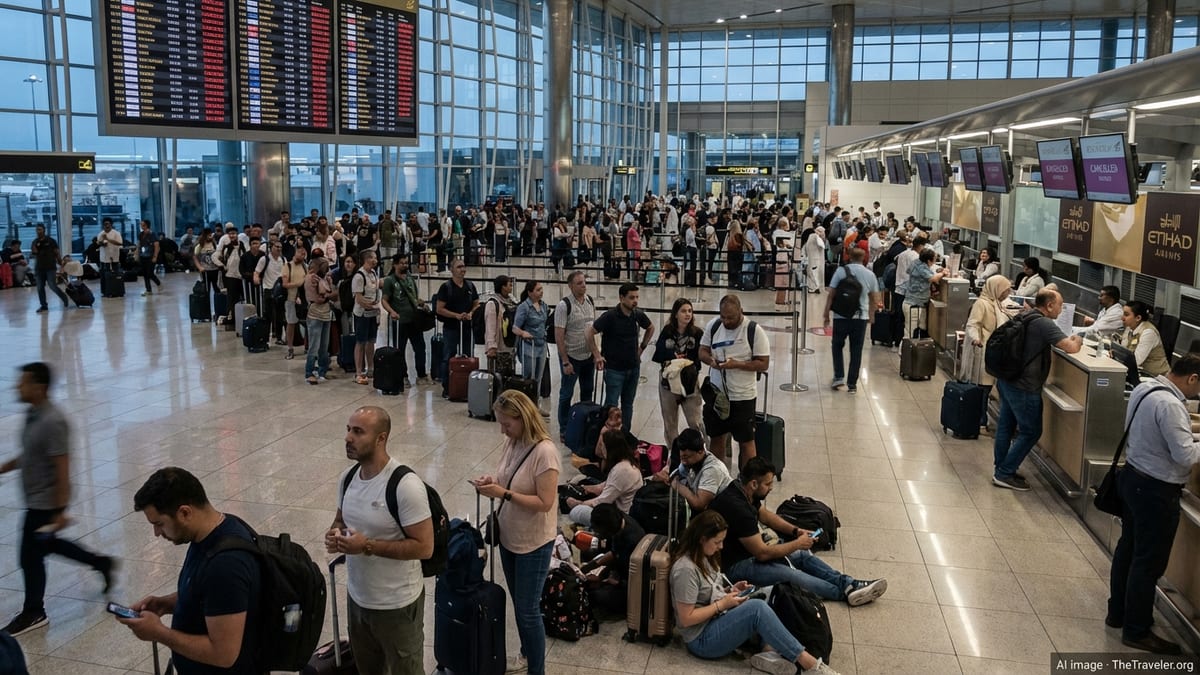
Passengers connecting through Saudi airports have faced extended time onboard aircraft while security assessments are carried out, as well as occasional terminal evacuations from airside to more protected interior areas. Reports from previous incidents at Abha and other southern airports indicate that operations can be halted quickly when a threat is detected, sometimes with only minutes of warning, leading to queues, missed connections and baggage delays.
Industry analysts quoted in international media note that sustained instability around major Saudi hubs could encourage some carriers and travelers to favor alternative Gulf gateways such as Dubai, Doha or Abu Dhabi. At the same time, Saudi authorities continue to highlight investments in air defense and hardened infrastructure intended to keep airports functioning even under elevated threat levels.
What current advisories mean for individual travelers
For leisure and business travelers, the recent casualties at Abha and Riyadh translate into a need for more careful planning rather than an automatic halt to all trips. Most major Western advisories do not prohibit all travel to Saudi Arabia but urge caution, avoidance of specific high risk border regions, and close attention to developments affecting airports.
Publicly available guidance from the United States recommends that anyone considering travel enroll in consular notification programs, monitor local media and official messages, and maintain a low profile in public areas, especially around transportation hubs. Travelers are also urged to maintain flexible itineraries and ensure that airlines and tour operators have up to date contact details in case of sudden schedule changes.
The United Kingdom and other European governments advise travelers to allow extra time at airports in Saudi Arabia, be prepared for enhanced screening, and follow instructions from airport staff during any security incident or alert. Insurance policies are another key consideration, as some plans restrict coverage in regions where government advisories reach the highest warning levels or where conflict-related incidents have recently occurred.
Travelers transiting through Saudi airports without entering the country should pay particular attention to airline notices and the status of connecting flights. Even when airspace remains technically open, temporary suspensions of ground operations can lead to missed onward legs. Where possible, booking through tickets with protected connections, rather than separate point to point segments, can reduce financial and logistical risk if disruptions occur.
Practical steps for those with imminent trips
For travelers with confirmed itineraries involving Saudi airports in the coming days or weeks, publicly available safety guidance converges on several practical steps. First, travelers should check the latest travel advisory issued by their own government on the day of departure, as wording can change rapidly following incidents like the Abha and Riyadh attacks.
Second, passengers are encouraged to reconfirm flight status directly with their airline before leaving for the airport, including both departure and arrival conditions. In recent incidents, airlines have sometimes restored limited services while keeping certain terminals or gates closed, making it important to know which check in area and security checkpoint to use.
Third, travelers should build extra time into their plans, both for ground transfers and for security processes at the airport. Enhanced screening, ID checks and occasional terminal reconfigurations can add to normal processing times, especially at peak travel periods. Some airlines and travel management companies have advised corporate travelers to aim for earlier departures in case same day meetings or connections are affected by short notice disruptions.
Finally, individuals with a low tolerance for security risk, or those traveling with children, older relatives or people with reduced mobility, may wish to consult with airlines or travel agents about alternative routing options that avoid current hotspots. Published advisories emphasize that the security situation remains fluid, and that decisions about whether to proceed, reroute, or postpone travel are ultimately personal judgments that should weigh the latest factual information against individual circumstances.