


More news on this day
Two foreign nationals were killed and dozens of other passengers injured in a recent strike on a Saudi regional airport, prompting updated government travel warnings and renewed concern over the safety of civilian aviation across the kingdom.
Get the latest news straight to your inbox!
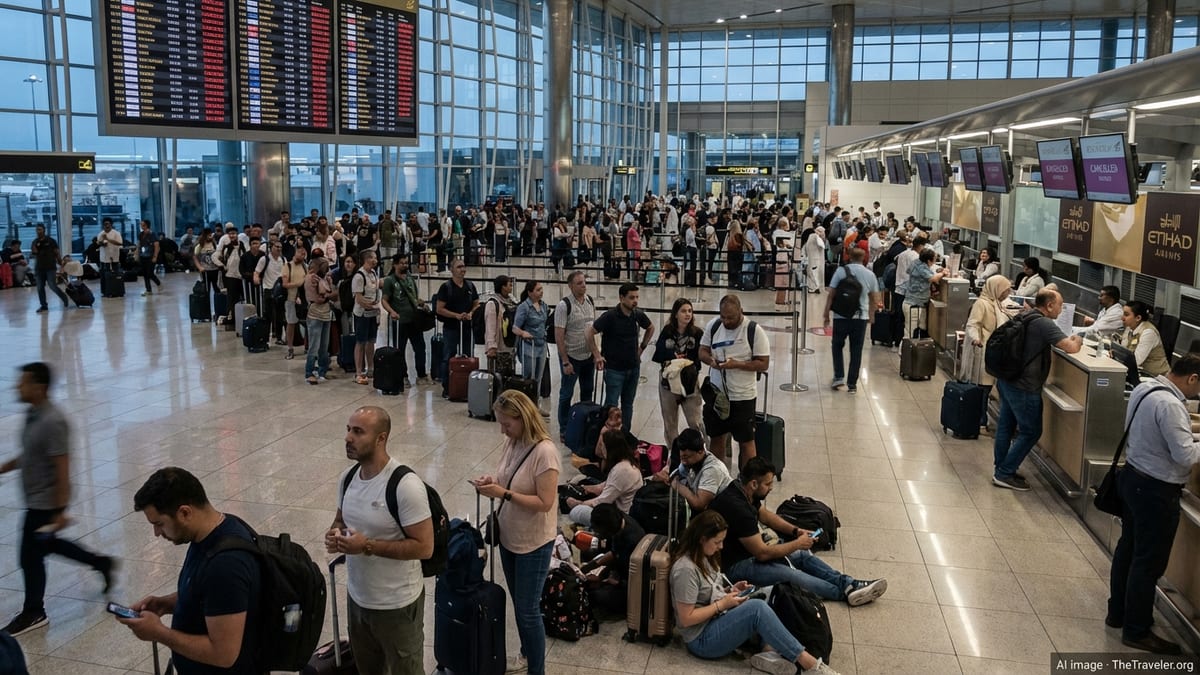
Deadly strike adds to series of airport attacks
Recent reporting from regional and international outlets indicates that the latest fatalities occurred during an attack on Abha International Airport in southern Saudi Arabia, part of a wider pattern of strikes on civilian aviation facilities this month. Publicly available information describes explosives hitting the terminal area used by commercial passengers, killing two expatriate women and wounding more than two dozen other travelers and staff.
The Abha incident followed earlier attacks on King Khalid International Airport in Riyadh, where multiple projectiles targeted both airport infrastructure and a Saudia aircraft on the ground. Open-source summaries from Saudi aviation authorities describe at least three Saudi nationals killed and several others injured in the Riyadh strikes, along with significant disruption to flight operations.
Taken together, these events form part of a broader escalation linked to Yemen’s Houthi movement and other armed actors that have repeatedly targeted airports and energy facilities in Saudi Arabia. Recent analyses of the conflict highlight the growing range of missiles and drones being used against sites hundreds of kilometers from the Yemeni border, increasing the exposure of major transport hubs.
While official casualty figures vary by incident, the cumulative toll from airport-related attacks this month now includes Saudi citizens, foreign residents, and visiting passengers from multiple countries, underscoring the international character of the risk.
New government advisories urge travelers to reconsider plans
In the wake of the latest strike, several governments have updated formal guidance on travel to Saudi Arabia, with particular emphasis on the threat to airports and aviation infrastructure. The United States now maintains a Level 3 advisory for the kingdom, urging travelers to reconsider nonessential trips and highlighting the danger posed by missiles and drones launched from Yemen and by broader regional tensions.
Publicly accessible advisory text notes that U.S. government personnel in Saudi Arabia require special authorization to use any airport in the country, reflecting heightened internal risk assessments. The guidance also references the possibility of sudden route closures, debris falling near runways, and the potential for further attacks to cause mass-casualty events or extended airport shutdowns.
In the United Kingdom, the latest foreign travel advice for Saudi Arabia draws specific attention to King Khalid International Airport in Riyadh, referencing its recent targeting and the ongoing threat from terrorism. The notice warns that the facility has been struck by missiles and may face further attempts, advising travelers to remain alert to official updates and to be prepared for delays or cancellations at short notice.
Other diplomatic missions in the region, including European and Asian embassies, have circulated security messages and alerts to their nationals. These advisories generally recommend avoiding nonessential time in and around affected airports, registering contact details with consular services, and closely monitoring carrier announcements before departure.
Impact on flights, connections, and route planning
The attacks have already produced notable disruptions in air traffic, particularly at Riyadh’s main gateway. Airline notices and aviation-tracking data cited in recent coverage show waves of cancellations and diversions following each strike, with some long-haul services rerouted to Jeddah or Dammam when operational conditions allowed.
For travelers, the most immediate consequences include missed connections, extended layovers, and unplanned overnight stays far from intended destinations. Some carriers have temporarily consolidated or reduced frequencies on routes into affected airports, prioritizing daylight arrivals and departures where local regulations and security assessments recommend it.
Travel industry reports also point to a rise in involuntary rebookings and schedule changes, particularly for passengers transiting Saudi hubs on journeys between Europe, Asia, and Africa. In many cases, airlines are waiving change fees when itineraries involve airports that have been directly targeted or are subject to heightened security alerts, but policies differ considerably between carriers.
Insurance implications are also becoming more complex. Underwriters are closely reviewing war and terrorism exclusions in standard travel policies, and some plans may not automatically cover disruptions caused by missile or drone strikes. Travelers booking itineraries that use Saudi airports as transit points are being encouraged, in publicly available guidance, to examine policy wording carefully and consider add-on coverage where it is available.
What travelers should know before transiting Saudi airports
For those who still plan to fly into or through Saudi Arabia, recent advisories and expert analyses suggest a number of practical steps to reduce risk and uncertainty. The first is to verify, shortly before departure, whether the intended airport is operating normally. This typically involves checking both the airline’s own status page and airport announcements, as well as any new security alerts from home-country embassies.
Passengers are also being encouraged to allow extra time for security screening and potential route adjustments on approach or departure. In periods following attacks, authorities have been known to close specific terminals, shift check-in and boarding to alternate facilities, and temporarily halt ground movements while debris is cleared or investigations proceed.
Another consideration is itinerary design. Travel planners note that, where possible, it may be prudent to avoid tight connections through Riyadh or Abha during periods of elevated threat, opting instead for longer layovers or alternative hubs in the region. Some global booking platforms now flag higher-risk airports within their search interfaces, allowing travelers to prioritize routings via other cities when schedules permit.
Finally, travelers are advised to keep essential documentation, medications, and valuables in hand luggage in case of rapid evacuations from gate areas or extended delays on the tarmac. Having immediate access to passports, visas, and proof of onward travel can expedite rebooking or temporary entry arrangements if a connecting flight is canceled due to a security incident.
Escalating regional tensions keep risk outlook uncertain
The security picture around Saudi airports remains fluid, shaped by developments in Yemen, the broader confrontation involving Iran, and shifting military postures among Saudi partners. Recent analyses from international think tanks describe how the resumption of large-scale hostilities this year shattered earlier ceasefire understandings and opened the way to more frequent cross-border strikes.
The intensifying use of unmanned aerial systems and longer-range missiles has complicated traditional defenses around airports, which were previously considered relatively insulated from front-line fighting. Civil aviation authorities now face the dual challenge of protecting runways and terminals from direct hits while also guarding against falling debris from intercepted projectiles in the wider approach corridors.
Given this environment, most public risk assessments stop short of predicting a rapid return to normal. Instead, they emphasize the likelihood of intermittent disruptions and localized spikes in danger as armed groups test new capabilities or seek leverage in ongoing negotiations. For travelers, this means that the decision to use Saudi airports, particularly in Riyadh and Abha, will continue to require close attention to evolving advisories in the weeks ahead.
Until there is a sustained reduction in attacks or a more durable political settlement in Yemen and the wider region, civilian aviation in Saudi Arabia is expected to remain exposed to periodic shocks, keeping airlines, airport operators, and passengers on a cautious footing.