


More news on this day
A short domestic flight in south-western Japan turned into an airport nightmare this week when a live snake was discovered inside the cockpit, forcing the airline to cancel the service and launch a detailed safety inspection.
Get the latest news straight to your inbox!
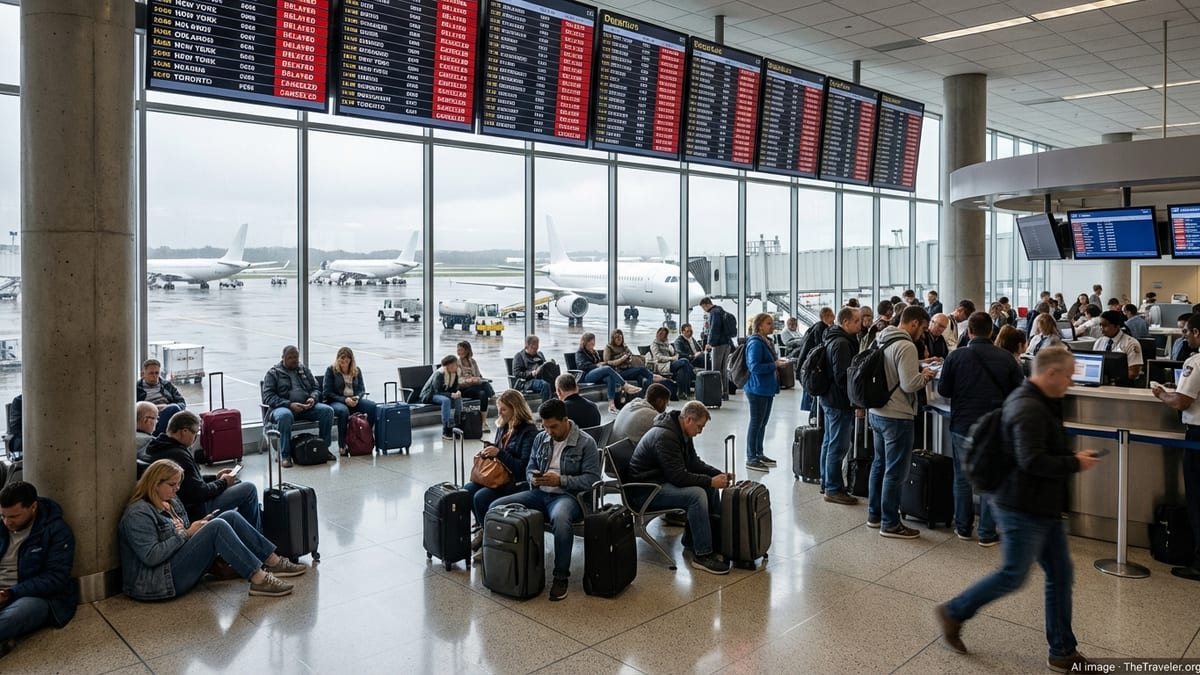
Snake discovery halts Fukuoka to Kagoshima service
Publicly available information from Japanese and international news outlets indicates that the incident took place on October 19, 2026, at Fukuoka Airport in south-western Japan. The aircraft, operated by Japan Air Commuter, a regional carrier in the Japan Airlines group, was scheduled to operate flight JAL3653 from Fukuoka to Kagoshima, a route of around 250 kilometres across Kyushu.
Reports indicate that a pilot preparing for departure noticed an unexpected movement beneath the floor area of the cockpit while the turboprop aircraft was on the stand. Subsequent checks suggested a small animal had found its way under the cabin carpet close to the front of the aircraft, prompting an immediate halt to departure preparations.
According to coverage from Japanese media cited by multiple international outlets, the aircraft involved was an ATR 42, a twin‑engine turboprop commonly used on short regional sectors. With the snake’s exact location unclear and the possibility that it had moved into areas that were difficult to access, the decision was taken to cancel the flight rather than risk departing with an unidentified animal still inside.
Passengers booked on the Fukuoka to Kagoshima service were transferred to alternative flights, and the aircraft was removed from service so that maintenance staff and wildlife specialists could inspect the interior in controlled conditions.
How the snake was found and recovered
Further inspection on October 20 revealed the snake’s hiding place. Coverage in Japanese and regional Asian media outlets describes a mechanic working inside the aircraft who discovered the reptile under the carpet in the forward cabin area at around early afternoon local time, roughly 24 hours after the original cancellation.
Reports describe the animal as a live, approximately 40‑centimetre striped snake. The species has not yet been publicly confirmed, and coverage notes that it was not immediately clear whether it was venomous. Wildlife personnel captured the snake at Fukuoka Airport, and the animal was removed without reported injury to staff.
Public information released through press reports notes that the airline had not determined how the snake entered the aircraft. Possibilities under consideration include the aircraft’s time parked on the apron at regional airports or contact with cargo or ground equipment, but there is no confirmed explanation. The carrier has publicly stated through media reports that this is the first time it has experienced such an incident.
The aircraft remained grounded while checks were carried out, including inspection of floor panels, wiring runs and other concealed spaces in the cabin and cockpit. There were no reports of additional animals being found, and subsequent coverage indicates that the aircraft was expected to return to service once safety inspections were completed.
Passenger impact and airport response
For travellers, the discovery translated into an abrupt cancellation of a short but busy regional service. Fukuoka to Kagoshima is an important domestic link in Kyushu, connecting a major urban centre with a smaller regional city that also serves as a gateway to islands and tourist destinations in southern Japan.
Media reports describe a cascade of disruption typical of short‑haul cancellations. Passengers were rebooked onto later flights or alternative services, while others faced missed onward connections and changes to same‑day plans. The airline arranged for the aircraft to be towed to a remote stand or maintenance area so inspections could continue without affecting other gate operations.
Fukuoka Airport itself continued operating, with the disruption contained mainly to the affected flight and associated ground‑handling resources. However, the highly unusual nature of the incident drew significant attention across Japanese news networks and international travel media, with images of the regional turboprop at its stand circulating widely.
Publicly available information from Japanese outlets indicates that no injuries were reported and that there was no emergency declared in flight, as the issue was identified before taxi or take‑off. Even so, the episode created an unsettling experience for travellers who suddenly found their routine regional hop cancelled for a reason seldom associated with modern commercial aviation.
Why airlines take wildlife incursions so seriously
Although this event was rare, aviation specialists frequently point out in public reports that even small animals can pose outsized risks once inside an aircraft. Snakes, birds, rodents and insects can potentially interfere with wiring, sensors or control runs, or cause distraction to crew members at critical phases of flight, which is why airlines tend to react conservatively when wildlife is suspected on board.
Press coverage of the Fukuoka case notes that the pilot’s initial sighting of unexplained movement near the cockpit floor was enough to trigger a precautionary stand‑down, followed by the cancellation once the animal could not be located. This aligns with broader risk‑management practices in commercial aviation, where uncertain threats to safety are generally treated on the assumption of a worst‑case scenario until proven otherwise.
The discovery has also highlighted the many routes by which wildlife can interact with airport operations. Aircraft parked on open stands, particularly at regional airports, may be accessible to local fauna that find their way onto the apron. Open doors during cleaning and catering, and cargo handling operations near grassy areas, all create potential pathways that airport operators are increasingly monitoring.
Recent years have seen other high‑profile reports of snakes and small animals discovered on aircraft around the world, some during cleaning between flights and others on arrival after long‑haul sectors. In many of those cases, flights were delayed while the animal was located and removed. The Fukuoka incident stands out because the aircraft never left the gate on the scheduled service, underscoring how early detection can prevent more serious in‑flight complications.
What this means for future flights in Japan
The incident is already prompting discussion in Japanese aviation circles and travel media about potential adjustments to wildlife‑management procedures at airports in the region. Publicly available coverage suggests that Japan Air Commuter and its parent group are reviewing how aircraft parked at regional stands are inspected and what additional measures might reduce the chance of similar events.
Any formal changes have not yet been detailed in public reports, but industry commentary indicates that options could include closer visual checks of wheel wells and lower fuselage areas, adjustments to how long cabin doors remain open while unattended and coordination with airport companies to monitor grassed areas and drainage channels close to stands.
For passengers flying within Japan, the episode serves as a reminder that even highly standardised domestic operations can be affected by unexpected local factors. However, public data from Japan’s civil aviation sector and historical safety records underline that such incidents remain exceptionally rare, and that airlines tend to err firmly on the side of caution.
With the snake now removed and the aircraft subject to detailed inspection, attention is turning to how lessons from this unusual case might quietly influence airport procedures across Japan. For most travellers, the only noticeable effect may be the occasional extra few minutes on the ground while ground crews complete checks designed to keep both passengers and wildlife safely separated.