


More news on this day
Australia has sharply upgraded its travel advice for Saudi Arabia, warning citizens of serious risks linked to recent missile strikes, volatile security conditions and growing concerns for travellers using Riyadh’s main international airport.
Get the latest news straight to your inbox!
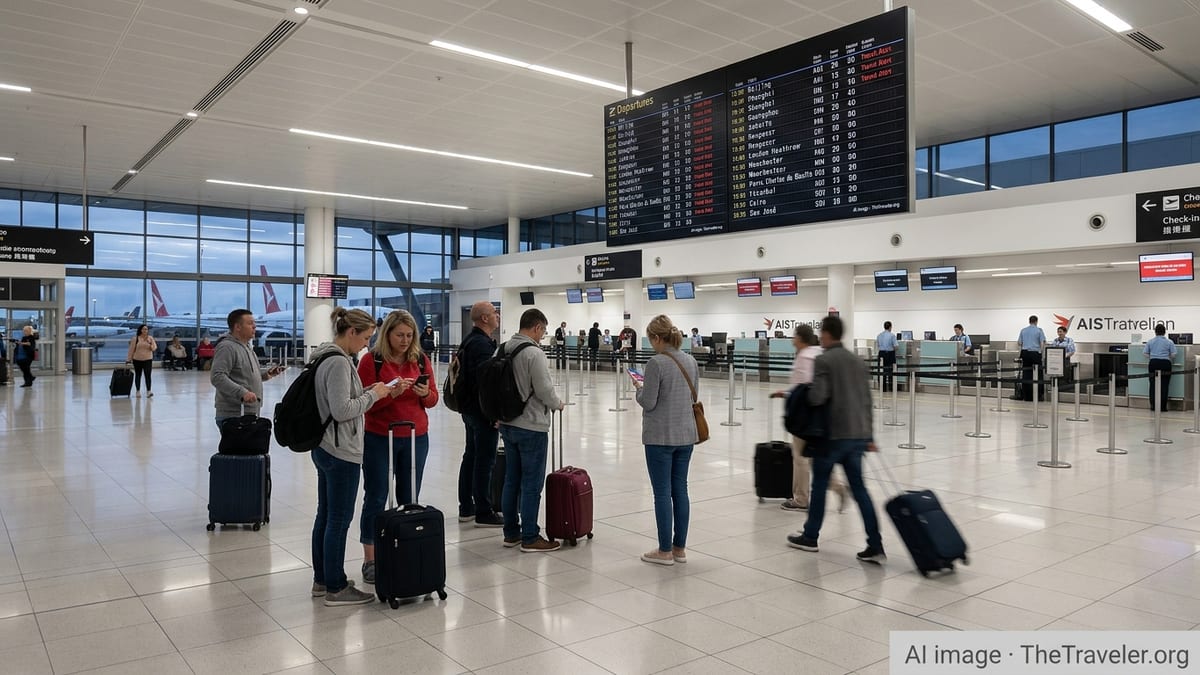
New ‘do not travel’ warning for parts of Saudi Arabia
According to publicly available travel advisories on the Australian government’s Smartraveller service, the overall advice level for Saudi Arabia has recently been raised to its highest setting in response to a deteriorating security environment. The change reflects an assessment that the risks from conflict-related violence and instability have escalated beyond what many leisure and business travellers are prepared to accept.
Information released through government channels indicates that the strictest warning applies to specific regions in the south of Saudi Arabia, particularly areas close to the border with Yemen. These zones are described as exposed to cross-border attacks and other conflict-related activity, including the possibility of missile or drone strikes. The advisory notes that conditions can change with little or no warning, making it difficult for travellers to predict when routes or facilities may become unsafe.
Travel guidance summarised in media coverage of the new advice states that Australians are urged not to enter designated high-risk zones under any circumstances. Those already present in these areas are encouraged to consider leaving as soon as it is safe to do so, taking into account the availability of commercial transport and the risk of movement during periods of heightened tension.
The heightened warning sits at the top of a four-step scale that ranges from exercising normal safety precautions to avoiding all travel. Smartraveller’s highest level is typically reserved for locations affected by armed conflict, widespread civil unrest or a severe breakdown in law and order.
Missile strike at Riyadh airport triggers urgent alerts
Recent reports of a deadly missile strike at King Khalid International Airport in Riyadh have been a central factor in Australia’s more severe advice. Coverage by Australian and international media outlets describes how the attack, claimed by Yemen’s Houthi movement, resulted in multiple fatalities and hundreds of injuries at one of the region’s busiest aviation hubs.
In the wake of the incident, updated public guidance urges Australians to reconfirm any flights into or out of Riyadh before travelling to the airport. Travellers are advised to maintain flexible itineraries, monitor local news and aviation updates closely and remain prepared for sudden cancellations or diversions affecting both direct services and onward connections.
The warnings focus not only on the immediate risk from further strikes but also on the secondary impacts for travellers, including disruption to airline schedules, potential congestion as security checks are intensified and delays at immigration and baggage processing. Information made available through official advisories highlights that airlines may alter routing decisions with little notice if the threat level to airspace changes.
Reports also emphasise that security procedures around critical infrastructure such as airports, transport hubs and government facilities have been tightened, with travellers likely to encounter additional screening, controlled access to terminal areas and restrictions on photography or filming.
Security risks for visitors across the kingdom
Beyond specific border regions and aviation facilities, Australia’s warning points to a broader range of security risks facing visitors to Saudi Arabia. Publicly accessible advisories refer to the possibility of terrorist attacks against public places, including locations popular with foreigners such as shopping centres, hotels, restaurants and large events.
There is also concern about the impact of regional tensions on domestic stability. The guidance notes that protests and political gatherings can emerge quickly, and that security responses may be robust. Travellers are urged to avoid demonstrations, follow the directions displayed in local security notices and move away from any sign of unrest as soon as it becomes apparent.
Road travel presents its own set of challenges. Reports summarising the government’s advice describe high rates of serious traffic accidents, long highway distances between major cities and harsh desert conditions that can make breakdowns particularly dangerous. Travellers are encouraged to use reputable transport providers, ensure vehicles are well maintained and carry sufficient water and emergency supplies when driving outside urban centres.
Published travel guidance adds that health facilities in major cities are generally well resourced, but access to advanced medical care may be limited in remote areas. Australians planning to travel are strongly encouraged to secure comprehensive travel insurance that explicitly covers high-risk destinations and medical evacuation costs.
Legal, cultural and technology constraints on travellers
Australia’s advisory also highlights legal and cultural factors that can create additional risks for visitors to Saudi Arabia. Public information explains that local laws are based on a strict interpretation of Islamic principles, with punishments for some offences significantly more severe than in Australia. Activities that may attract fines or minor penalties elsewhere, such as public displays of affection, certain social media posts or possession of prohibited items, can lead to detention, prosecution or deportation.
Reports note that behaviour related to alcohol, drugs and morality offences is particularly sensitive. Alcohol is heavily restricted, and penalties for possession or trafficking of illegal drugs are described as extremely severe. Same-sex relationships and public advocacy on issues related to sexuality or religion may also carry serious legal consequences.
Digital activity is another area of concern. Publicly available information about Saudi regulations indicates that online posts deemed critical of religious or political authorities can trigger investigations, especially when combined with in-country travel. Australians are advised to review their social media content and privacy settings before arrival and to avoid online commentary that could be interpreted as offensive or destabilising.
The advisory further encourages travellers to respect local customs around dress and behaviour. While dress codes have eased in some urban areas, guidance suggests that visitors, particularly women, should remain conservative in clothing choices and familiarise themselves with regional expectations before visiting religious or rural communities.
What Australian travellers should do now
For Australians with existing plans involving Saudi Arabia, publicly available guidance recommends a careful reassessment of the necessity of the trip in light of the new warning. Travellers are advised to consider whether business engagements can be postponed or conducted remotely and whether leisure trips can be rerouted through destinations assessed as safer.
Those who decide to proceed are urged to register their details on official traveller registration services where available, subscribe to email or app-based updates for their destination and keep close contact with family or trusted contacts in Australia. It is also recommended that travellers maintain multiple means of communication, including roaming-capable mobile phones and backup messaging options.
Media reports summarising expert commentary suggest that travellers should review their insurance documents line by line to confirm coverage in countries or regions under a high-level travel warning. Some policies may exclude claims arising from conflict-related incidents or fail to cover cancellation costs once an official advisory reaches its highest tier.
Finally, the advisory encourages Australians transiting the broader Middle East to check the status of all transit points, not only their final destination. Changes in threat levels affecting neighbouring states can influence airspace permissions, flight routing and the availability of alternative connections, with potential knock-on effects for travellers across Europe, Asia and Africa.