


More news on this day
The United States has renewed an urgent warning against travel to Lebanon, keeping the country under its highest Level 4 “Do Not Travel” advisory and urging American citizens to avoid visiting or to depart while commercial flights are still available.
Get the latest news straight to your inbox!
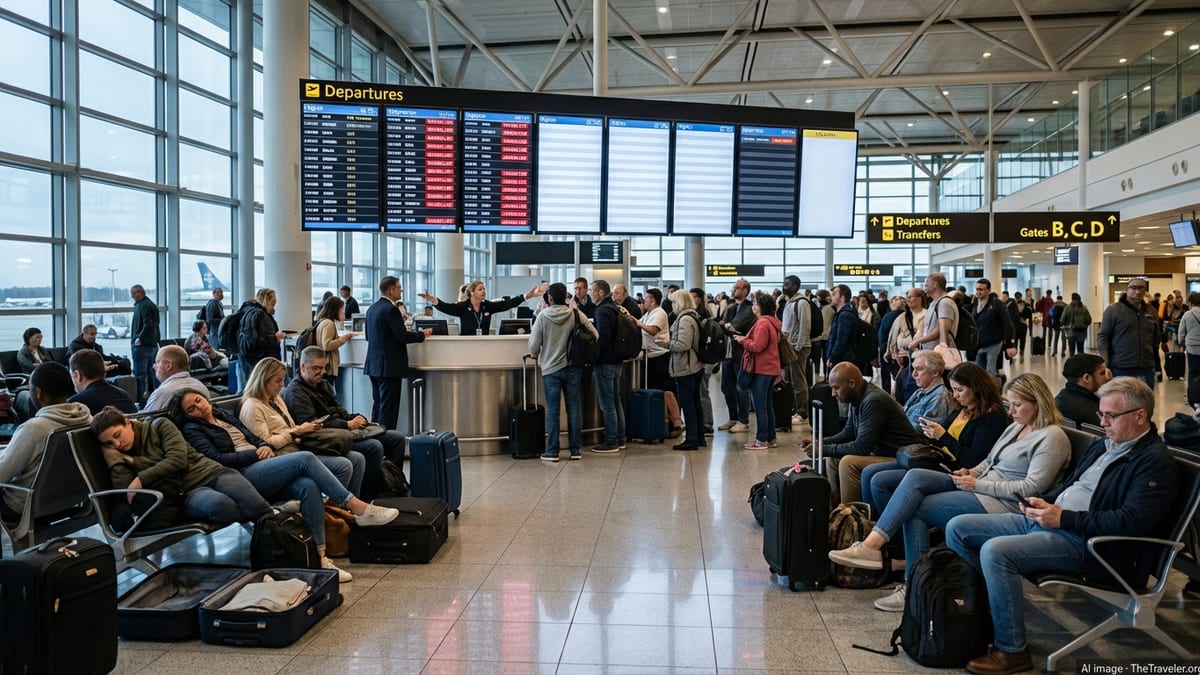
Level 4 warning: Lebanon labeled too dangerous for U.S. travelers
Publicly available information from the U.S. State Department shows that Lebanon remains under a Level 4 “Do Not Travel” advisory, the most severe warning in the department’s four-tier system. The advisory, updated in 2026, cites a combination of crime, terrorism, civil unrest, kidnapping, the presence of unexploded landmines and the ongoing risk of armed conflict as reasons for the designation.
The Level 4 label indicates that U.S. citizens are strongly urged not to visit the country for any reason and, if already present, to consider leaving as soon as it is safe to do so. The State Department’s general guidance for Level 4 destinations stresses that the U.S. government may have very limited or no ability to assist its citizens during an emergency, including arranging evacuation or providing consular support.
Lebanon has been in the highest risk category for an extended period, and recent updates have reinforced rather than eased that stance. Regional tensions, periodic cross-border strikes and localized clashes have kept security conditions volatile, particularly in areas close to conflict zones.
The advisory places Lebanon alongside a small group of countries worldwide where U.S. travelers are told to avoid non-essential trips entirely. For travelers accustomed to navigating Level 2 or Level 3 destinations, the Level 4 designation signals an environment where risks are judged to be acute, unpredictable and beyond what standard travel precautions can reasonably address.
Security picture: conflict spillover and internal flashpoints
Country information pages and related advisories describe a complex security landscape across Lebanon. Areas in the south, especially those south of the Litani River, are identified as high-risk due to the potential for armed clashes and exchanges of fire linked to the broader regional confrontation. Border regions near Syria are also highlighted as sensitive, with reports pointing to the risk of terrorism, armed groups and sporadic violence.
Urban zones are not immune. Travel guidance singles out certain neighborhoods of Beirut and the northern city of Tripoli as locations where political tensions, armed incidents and criminal activity can flare with little warning. Refugee camps are also highlighted as particularly unstable, with elevated risks linked to armed factions, restricted access for security forces and limited state control.
In addition to active conflict and terrorism concerns, the advisory points to persistent problems with kidnapping and crime. Past incidents involving foreign nationals, local political figures and businesspeople have contributed to a perception that abduction for ransom or political leverage remains a serious hazard in parts of the country. The presence of unexploded ordnance and landmines, especially in certain rural and border areas, adds another layer of physical risk that is unusual even among high-alert destinations.
Analyses from international security and travel-risk consultancies underline that conditions on the ground can change in hours, rather than days. Road closures, airport disruptions, localized curfews and intermittent clashes are all cited as plausible short-notice developments that can trap visitors or make routine movement difficult.
Guidance for Americans in or near Lebanon
While the advisory urges U.S. citizens to avoid travel to Lebanon entirely, publicly available guidance also addresses those who are already in the country. Official materials recommend that Americans maintain updated travel documents, develop contingency plans that do not rely solely on U.S. government assistance and closely track security alerts from the nearest U.S. embassy or consulate.
Travel-risk notices encourage individuals to keep family or trusted contacts informed of their movements, to avoid demonstrations and large gatherings, and to steer clear of areas known for past violence or political tensions. Travelers are also advised to monitor local media and trusted international outlets closely, as changes in the regional security picture can have immediate implications for Lebanon’s internal stability and airspace.
Commercial air links are described as a critical lifeline. Past crises in Lebanon and elsewhere in the region have shown that once security deteriorates beyond a certain point, airlines may rapidly scale back or suspend service. The travel advisory framework warns that waiting for a clearer sign of danger can leave travelers with sharply reduced options to exit, higher ticket prices or the need to route through multiple third countries.
For Americans considering trips elsewhere in the Middle East, the Lebanon warning is presented in the context of a broader regional caution. A worldwide security alert issued in 2026 urged U.S. citizens, particularly those heading to or transiting through the Middle East, to exercise heightened vigilance, review contingency plans and stay alert to official updates as tensions ebb and flow.
Impact on airlines, tour operators and regional itineraries
The continued Level 4 designation for Lebanon is reshaping how airlines, cruise lines and tour operators approach the eastern Mediterranean. Industry digests tracking the Middle East crisis and travel patterns report that many major carriers no longer schedule regular commercial flights to Beirut from certain hubs, or adjust capacity frequently in response to the security environment and insurance considerations.
Some regional and European airlines still serve Lebanon, but schedules can be revised at short notice, and passengers may encounter additional checks, document screening or rerouting through third countries. Travel-management firms note that corporate clients frequently classify Lebanon as off-limits for non-essential business trips, aligning internal policies with the U.S. and allied government advisories.
For leisure travelers, the advisory disrupts common multi-country itineraries that once combined Lebanon with destinations such as Jordan, Cyprus or Turkey. Travel planners now often recommend removing Lebanon from regional routes altogether and instead focusing on neighboring countries with lower advisory levels, or postponing Middle East trips if the objective was to spend significant time in and around Beirut.
Travel insurers also factor government advisories into policy conditions. Many standard policies either exclude coverage when visiting locations under a “Do Not Travel” designation or require additional specialist coverage that can be expensive and tightly limited. Prospective visitors weighing the risks must therefore consider not only physical safety but also the possibility that medical evacuation, trip interruption and liability coverage may be restricted or unavailable.
What the advisory means for future travel plans
The warning for Lebanon illustrates how quickly a destination can move from niche favorite to no-go zone in the eyes of major travel markets. Prior to the deepening of regional tensions, the country’s mix of Mediterranean coastline, historic sites and renowned food culture had begun attracting a new wave of independent travelers, particularly from Europe and the wider Middle East.
With the Level 4 advisory still in place as of mid-October 2026, U.S.-based travelers are being urged to reconsider any near-term plans that involve entering Lebanon, even for brief stopovers. Industry observers note that some visitors continue to go despite official warnings, but public guidance stresses that those decisions are made at personal risk, with limited recourse if conditions deteriorate.
Trip planners monitoring developments suggest that travelers adopt a flexible approach to Middle East itineraries over the coming months. That may mean building plans around destinations currently rated at lower advisory levels, keeping accommodation and flight bookings as changeable as possible, and being prepared to pivot to entirely different regions if the security situation worsens.
For now, the U.S. message regarding Lebanon remains unequivocal: in light of the security environment, Americans are urged not to travel to the country for any reason, and those already there are strongly encouraged to make careful, time-sensitive decisions about their safety and ability to leave.