


More news on this day
The United States has elevated its travel advisory for Saudi Arabia to Level 3, urging travelers to reconsider nonessential trips as renewed missile and drone attacks target airports, energy infrastructure and areas near the border with Yemen.
Get the latest news straight to your inbox!
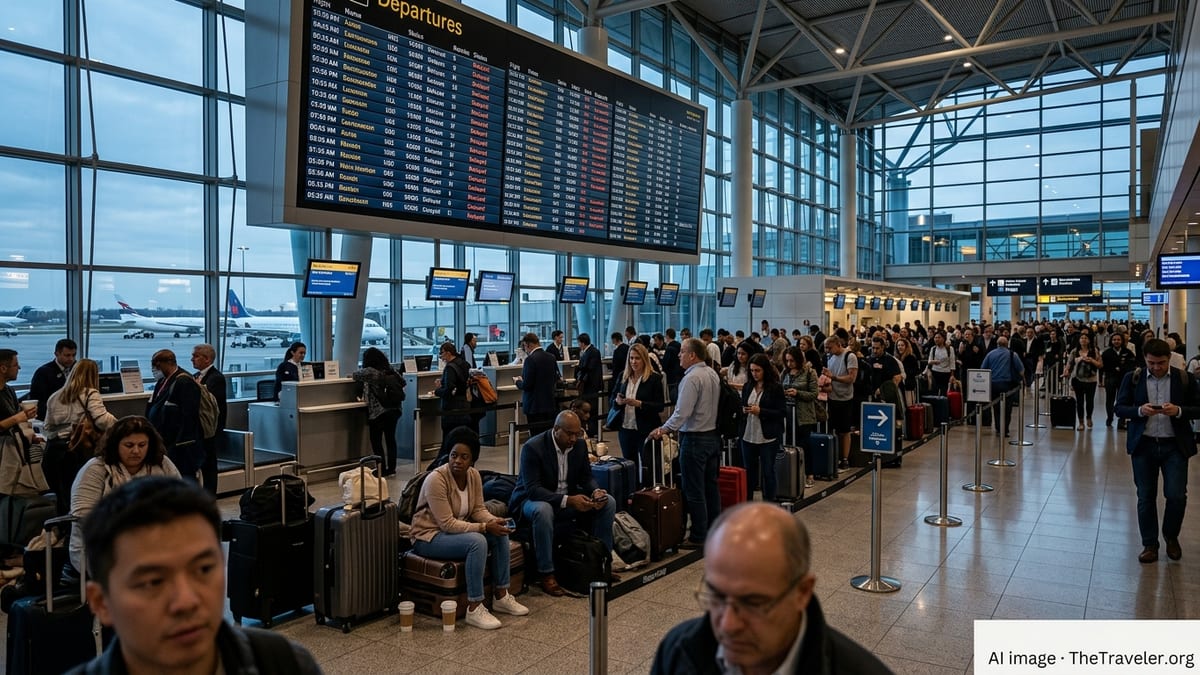
Advisory Updated to Level 3 Amid Intensifying Regional Conflict
The latest U.S. State Department advisory for Saudi Arabia, issued on October 12, 2026, maintains the country at Level 3, a category that urges travelers to reconsider travel because of heightened safety and security risks. Publicly available information describes the advisory as driven primarily by terrorism concerns and broader regional conflict, with specific warnings related to ongoing missile and drone threats.
State Department material explaining the four-level system notes that a Level 3 advisory reflects a significantly increased likelihood of risk to personal safety compared with routine international travel. The guidance highlights that conditions can change with little warning and that government assistance may be constrained in the event of a rapidly evolving security situation.
The advisory for Saudi Arabia is being issued in the context of a wider pattern of alerts for the Middle East, including a worldwide caution that encourages travelers to carefully review route choices, transit points and contingency plans when moving through the region.
Recent Attacks on Airports and Energy Infrastructure
Reports from international media outlets describe a marked escalation in attacks on civilian infrastructure inside Saudi Arabia since early October 2026. Riyadh’s King Khalid International Airport has been struck repeatedly, with one attack on October 10 reported to have killed at least a dozen people and injured more than 300, according to widely cited coverage by global wire services and regional broadcasters.
Follow-up reporting indicates that the airport was hit again the next day, causing further damage and renewed disruption to operations. Aviation-focused advisories referenced in those reports warn that missile and drone activity, as well as interception efforts by Saudi air defenses, have increased the risk to civil aviation in the area around Riyadh.
In the eastern city of Dhahran, international news agencies have also described a recent strike on facilities associated with the national oil company, underscoring the vulnerability of energy infrastructure that had previously been considered heavily protected. Analysts quoted in those reports suggest that the pattern of attacks raises questions about the ability of local defenses to fully shield major economic and transport hubs.
Travel guidance issued by other governments, including Australia, Canada and the United Kingdom, has been updated in parallel, warning of potential further strikes against airports, industrial plants and shipping in the Red Sea. Several advisories specifically reference the risk of debris from intercepted missiles or drones falling in populated or heavily traveled areas.
Border Regions and Internal Movement Restrictions
Travel advisories from the United States, Canada and others continue to identify the provinces of Asir, Jazan and Najran, along the Saudi border with Yemen, as areas of particular concern. Public guidance from these governments urges their nationals to avoid all travel, or at minimum any nonessential travel, to these southern regions due to the risk of cross-border strikes, military operations and falling debris.
Information published by the U.S. government further notes that official personnel face formal restrictions on movement within a defined distance of the Yemen border, reflecting an assessment of elevated risk in those zones. Similar cautions are echoed in European and Australian travel advice, which cites the resumption of direct conflict involving Houthi forces and Saudi-led coalition assets in 2026.
Within the rest of Saudi Arabia, foreign travel advisories differentiate between major urban centers and more remote areas. While central districts of Riyadh, Jeddah and Dammam remain accessible to commercial air services, the combination of sporadic strikes and emergency air-defense activity has led multiple governments to recommend that travelers maintain flexible itineraries and be prepared for sudden route changes or shelter-in-place instructions.
Impact on Flights, Transit and Travel Planning
Airlines serving Saudi Arabia have already adjusted schedules and routings in response to the recent attacks, according to publicly available flight data and aviation reporting. Some carriers have reduced frequencies into Riyadh and Jeddah, while others have temporarily shifted traffic to alternative airports or increased ground times to accommodate enhanced security checks and airspace management measures.
Travel advisories stress the importance of monitoring both airline communications and official government alerts when planning trips that involve transit through Saudi airspace or airports. Guidance from several foreign ministries encourages passengers to keep mobile devices charged, ensure they receive carrier notifications, and consider purchasing tickets that allow changes without substantial penalties, given the potential for short-notice cancellations or rerouting.
Travel planning is also being affected by the broader regional security picture. Separate warnings about maritime risks in the Red Sea and Gulf of Aden, including previous attacks on commercial shipping, have led to adjustments in cruise itineraries and container shipping routes. For passengers, this can mean altered cruise schedules, changes in embarkation ports, or the replacement of at-sea days with additional time in neighboring countries considered less exposed to current hostilities.
What a Level 3 Advisory Means for Prospective Travelers
Explanatory material released by the U.S. State Department describes a Level 3 advisory as a strong signal that travelers should reconsider plans and proceed only if they judge that the benefits of the trip outweigh the risks. The guidance distinguishes Level 3 from Level 4, which is reserved for destinations where travelers are urged not to go at all, yet it emphasizes that Level 3 locations may still experience life-threatening incidents, especially in times of armed conflict.
For Saudi Arabia, this means that nonessential tourism and discretionary business travel face an elevated risk envelope that now includes the possibility of missile and drone attacks on civilian areas, temporary airport closures and delays, and sudden shifts in local security posture. Travelers who choose to go despite the advisory are encouraged in publicly available guidance to develop contingency plans, share itineraries with family or colleagues, and remain attentive to local announcements and shelter instructions.
Other governments’ advisories broadly align with this assessment, even when the formal wording differs. Several countries currently advise their nationals to avoid nonessential travel to Saudi Arabia or to stay away from specific regions and critical infrastructure sites. Collectively, these notices underline that conditions are fluid and that the security environment can deteriorate quickly, particularly if regional tensions intensify further.