


More news on this day
Travelers flying to, from, or through the UAE today are being urged to double-check flight status before leaving for the airport, as live trackers and airline advisories continue to show pockets of delays and some cancellations across the Dubai and Abu Dhabi networks.
Get the latest news straight to your inbox!
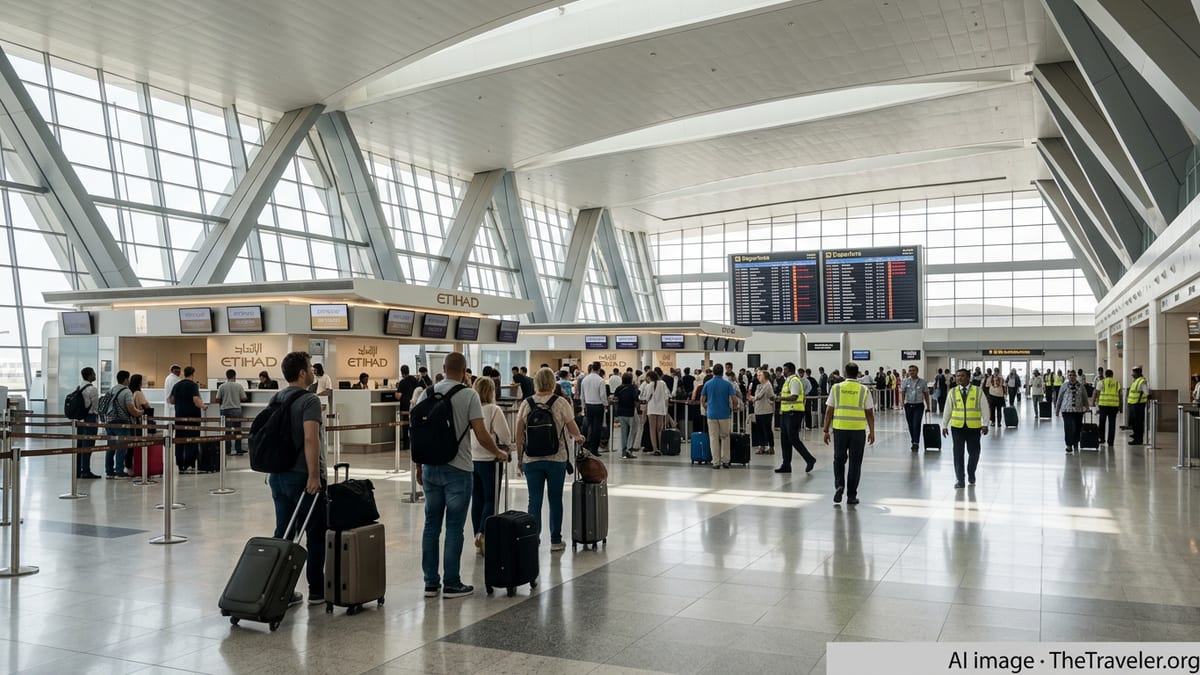
What live trackers show for Dubai airports today
Public flight boards for Dubai’s airports show a mixed picture on Thursday, September 17, 2026, with routine on-time movements alongside notable disruptions on certain services. Dubai World Central (DWC) published flight-status entries for today that include multiple flights marked cancelled, including services listed to Shiraz and Tehran as well as several internal positioning entries shown with flydubai flight numbers.
For Dubai International (DXB), third-party real-time boards indicate a busy schedule today, with hundreds of departures listed and a combination of on-time flights and moderate delays depending on route and airline. Some trackers also summarize the day’s performance with a small share of cancellations and average delays in the low double digits for departures, a pattern that can shift quickly as rotations, airspace constraints, and aircraft availability change through the day.
Because DXB and DWC handle different mixes of airlines and operations, travelers are advised to check the specific airport and terminal tied to their booking. A flight number that appears “scheduled” on an airport board can still change closer to departure if an aircraft is swapped, a crew times out, or an inbound sector arrives late.
Emirates: where to check and what the airline is telling customers
Emirates continues to direct passengers to its official flight-status tool and to customer notifications for the most reliable view of whether a specific flight is operating. In its publicly posted disruption guidance and travel updates, Emirates emphasizes checking email and flight status before traveling to the airport, especially when disruptions occur across a region or due to air-traffic issues affecting certain markets.
Emirates’ travel-updates page has recently referenced operational disruption scenarios such as air-traffic-control technical issues in the UK that can ripple into delays and changes across a network. Even when a disruption originates outside the UAE, it can affect aircraft rotations returning to Dubai and, by extension, connecting itineraries onward through DXB.
For passengers already en route, the practical implication is that a seemingly minor departure delay into Dubai can compress connection times, particularly on itineraries that require a terminal transfer or a long walk between concourses. Emirates advises customers to monitor updates and manage their booking using its digital tools if they receive a change notice.
Etihad: Abu Dhabi operations and what to expect with connections
Etihad maintains a flight-status tracker and encourages passengers to review updates for their specific flight and connection. Publicly available flight-status pages can include reasons for delays on particular sectors, and Etihad’s guidance highlights that rebooking support for onward travel depends on whether the connecting service is operated by Etihad or a partner carrier.
Separate destination marketing guidance for Abu Dhabi also indicates Zayed International Airport (AUH) is open and operational, while reiterating the core message for travelers today: confirm flight status directly with the airline before heading to the terminal.
For those connecting at AUH, the most disruption-sensitive itineraries tend to be long-haul arrivals feeding multiple regional departures within a narrow bank. If an inbound long-haul flight lands late, downstream connections can be at higher risk of missed connections or re-accommodation, especially when the next available flight is not until the following day.
flydubai: status checks, operational updates, and what delays can look like
flydubai publishes a real-time flight-status tool and a separate operational-updates page that flags network-level changes. The airline has also issued seasonal travel advisories noting that Dubai International can become busier than usual during peak periods, which can contribute to longer processing times and tighter margins for last-minute airport arrivals.
On its operational guidance, flydubai notes that flight durations and transit times in Dubai can be longer than usual when flights are rerouted, a factor that often shows up to passengers as later arrivals, missed turnarounds, and knock-on delays across an aircraft’s daily sequence.
In practice, that means a flydubai flight that begins the day only slightly behind schedule can drift later after multiple short-haul sectors. Passengers are typically best served by checking status more than once: earlier in the day to anticipate disruption, and again closer to departure for gate and timing changes.
Air Arabia: how to verify your flight and what to do if plans change
Air Arabia directs customers to its flight-status page for real-time tracking by route or flight number, and it advises travelers with connecting journeys to check each segment separately. That is particularly important for itineraries involving connections via Sharjah (SHJ) or other Air Arabia bases, where a change to the first leg can invalidate the entire sequence of onward plans.
Sharjah is widely described as Air Arabia’s home base, and disruptions affecting regional airspace, airport congestion, or aircraft rotations can cascade across short-haul schedules. When travelers see online chatter about cancellations, the most reliable next step is still the airline’s own flight-status result tied to their flight number and departure date, as third-party boards can lag.
If a flight is delayed or cancelled, travelers generally benefit from documenting the current status shown in the airline’s tools, confirming whether they are eligible for rebooking or a refund under their fare rules, and checking whether any onward ground transport or hotel reservations need adjustment. For same-day travel, confirming the operating status before leaving for the airport can help avoid unnecessary trips during rapidly changing conditions.