


More news on this day
Passengers flying from the UAE today are being urged to monitor their flight status closely, as Emirates, Etihad, flydubai and Air Arabia continue to adjust schedules in response to regional tensions and operational challenges.
Get the latest news straight to your inbox!
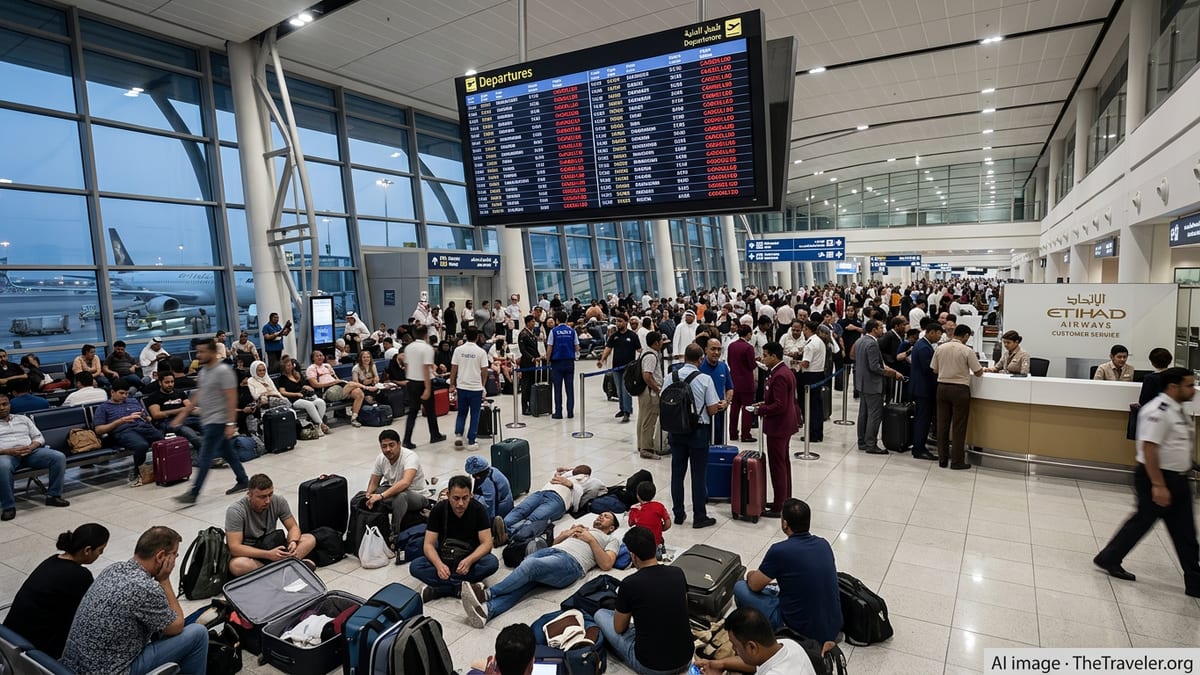
Regional situation keeps UAE flight schedules under pressure
Published coverage from UAE-based outlets indicates that services operated by Emirates, Etihad Airways, flydubai and Air Arabia remain under strain, with a mix of on-time departures, delays and outright cancellations. Recent reports describe airlines as continuing to review Middle East routes and timings while regional security tensions linked to the ongoing US–Iran conflict affect airspace and routing options.
According to recent reporting, some flights from Dubai and Abu Dhabi are operating as normal, but others are being cancelled or diverted at relatively short notice. This pattern means that an itinerary which appears confirmed in advance can still change on the day of travel, particularly on routes crossing sensitive airspace. As a result, passengers are being advised to treat departure times as subject to change and to check status repeatedly in the hours before leaving for the airport.
Airlines are also working within tighter operational windows due to altered routings around affected areas. Longer flight times and crew duty constraints can, in turn, lead to knock-on delays across the network. Publicly available data from flight-tracking platforms shows selected Etihad and other regional services arriving behind schedule, reinforcing the picture of a system that is functioning, but not yet fully back to typical reliability levels.
Emirates: operating, but with rolling disruption risks
Emirates continues to operate a broad global schedule out of Dubai International, with the carrier’s official information stating that services now cover more than 130 destinations. However, its disruption guidance makes clear that some flights remain subject to rescheduling or cancellation, and that customers whose services are affected may be rebooked on later departures or, in some cases, on partner airlines.
The airline’s online flight-status tools and FAQs emphasize that customers should verify the latest details for their specific flight before heading to the airport. Publicly available guidance notes that email or app notifications are sent when changes occur, but that operational conditions can evolve quickly, including close to departure time. Passengers who have received a cancellation notice are advised by the airline’s published materials not to travel to the airport and instead arrange rebooking or refunds through official channels.
Emirates also highlights flexible rebooking options on its help pages, indicating that many disrupted tickets can be moved to alternative dates without additional rebooking fees, although fare differences may apply. Travelers connecting beyond Dubai are being told, via publicly available information, that the carrier will aim to place them on the next available service where possible.
Etihad schedules show individual delays amid broader continuity
Etihad Airways flights from Abu Dhabi are generally continuing to operate, but live-tracking data for selected services illustrates how individual delays remain common. For example, recent long-haul arrivals into Abu Dhabi have been recorded landing well behind the original timetable, as updated on independent flight-tracking platforms. Such delays can originate from late departures at the origin airport, weather en route, or knock-on effects from earlier rotations.
Information made available by Abu Dhabi’s main airport indicates that departures are proceeding, though travelers are directed toward online tools to confirm whether a specific flight is on time, delayed or cancelled. In some cases, flight entries have been updated from scheduled to “departed” or “delayed” close to the planned time, underlining that travelers relying on printed itineraries alone may not be seeing the full, current picture.
Etihad’s handling policies for disrupted travel, published on its own channels, typically allow affected passengers to change their bookings or request refunds under defined conditions during periods of significant operational impact. While base schedules remain largely intact, the presence of sporadic delays means that passengers with tight connections or important onward plans should allow for additional buffer time.
flydubai and Air Arabia: mixed performance across regional routes
flydubai and Air Arabia, which together operate a dense web of short- and medium-haul routes from Dubai, Sharjah and other UAE airports, are also experiencing a blend of on-time operations and disruptions. Flight-tracking data for services marketed under Emirates codes but operated by flydubai, for instance, shows some departures from Dubai International running with average delays in the range of 40 minutes to an hour on specific city pairs.
Budget carriers tend to schedule aircraft tightly across multiple daily rotations, meaning that an early-morning delay can cascade into later services if recovery windows are limited. In the current environment of regional tensions and high summer demand, that effect is visible in selected routes where departure and arrival times slip beyond their planned slots, even when flights are not fully cancelled.
Sharjah-based Air Arabia is continuing to fly to many regular destinations, while also cancelling or rescheduling certain services in line with wider regional risk assessments. Independent flight-status boards for partner and feeder airlines into the UAE show some cancellations and significant delays on routes connecting to Gulf hubs, illustrating the wider network complexity that can affect passengers even if their own sector remains scheduled.
Weather, demand and airport systems add to day-of-travel uncertainty
Alongside geopolitical factors, local weather and peak-season demand are contributing to an elevated risk of delays today. Forecasts for Monday, 31 August, from the UAE’s meteorological authorities and local media point to high temperatures, with Dubai expected to reach the low-to-mid 40s Celsius and some inland areas climbing higher. While visibility is generally forecast to be good, forecasters also flag the potential for humidity, haze or mist in certain periods, which can require operational adjustments.
Real-time meteorological data for Dubai International on Monday morning shows hot but otherwise stable flying conditions, with clear skies and light to moderate winds. However, high heat and strong sun can still place additional strain on ground operations and airport infrastructure, from ramp handling to aircraft turnaround times, particularly during the busiest banks of departures.
Airport flight-information pages for Dubai list temporary technical issues with live boards at times, with notices indicating that some online status tools are intermittently unavailable. When combined with already tight schedules and region-wide airspace adjustments, these factors mean travelers should build extra margin into their journey to the airport and expect longer queues at check-in, security and boarding.
What passengers flying from UAE today should do
Passengers departing from Dubai, Abu Dhabi or Sharjah today are being encouraged, via publicly available airline and airport information, to check their flight status repeatedly in the 24 hours and especially the 3 to 4 hours before scheduled departure. Using airline apps, flight-status webpages and airport websites can provide more up-to-date detail than printed itineraries or third-party confirmations alone.
Travelers whose flights are marked as cancelled online are generally directed by airline guidance to avoid going to the airport and instead seek rebooking or refunds through official digital channels or customer-service centers. For flights still shown as operating, arriving early at the terminal, keeping contact details up to date in the booking, and registering for status alerts can help reduce the impact of any late-breaking schedule changes.
Given the combination of regional tensions, hot summer conditions and high demand, experts quoted across recent public reporting recommend that passengers maintain flexibility where possible, including avoiding extremely tight connections and allowing for potential overnight stays if itineraries become heavily disrupted. For those yet to travel, checking the latest advisories for their airline and route before finalizing plans remains an important step.
Gulf News: Flying from UAE today? UAE flights affected
Emirates flight-status and disruption updates