


More news on this day
A new wave of visa-free travel policies centered on the United Arab Emirates, Hong Kong and Uzbekistan is reshaping mobility across Asia and beyond, as destinations from China and Vietnam to Australia, New Zealand and Sri Lanka compete to attract tourists, investors and students with smoother entry rules.
Get the latest news straight to your inbox!
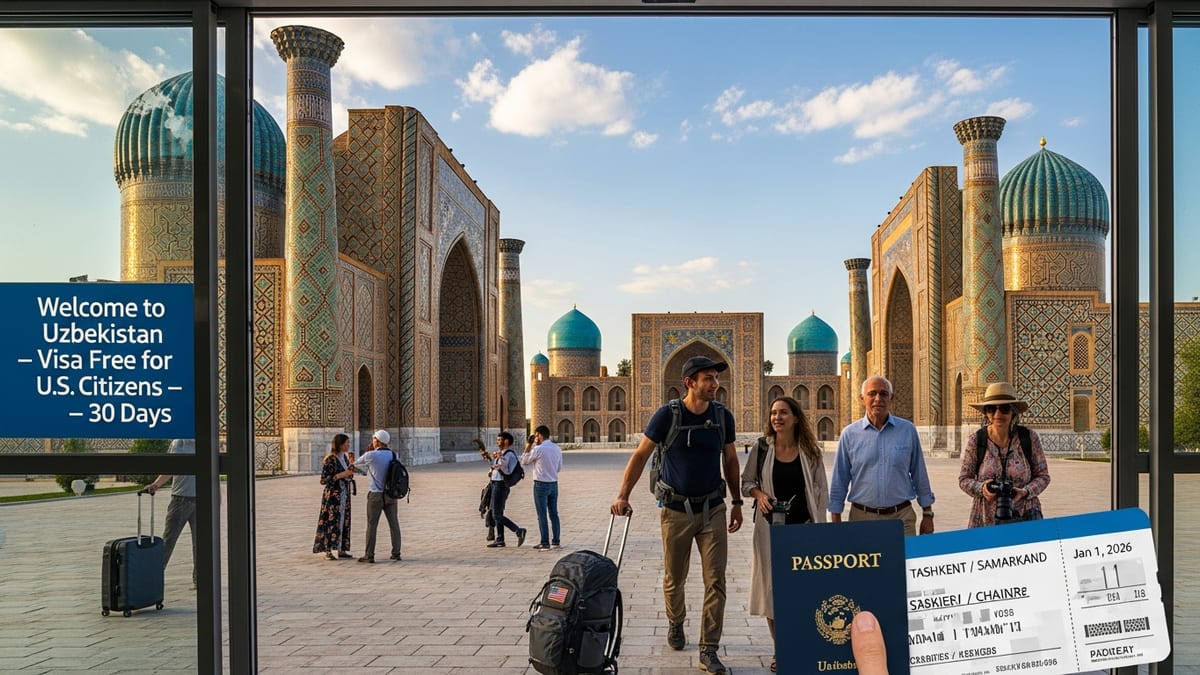
UAE Emerges as a Visa-Free Connector for Central Asia and Beyond
The United Arab Emirates has strengthened its role as a regional aviation and travel hub by expanding visa-free arrangements with key Asian partners. Publicly available information shows that since early 2024, citizens of Uzbekistan have been able to enter the UAE without a visa for short stays, significantly simplifying travel between Tashkent and Gulf gateways. The waiver complements the UAE’s long-standing policy of granting many nationalities visa-free or visa-on-arrival entry, reinforcing its position as a primary transit point linking Europe, Asia and Africa.
The agreement with Uzbekistan reflects a broader strategy in Abu Dhabi and Dubai to deepen ties with Central Asia through tourism, trade and investment. Reports indicate that Uzbek tourism authorities view the UAE connection as a way to draw more visitors via Gulf airline networks while also making it easier for Uzbek residents to explore Middle Eastern destinations. For UAE-based carriers, the move supports growing demand for both leisure and business travel to emerging Central Asian markets.
The UAE’s evolving visa policy sits within a competitive landscape in which destinations such as Sri Lanka and several Southeast Asian states are lowering entry barriers for visitors from China, India and the Gulf. As more governments opt for unilateral or reciprocal visa waivers, Emirates and other UAE airlines are positioned to capture connecting traffic from travelers stitching together multi-country itineraries without complex pre-travel paperwork.
Travel industry analysts note that these visa-free links are especially important for younger and first-time travelers, who may be more price-sensitive and reluctant to navigate lengthy consular processes. The UAE’s open-door approach for many short-stay visitors is helping to normalize the idea of spontaneous regional trips, weekend breaks and study visits across Asia and the Middle East.
Uzbekistan’s New Visa-Free Push Targets Tourists, Investors and Students
Uzbekistan has moved rapidly in recent years to dismantle administrative hurdles for foreign visitors, positioning itself as one of Central Asia’s most open destinations. Government information and independent monitoring show that the country has introduced or expanded visa-free access for dozens of nationalities, with citizens from Australia, New Zealand and several European countries now eligible for short, visa-free stays. Bilateral waivers with partners such as the UAE and China are central pillars of this strategy.
A landmark mutual visa-free regime between Uzbekistan and China, set for 30-day stays, is being rolled out following agreements signed in late 2024. This arrangement is expected to make it easier for Chinese travelers to visit Silk Road cities such as Samarkand and Bukhara, while also supporting outbound tourism and educational exchanges for Uzbek citizens heading to Chinese universities and business hubs. The deal adds to Uzbekistan’s earlier decision to allow short visa-free transits for Chinese and Hong Kong visitors, which was introduced to stimulate stopover tourism.
Uzbekistan has also widened visa-free or simplified entry to citizens of markets including the United Kingdom, Canada, Australia and New Zealand, according to regional investment and tourism promotion materials. These changes are designed to support ambitious targets for foreign visitor arrivals and tourism revenue, with policymakers framing tourism as a “driver of the economy.” Simplified border rules are helping tour operators package multi-country routes that combine Central Asia with Gulf, South Asian or East Asian stops.
For travelers from countries that now enjoy visa-free or streamlined entry, the impact is tangible. It reduces costs associated with applications, removes uncertainty around processing times and makes spontaneous or last-minute travel more feasible. For Uzbek authorities and local businesses, higher visitor volumes mean new demand for hotels, transport, cultural experiences and conference facilities, further embedding the country into regional tourism circuits.
Hong Kong Leans on Visa-Free Reach to Reinforce Its Global Hub Role
Hong Kong is also at the center of the current visa-free momentum. Official statistics from the territory’s immigration authorities indicate that, as of early 2026, Hong Kong Special Administrative Region passport holders enjoy visa-free or visa-on-arrival access to around 175 destinations worldwide. This puts the Hong Kong travel document among the most permissive in Asia, enabling relatively frictionless movement across Europe, the Americas, much of Asia-Pacific and parts of Africa.
While Hong Kong has not recently unveiled a single headline-grabbing bilateral waiver on the scale of Uzbekistan’s agreement with China, its steady expansion of mutual visa-free deals over the last decade has produced a highly connected environment for residents and businesses. The territory’s outbound travelers can move easily between major partners including the UAE, Australia, New Zealand and many European Union states, often without advance visa arrangements. This, in turn, reinforces Hong Kong’s role as a preferred base for firms managing regional operations.
Inbound access to Hong Kong is also relatively liberal for many nationalities, with numerous countries benefiting from short visa-free stays for tourism and business visits. These arrangements are central to the city’s efforts to recover visitor numbers following the pandemic-related downturn. Published coverage suggests that tourism promotion campaigns are increasingly built around seamless entry, efficient air connectivity and the territory’s status as a gateway to mainland China and the wider Greater Bay Area.
By aligning itself with other destinations that prioritize visa-free regimes, Hong Kong is sending a broader signal about openness to global talent, students and entrepreneurs. The combination of favorable entry rules, robust flight networks and established financial infrastructure positions the city as a counterpart to hubs like Dubai and Singapore in the rapidly evolving map of post-pandemic travel and investment.
China, Vietnam, Australia, New Zealand and Sri Lanka Deepen the Visa-Free Trend
The moves by the UAE, Hong Kong and Uzbekistan form part of a wider regional shift toward visa liberalization in Asia and the Pacific. China has significantly widened its unilateral visa-free list since 2024, granting short-stay, visa-free entry to citizens from countries such as France, Germany and other European states, and later extending similar treatment on a trial basis to nationals of New Zealand, Australia and Poland. Foreign ministry notices and policy summaries indicate that, by late 2025, dozens of countries enjoyed 15- to 30-day visa-free access for tourism and business purposes.
At the same time, reciprocal arrangements between China and partners like Uzbekistan illustrate how visa policy is being used as a lever to support tourism, aviation and trade. Easier entry for Chinese travelers encourages outbound tourism and spending abroad, while welcoming more visitors to Chinese destinations supports local economies seeking to diversify beyond traditional manufacturing and export sectors. Trial periods for these waivers are typically extended if they generate strong travel demand and do not raise major security or immigration concerns.
Elsewhere in Asia, Vietnam has expanded its visa exemption list for selected European and Asian markets and lengthened allowed stays for some visitors, according to tourism ministry updates and industry reporting. Liberalization supports the country’s long-term tourism goals, especially in coastal resort regions and heritage cities such as Hoi An and Hue. For travelers combining Vietnam with other regional stops like Hong Kong, Sri Lanka or the UAE, the ability to move without extensive visa paperwork makes multi-country itineraries more attractive.
Sri Lanka, a key Indian Ocean destination for beach tourism and cultural travel, has also tested visa-free or fee-waiver schemes for select groups, including travelers from China, India, Russia, Middle Eastern states and parts of Europe. These pilot programs, highlighted in local media and tourism briefings, have been framed as tools to accelerate post-pandemic recovery and compete with destinations around the Arabian Sea and Southeast Asia that are pursuing similar strategies.
Tourism, Business and Cultural Ties Poised for Further Growth
The emerging network of visa-free and simplified entry routes linking the UAE, Hong Kong, Uzbekistan, China, Vietnam, Australia, New Zealand, Sri Lanka and other markets is quietly redrawing regional travel patterns. For airlines, tour operators and hotel groups, the easing of formalities creates an environment in which new routes, code-shares and multi-stop packages become commercially viable. For travelers, it opens the door to more spontaneous journeys and complex itineraries that would previously have required extensive consular planning.
Business communities are also expected to benefit as corporate visitors face fewer procedural hurdles when attending trade fairs, scouting investments or meeting partners. According to publicly available data on investment flows, countries that marry easier entry with targeted business incentives often see faster growth in cross-border projects. Visa-free regimes, particularly when reciprocal and predictable, help to lower transaction costs and signal long-term openness to collaboration.
Education and cultural exchanges are another area likely to gain from the trend. Student mobility between Central Asia, the Gulf, East Asia and the English-speaking world already relies heavily on transit points such as Dubai and Hong Kong. As Uzbekistan signs more mutual waivers and China maintains or extends its current trial policies, regional universities and cultural institutions may find it easier to host visiting scholars, performers and students for short programs without extensive visa processing.
Although some of the new waivers are time-limited trials and remain subject to review, recent policy trajectories suggest that governments across Asia and the Pacific increasingly view visa-free travel as a competitive advantage rather than an exceptional concession. With the UAE, Hong Kong and Uzbekistan now firmly part of this broader movement, travelers can expect a steadily more connected map of routes linking historic Silk Road cities, modern Gulf skylines and Pacific coast destinations under smoother, less bureaucratic border rules.