


More news on this day
Wizz Air’s decision to equip its entire Airbus fleet with Starlink satellite Wi-Fi from 2027 is poised to transform the budget travel experience across Hungary, Poland and the United Kingdom, turning one of Europe’s most no-frills carriers into a high-speed connectivity frontrunner.
Get the latest news straight to your inbox!
A Landmark Connectivity Shift for a Hungary-Based Ultra-Low-Cost Giant
The Budapest-headquartered Wizz Air group has confirmed an agreement with Starlink to introduce high-speed satellite internet across its fleet starting in 2027, according to recent aviation and technology coverage. Reports indicate that the airline will become the first European ultra-low-cost carrier to commit to a full-fleet Starlink installation, positioning Hungary’s flagship budget airline at the center of a broader shift toward always-on connectivity in the skies.
Publicly available information on Wizz Air’s network and fleet shows that the group operates a large Airbus A320neo-family fleet and serves more than 200 destinations, many of them radiating from Central and Eastern Europe. Until now, Wizz Air has been notable for offering no inflight Wi-Fi at all, a choice aligned with its strict cost-control model. The Starlink deal therefore marks a strategic break with past practice, signaling that reliable onboard internet is becoming a baseline expectation, even in the ultra-low-cost segment.
Analysts following Starlink’s aviation rollout note that the service is designed to deliver low-latency, high-bandwidth connectivity suitable for streaming, messaging and real-time work applications. Applied to Wizz Air’s high-density, short and medium-haul operations, this technology could significantly change passenger behavior, particularly on busy leisure and visiting-friends-and-relatives routes linking Hungary with the rest of Europe.
The agreement also underscores Hungary’s growing visibility in the European aviation technology landscape. With a Hungarian-rooted airline among the first budget players to sign for Starlink on a fleet-wide basis, the country’s role shifts from simply hosting a fast-growing carrier to anchoring a major inflight connectivity upgrade that will be experienced by millions of travelers each year.
What Starlink on Wizz Air Means for Travelers in Poland
Wizz Air has long identified Poland as one of its core markets, with sizable operations at airports such as Warsaw, Katowice and Gdansk. Company reports and national aviation statistics describe the carrier as a key player in linking Polish regional cities with destinations across Europe and the Middle East. The planned Starlink rollout is therefore set to have a visible impact on Poland’s outbound and inbound air travel, particularly for cost-conscious passengers who still demand digital access.
On popular labor-mobility routes from Polish cities to the United Kingdom, Scandinavia and Western Europe, many passengers rely on uninterrupted connectivity to coordinate work, accommodation and onward ground transport. Once Starlink-equipped aircraft begin entering service from 2027, trip planning and remote working from the cabin could become markedly easier on these sectors, narrowing the gap between low-cost and full-service carriers in terms of digital experience.
Industry commentary suggests that the exact pricing model for Wizz Air’s Starlink access has not yet been detailed. Observers point out that some airlines adopting Starlink have chosen free access for all passengers, while others are experimenting with tiered plans or bundled offers for frequent flyers. For Polish travelers, the balance between Wizz Air’s traditionally low base fares and any potential Wi-Fi charge will be critical in determining whether connectivity becomes a standard expectation or a selectively purchased add-on.
For Poland’s airports, a Starlink-enabled Wizz Air fleet could add competitive pressure on rival carriers still operating without high-speed inflight internet. As Polish passengers compare experiences across airlines serving the same city pairs, the presence or absence of fast onboard Wi-Fi may begin to influence booking decisions almost as much as fare differences and schedule convenience.
United Kingdom Routes Poised for a New Budget Wi-Fi Race
In the United Kingdom, Wizz Air UK is based at London Luton and continues to expand its presence through additional slots and new routes, according to recent scheduling and airport data. That growth trajectory, combined with the parent group’s Starlink commitment, suggests that many UK-originating flights will be among the first in Europe where low-cost travelers can expect high-speed satellite connectivity as standard on Wizz-operated services.
London Luton has become a significant hub for value-focused airlines, including Wizz Air, Ryanair and easyJet. Industry analyses indicate that those competitors are at different stages of evaluating or adopting advanced inflight connectivity solutions. With Wizz Air now publicly aligned with Starlink, the UK market is likely to see a more intense technology comparison between carriers, as passengers weigh price against the promise of streaming-capable Wi-Fi on flights to Central and Eastern Europe.
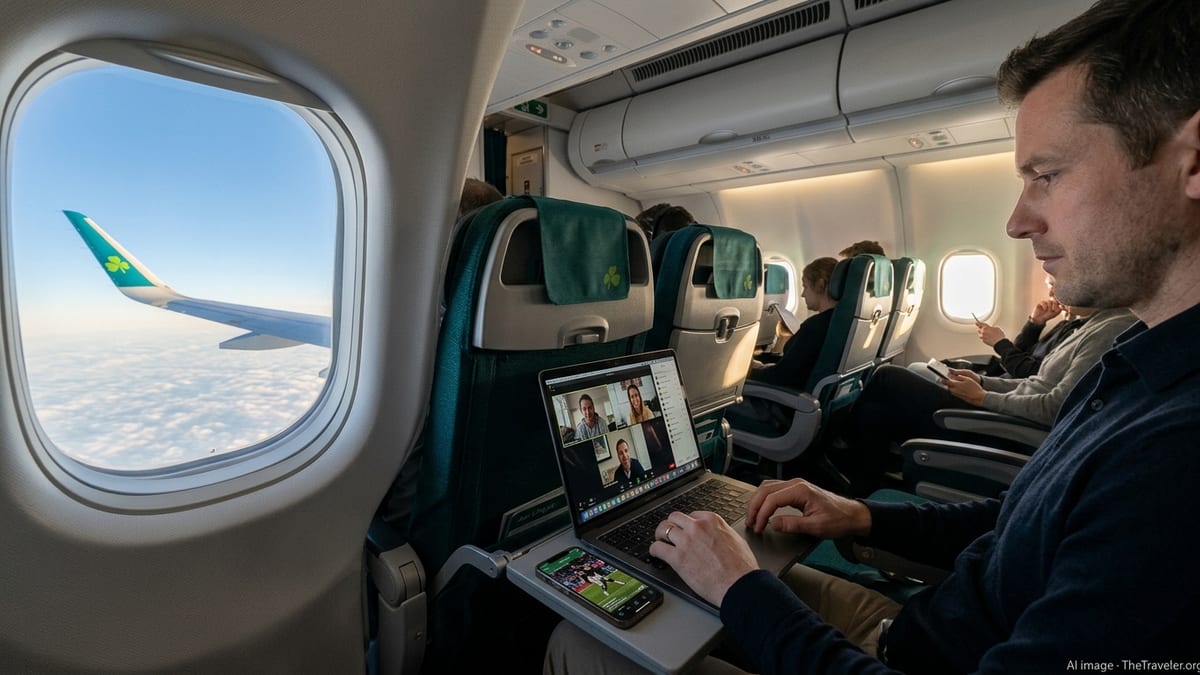
On heavily trafficked routes between Luton and Polish cities, or between the UK and Hungary, a Starlink-equipped Wizz Air operation would effectively turn the cabin into an extension of passengers’ digital lives. For business travelers using low-cost carriers, this could mean productive work sessions on sub-three-hour flights. For leisure travelers, it may translate into seamless social media use, entertainment streaming and real-time trip sharing without the usual anxiety about being offline during crucial travel moments.
Regulatory and infrastructure readiness in the UK will also shape how quickly the service appears on British-registered aircraft. Aviation regulators have been progressively clearing satellite connectivity solutions for use in national airspace, and observers expect coordinated approvals for aircraft hardware, cabin systems and passenger device usage that will allow Wizz Air UK to align with the broader group’s Starlink deployment timetable.
Implementation Timeline, Fleet Strategy and Passenger Expectations
According to recent coverage from aviation and technology outlets, Wizz Air and Starlink are targeting a service entry date from 2027, with a progressive installation schedule across the airline’s Airbus fleet. Such programs typically begin with a small number of aircraft used as testbeds before ramping to multiple parallel installation lines during heavy maintenance checks. For passengers in Hungary, Poland and the UK, this means that Starlink availability is likely to appear first on select routes before gradually becoming standard across the network.
Fleet planning information for Wizz Air highlights a strong focus on new-generation Airbus A321neo and A321XLR aircraft, which are well-suited to supporting the power and structural requirements of modern satellite antenna systems. By concentrating the installation effort on a relatively homogeneous fleet, Wizz Air can simplify certification, maintenance and crew training, increasing the chances of a smoother, faster rollout once the first systems are approved and operational.
Passenger expectations, however, are evolving rapidly. Surveys and commentary across the aviation sector show that even short-haul travelers now compare in-flight connectivity options when choosing between carriers. For an ultra-low-cost airline that built its brand on stripped-back service, Wizz Air’s Starlink move responds directly to that shift. If the service quality meets Starlink’s advertised performance, passengers may begin to see Wi-Fi as a defining feature of Wizz Air’s value proposition rather than a surprising extra.
Observers also note that onboard connectivity creates new revenue and engagement opportunities, from digital retail and targeted advertising to real-time disruption management. For a cost-focused airline operating dense networks in and out of Hungary, Poland and the UK, those ancillary possibilities may be as strategically important as the immediate passenger appeal of fast internet access.
Regional and Competitive Implications Across Europe
The Wizz Air Starlink agreement is already prompting comparisons with other European carriers at different stages of the connectivity curve. Full-service airlines and some hybrid low-cost operators have offered Wi-Fi for years, often relying on legacy satellite systems with higher latency or data caps. Starlink’s entry into the market, combined with Wizz Air’s decision to deploy it at scale, could accelerate a broader technological refresh across Europe’s short-haul fleets.
For Central and Eastern Europe, where Wizz Air is a dominant player, the move positions the region as a test ground for mass-market satellite Wi-Fi adoption. Routes linking Budapest, Warsaw, Gdansk and regional Polish cities with London, Birmingham and other UK airports may become early showcases for what a high-capacity, low-latency system can deliver on high-load, high-frequency services.
In competitive terms, rival budget carriers serving Hungary, Poland and the UK face a choice between matching Wizz Air’s connectivity offer, partnering with alternative providers, or attempting to compete purely on price. Industry commentary suggests that the cost-benefit calculation is shifting as Starlink and similar systems refine their equipment and installation economics, potentially lowering barriers to entry for other airlines but leaving Wizz Air with a first-mover advantage in the ultra-low-cost space.
As the 2027 launch window approaches, travelers in Hungary, Poland and the United Kingdom are likely to see inflight Wi-Fi transition from occasional luxury to consistent expectation on Wizz Air services. The carrier’s Starlink partnership signals that the era of disconnecting at the aircraft door is drawing to a close, even for those flying on Europe’s most aggressively priced tickets.