


More news on this day
Equity markets in the United Arab Emirates slipped this week as renewed warnings over regional air travel revived investor concern about conflict risks, flight disruptions and the outlook for the country’s tourism-driven recovery.
Get the latest news straight to your inbox!
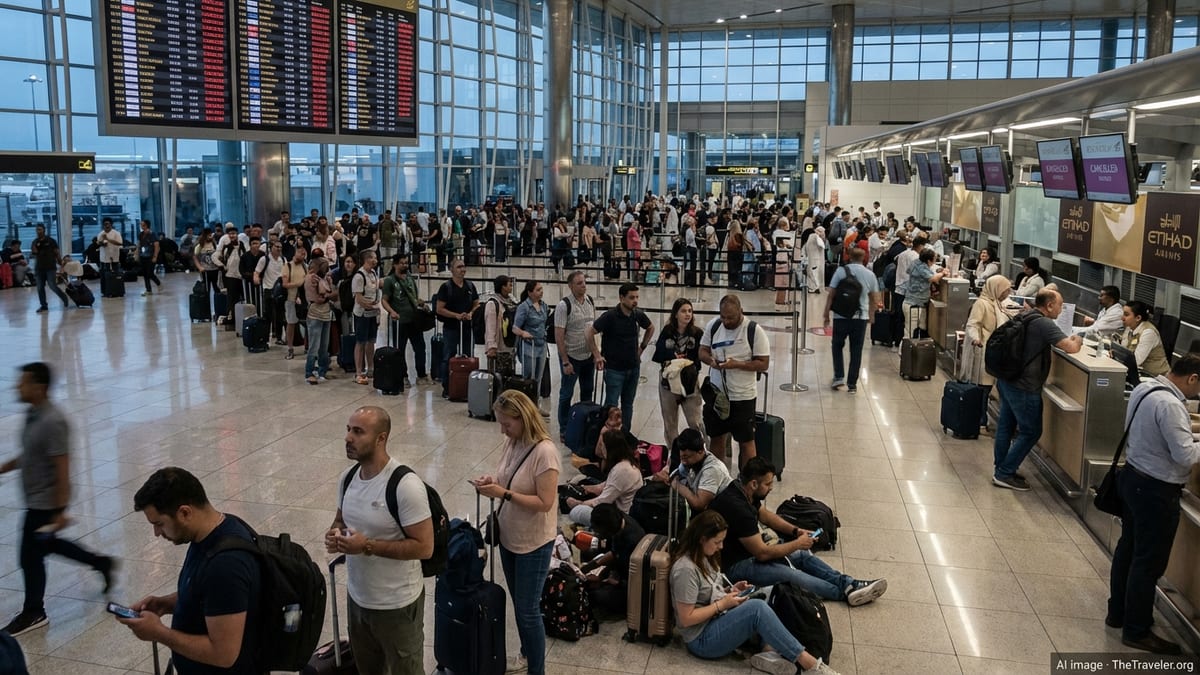
Market selloff follows renewed air travel warnings
Recent sessions on the Dubai Financial Market and Abu Dhabi Securities Exchange have seen broad-based declines, with aviation, tourism and consumer-related shares among the most pressured. Market data reported in regional business coverage indicate that travel-linked stocks underperformed wider Gulf benchmarks after a series of fresh advisories on flying in Middle East airspace and headlines about delays and cancellations at Dubai International and Abu Dhabi’s Zayed International airports.
Publicly available information shows that multiple governments have reiterated or tightened advice on travel to the Gulf in recent months, citing ongoing conflict between the United States and Iran and the risk of missile or drone attacks affecting regional air corridors. These warnings have coincided with periodic disruptions to commercial schedules and have reinforced concerns that a slower, more volatile recovery in passenger demand could weigh on listed airlines, airport operators and hospitality companies.
Analysts tracking the region note that the UAE’s equity markets had already been sensitive to shifts in travel sentiment because of the country’s dependence on aviation and tourism as pillars of non-oil growth. The latest bout of selling has been interpreted as investors repricing earnings expectations for sectors most exposed to long-haul transit traffic and discretionary leisure spending.
While broader Gulf benchmarks remain supported by elevated energy prices, recent research from regional and international institutions highlights that recurring shocks to travel and logistics are eroding business confidence and delaying investment decisions, particularly in areas tied to visitor arrivals and consumer services.
Travel advisories and airspace disruptions unsettle investors
Updated government guidance has brought renewed attention to the risks surrounding air travel in and around the UAE. An advisory published by the United States in late August urged travelers to reconsider trips to the country due to terrorism and armed conflict, noting that the ongoing confrontation with Iran has led to threats against locations associated with US interests and to disruptions in commercial flights across the region.
Similar cautionary language has appeared in other nations’ travel advisories covering the Gulf, including references to the possibility of attacks resuming with little warning and to the potential for rapid changes in route availability. Industry-focused publications have reported that several international carriers extended or reintroduced suspensions on services to key hubs such as Dubai, Riyadh and Amman during earlier phases of the conflict, before gradually rebuilding schedules as airspace capacity improved.
The effect on traveler sentiment has been cumulative. Gulf-based travel agents quoted in regional media describe residents and visitors becoming more selective about trips, especially for leisure, as they weigh higher fares and the possibility of last-minute changes. For market participants, these developments translate into a more uncertain revenue outlook for airlines, airport operators and tourism-related developers whose performance is closely watched on UAE exchanges.
Although airspace within the UAE itself has been reopened and exceptional operating procedures introduced earlier in the year have largely been unwound, recent days have seen renewed delays and a small number of cancellations at Dubai and Abu Dhabi airports after fresh escalations in fighting. That backdrop has reinforced the sense among investors that the recovery path for regional aviation remains vulnerable to sudden shifts in the security environment.
Regional aviation under pressure from higher costs and rerouting
Beneath the immediate market reaction, structural pressures continue to reshape aviation across the Middle East. Reports from Gulf-based business outlets highlight that airfares on many routes touching the UAE remain elevated, reflecting longer flying times around restricted airspace, increased fuel costs and capacity constraints as airlines juggle aircraft and crews on detoured networks.
One recent assessment of the industry outlook warned that fares could stay high well into 2026 as Gulf carriers contend with prolonged disruption to traditional east–west corridors. According to that analysis, a sustained period of rerouting could shave several percentage points off global passenger growth and has already encouraged airlines and travelers to experiment with alternative hubs and itineraries, potentially diluting the dominance of long-established Gulf transfer points.
Six months into the current conflict cycle, regional coverage shows that UAE aviation is in a gradual but uneven recovery. Dubai International has been ramping up movements after the lifting of domestic airspace restrictions, yet passenger throughput remains below pre-conflict levels, and official updates from the airport operator have acknowledged a double-digit decline in aircraft movements compared with a year earlier. Trade publications have also pointed to a significant fall in hotel occupancy in Dubai during the first half of 2026, reflecting softer visitor arrivals and cautious corporate travel budgets.
International airline associations and economic forecasters have revised projections for Middle East carriers, with some reports indicating that the region could swing from profit in 2025 to a net loss in 2026. For UAE equities, that shift reinforces worries that listed aviation and tourism names may face a more prolonged period of weaker margins and delayed expansion plans than previously expected.
Tourism outlook weakens as travelers weigh risk and cost
The tourism sector, a key contributor to Dubai’s and Abu Dhabi’s diversification strategies, has been particularly exposed to the latest warnings on regional air travel. Coverage in local media suggests that demand for leisure trips from UAE residents has softened, with households rethinking non-essential holidays amid high airfare levels, lingering security concerns and broader economic pressures.
Travel agencies operating in the country report that many outbound residents now prioritize essential journeys, such as family emergencies or visa-related travel, over discretionary getaways. On popular summer routes, published estimates indicate that a family of four can face air ticket costs of between 8,000 and 10,000 dirhams on certain sectors, making last-minute travel especially challenging for middle-income households.
Inbound tourism has also shown signs of strain. Passenger traffic data cited by regional travel analysts indicate that Dubai airport volumes fell sharply in the first half of 2026, with visitor numbers dropping by roughly one third compared with the previous year as airspace closures and security headlines weighed on bookings. Although some source markets, such as the United Kingdom, have shown renewed interest following the easing of earlier warnings, the latest advisories from other governments risk slowing that nascent rebound.
Hospitality performance reflects the same pattern. Industry monitors quoted in business press coverage note that average hotel occupancy in Dubai for the first six months of the year has declined significantly year on year, eroding pricing power and prompting operators to launch aggressive promotions. The prospect of renewed air travel caution adds further uncertainty for investors in new resorts, mixed-use tourism projects and associated retail developments that depend on sustained visitor flows.
Policy responses aim to steady confidence and travel flows
Against this backdrop of market volatility and fragile demand, authorities and industry stakeholders across the UAE and wider Gulf are attempting to shore up confidence in regional travel. Official statements from Dubai Airports indicate that, with national airspace now open, the operator is moving to restore capacity by increasing daily flight movements in coordination with airlines and air traffic partners and by advancing long-term expansion plans at Dubai World Central to support future growth.
At the same time, Gulf governments and tourism bodies are rolling out incentives designed to keep the region competitive despite security concerns and cost pressures. Travel industry coverage points to a combination of discounted fares, installment payment options, travel insurance offerings and more flexible visa regimes. Recent initiatives in the UAE have included multi-year tourist visas aimed at encouraging repeat visits, as well as resident-focused campaigns that reward locals who attract friends and relatives to visit during quieter periods.
Market observers note that these measures are intended to offset the dampening effect of conflict-related travel warnings by emphasizing convenience and value. However, research from economic institutes focused on the Gulf cautions that sectors such as tourism may take longer to recover than energy or trade, particularly if periodic escalations continue to trigger new advisories and temporary route suspensions.
For now, UAE equity markets appear to be reflecting that reality. Investors are watching not only the security situation and the tone of future travel guidance, but also the pace at which airlines restore full schedules and passengers regain confidence in using Gulf hubs as transit points. Until clearer signals emerge, aviation and tourism-linked stocks are likely to remain sensitive to any fresh developments affecting regional air travel.