


More news on this day
Israel’s Foreign Ministry has issued updated guidance urging Israeli citizens to avoid travel to Ethiopia’s Tigray region, following renewed clashes in the north of the country, suspended civilian flights and tight movement restrictions affecting foreign nationals.
Get the latest news straight to your inbox!
Heightened warning focused on northern Ethiopia
According to publicly available travel advisories, the Israeli warning singles out the Tigray region in northern Ethiopia and areas along the nearby border with Eritrea, where security conditions have deteriorated again during 2026. The move aligns Israel’s stance with a growing number of governments that now classify Tigray as an area where leisure and nonessential travel should not take place.
Reports from international travel advisories describe Tigray as subject to armed clashes between Tigray People’s Liberation Front aligned forces and federal Ethiopian troops, including the reported use of drone strikes in populated areas. These reports indicate that while a cessation of hostilities agreement was reached in November 2022, violence has resurfaced in parts of the region, creating a fluid and unpredictable environment for civilians and visitors.
Foreign travel advice published by other governments notes that tensions remain high not only in Tigray but also along the country’s northern borders. These sources highlight the potential for road closures, sudden curfews, checkpoints and local restrictions that can leave travelers without reliable access to transport or assistance. Israel’s new message to its citizens mirrors these wider concerns and frames Tigray as an area where travel should be avoided altogether.
International advisories flag flight suspensions and access limits
Published guidance from foreign ministries, including the United States and the United Kingdom, now records Tigray as a region subject to the most severe level of warning, typically equivalent to a blanket “do not travel” classification. In late August 2026, the U.S. Department of State’s advisory for Ethiopia was updated to “Level 4: Do not travel” for Tigray, citing armed conflict, unrest and crime, while maintaining an overall “reconsider travel” level for the country as a whole.
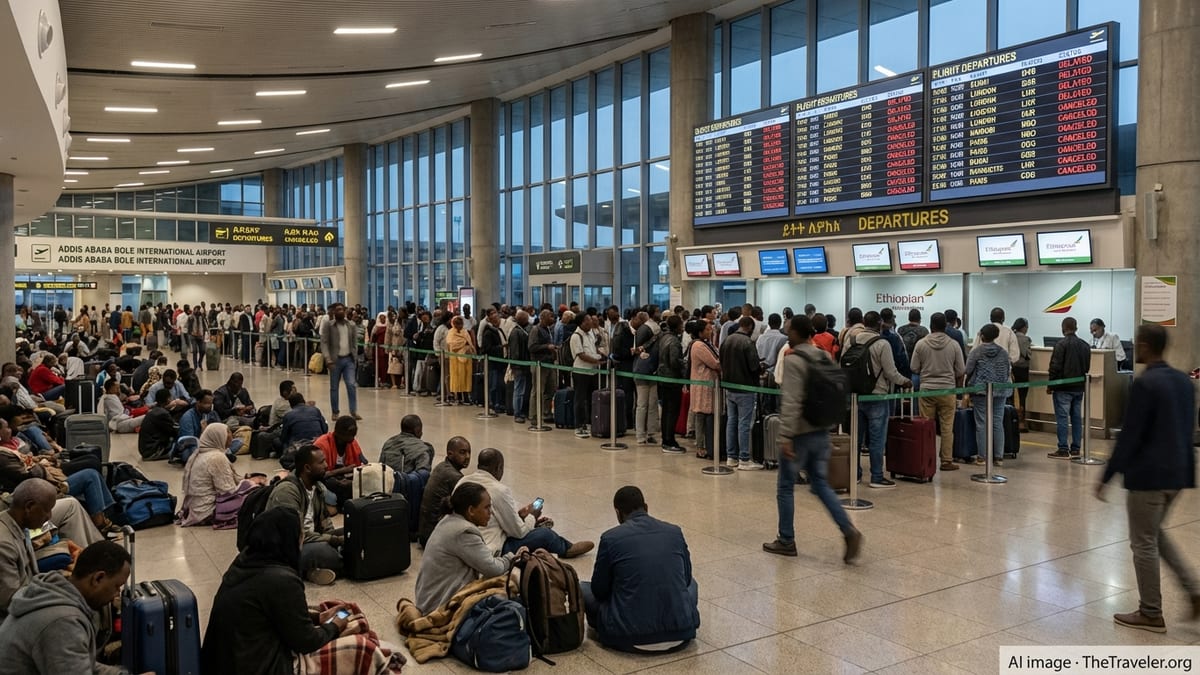
Regional risk assessments from other governments report that since late January 2026, all civilian flights to and from Tigray have been suspended. Foreign nationals are also described as unable to use airports in neighboring Afar regional state due to restrictions imposed by Ethiopian authorities. These measures significantly limit entry and exit options for anyone attempting to reach Tigray by air and increase the likelihood that travelers could find themselves stranded without routine commercial services.
Publicly available information further notes that border roads with Eritrea are closed and that conditions at the frontier can change at short notice. Combined with the suspension of internal flights, these closures leave few legal, secure routes into Tigray. Israel’s latest caution to its citizens reflects these layered constraints, advising against itineraries that rely on connecting flights or overland transfers into the region.
On-the-ground risks: conflict, checkpoints and communication outages
Recent safety and security summaries for Ethiopia describe a complex pattern of instability that extends beyond headline clashes. International travel advice highlights reports of targeted operations, checkpoints and searches, particularly affecting people of Tigrayan, Amhara or Oromo origin in and around Addis Ababa. These measures can delay travelers, disrupt itineraries and complicate attempts to move onward to northern regions.
In Tigray itself, international assessments refer to intermittent fighting, banditry and localized crime, with the risk of sudden violence on key roads. Historic use of heavy weaponry and landmines in the wider conflict zone remains a concern, especially on rural routes. Several foreign advisories also warn about temporary shutdowns of mobile networks and internet services in parts of northern Ethiopia, which can prevent travelers from contacting airlines, tour operators or consular services.
Israel’s guidance fits into this broader picture by emphasizing that Israeli citizens who choose to remain in, or travel close to, Tigray may face difficulties in receiving timely assistance. While the Israeli Embassy in Addis Ababa continues to operate and provide routine consular services for Ethiopia and South Sudan from the capital, movement constraints, airport closures and security incidents in the north can limit the embassy’s ability to support travelers in the affected areas.
Implications for travelers planning trips to Ethiopia
The latest message from Israel’s Foreign Ministry does not call for a halt to all travel to Ethiopia, but it draws a clear distinction between the higher-risk northern regions and other parts of the country where tourism and business trips continue. International advisories for Ethiopia encourage travelers who decide to visit to remain in close contact with their airline, monitor local news, and stay updated on security developments, particularly before any domestic flight or long-distance road journey.
Major foreign advisories also point out that Ethiopian authorities may introduce new travel restrictions, curfews or security operations with little or no warning. For visitors, this can translate into last minute schedule changes, cancelled domestic connections and extended stays in Addis Ababa while waiting for conditions to stabilize. Given the suspension of civilian flights into Tigray and explicit warnings not to travel there, itineraries that previously included historic sites or humanitarian visits in the region are now described as unfeasible for the foreseeable future.
Travel industry operators active in Ethiopia have begun revising itineraries to focus on destinations such as Addis Ababa and regions not covered by heightened warnings. Publicly available information from some carriers and tour organizers indicates that they are advising clients to avoid booking internal connections to the north until airlines and authorities confirm that services have resumed and security conditions have improved.
What Israelis should do if already in northern Ethiopia
For Israeli citizens already present in northern Ethiopia, the updated caution underscores the importance of assessing whether they can safely relocate to areas with lower risk levels. International advisories generally recommend that foreign nationals in Tigray or nearby high-risk zones consider leaving as soon as it is practical to do so, using any remaining commercial options and avoiding land routes close to active conflict lines or closed borders.
Given the current suspension of regular civilian flights to Tigray, some foreign nationals in the region may find that their only viable route out involves moving southward by road into areas where air travel remains available. Travel advice from several governments urges travelers in such situations to maintain a low profile, avoid large gatherings and public demonstrations, and keep friends or family informed of their movements whenever communications are available.
Public information from the Israeli Embassy in Addis Ababa lists standard contact details and consular services for citizens in Ethiopia. However, the embassy’s reach into conflict-affected areas is constrained by the same security and movement limitations facing other foreign missions. Israelis in or near Tigray are therefore urged by travel advisories to take these constraints into account when making decisions and not to assume that emergency assistance can be provided in every location or scenario.