


More news on this day
Britain’s rail network is facing fresh disruption as an intense late‑June heatwave forces operators to slow trains, cut services and urge passengers to travel only if their journeys are essential.
Get the latest news straight to your inbox!
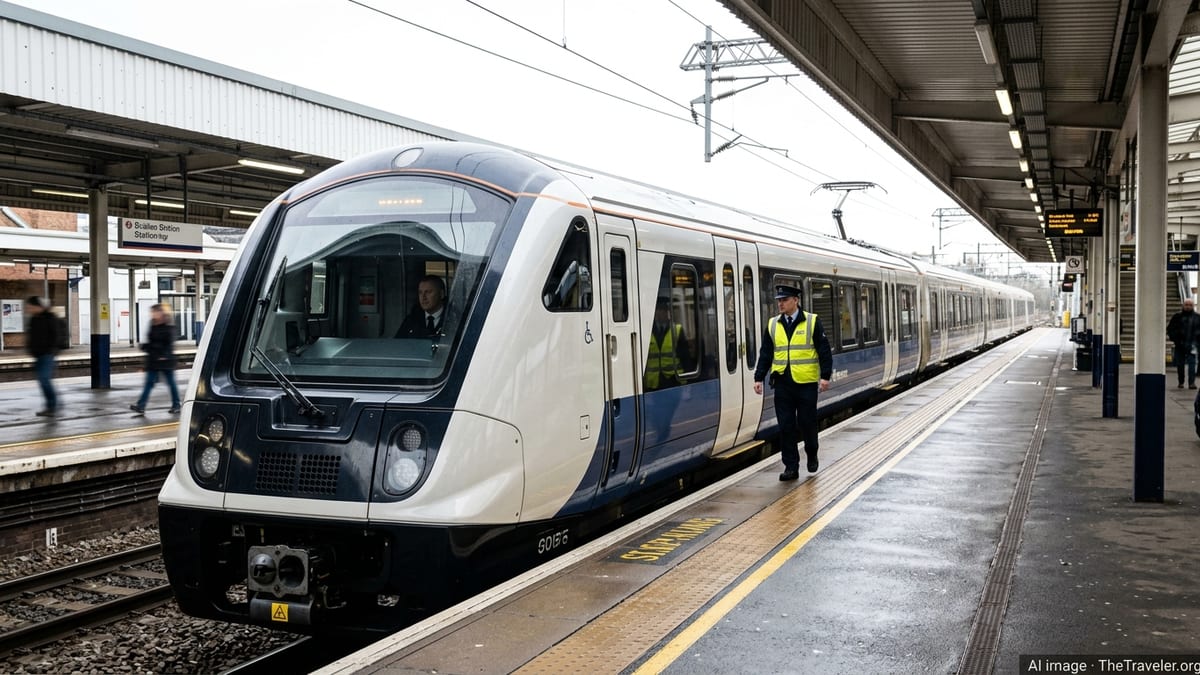
Red heat alerts collide with fragile rail infrastructure
Publicly available information from forecasters and health agencies shows temperatures climbing into the high 30s Celsius across large parts of England and Wales this week, with the UK Health Security Agency issuing red heat-health alerts for several regions. The highest warning level signals a severe heatwave with potential impacts on transport systems as well as on public health.
Rail infrastructure is particularly vulnerable in these conditions. Steel tracks expand in the heat and can buckle if temperatures exceed the range they were designed to withstand, while overhead power lines can sag and lose tension. To reduce the risk of accidents, Network Rail and train operators routinely impose speed restrictions and in some cases reduce the number of services, trading punctuality for safety.
As temperatures have risen, those safeguards are once again rippling through timetables. National passenger information channels show disruption and warnings tied directly to the hot weather, echoing patterns seen during previous UK heatwaves when rails, points and power equipment struggled to cope with prolonged extreme temperatures.
The warnings come during a busy travel period for work commuters and early summer leisure trips, raising the risk of crowding on the trains that do run and of passengers being stranded on hot platforms or in carriages if services fail.
Train operators cut timetables and urge essential travel only
Multiple operators across the network have introduced emergency measures as the heatwave intensifies. Information posted by companies including Southeastern, CrossCountry and South Western Railway indicates that timetables are being slimmed down on key intercity and commuter routes, with some trains cancelled outright and others combined or retimed.
Recent service updates from Southeastern’s media centre advise customers in Kent and the South East to avoid non-essential rail travel as very high temperatures continue, warning that services are likely to be disrupted and journey times extended. Similar language appears in travel advisories from CrossCountry, which has announced a reduced service on some long-distance routes and highlighted the possibility of further disruption where speed restrictions are imposed.
Travel alerts compiled by ticketing and journey-planning platforms report that hot weather is affecting services between 23 and 26 June, with particularly severe impacts expected on the hottest days. Some guidance recommends that passengers “travel only if your journey is essential” and check for last-minute alterations before setting out, a message echoed across operator websites and social media channels.
National Rail’s disruption pages list heat-related incidents on parts of the Great Western Railway network and caution that passengers on affected routes should consider travelling only if necessary, reflecting a patchwork of restrictions that can change quickly as temperatures peak during the afternoon and ease overnight.
International and regional links also affected
The impact of the heatwave is not confined to domestic commuter corridors. International and cross-border rail links are also being hit as high temperatures spread across northwestern Europe, prompting alerts in neighbouring countries and on major intercity routes.
Eurostar has cancelled or retimed a series of trains between London, Paris and Brussels over the coming days, according to recent coverage from European travel outlets. The operator is allowing many passengers to switch to alternative services free of charge if they prefer to travel outside the hottest period, and is advising vulnerable travellers to consider postponing journeys where possible.
Within Britain, regional operators are issuing tailored warnings as conditions vary by area. In Scotland, passenger information shared through local media and online forums points to ScotRail advising customers that heat could disrupt some services, particularly where older infrastructure or limited overhead power capacity makes the network more sensitive to extreme temperatures.
The combined effect is a patchwork of advisories across the UK and near-continent, with passengers on routes as varied as London to Birmingham, Kent to the coast and London to Paris all being told to expect altered timetables, fuller trains and the possibility of last-minute cancellations linked to the weather.
Why UK trains struggle when temperatures soar
The renewed disruption has revived questions about why the UK rail system is so frequently affected when temperatures climb into the high 30s. Technical explanations published by rail infrastructure specialists highlight the way tracks, overhead power equipment and signalling are designed for a specific temperature range, often prioritising resilience against cold, frost and heavy rain rather than prolonged heat.
When rails expand beyond their design limits they can buckle, making it unsafe for trains to run at normal speeds. To mitigate that risk, engineers introduce temporary speed limits on exposed stretches of track and use remote monitoring and on-site patrols to identify hot spots. Lower speeds reduce the forces on the rails but inevitably extend journey times and reduce the number of services that can operate.
Extreme heat also tests the cooling systems on modern trains. Air conditioning units must work harder as onboard temperatures rise, and failures can quickly make carriages uncomfortable, particularly if a train is held at a signal or stranded between stations. Passenger experiences shared on rail forums describe previous heatwaves in which carriages became uncomfortably hot during breakdowns, underlining why operators are keen to reduce loading and avoid standing passengers when disruption is likely.
Industry reports published in recent years indicate that Network Rail and train companies have been gradually adapting infrastructure and maintenance practices in response to more frequent heatwaves, including changing the way tracks are stressed and replacing vulnerable components. However, the current episode suggests that even upgraded sections of the network remain vulnerable when temperatures exceed historical norms for several consecutive days.
What passengers can expect in the coming days
Travel advisories issued in recent days suggest that disruption linked to the heatwave is likely to continue while red and amber alerts remain in place. Some operators have extended their warnings into Friday, noting that high overnight temperatures limit the opportunity for rails and equipment to cool, and that recovery from earlier disruption can take time even if the weather begins to moderate.
Passengers who decide that they must travel are being encouraged through publicly available guidance to plan ahead, allow extra time and carry water, particularly on routes where onboard catering may be limited or subject to staff shortages. Many operators are relaxing ticket restrictions, allowing advance ticket holders to board earlier or later trains on the same day to avoid the hottest part of the afternoon.
Consumer-facing information services report that passengers whose trains are cancelled or heavily delayed may be eligible for refunds or compensation under existing delay and repayment schemes, though policies vary by operator and retailer. Travellers are being advised to check the specific terms attached to their tickets and to keep records of disruptions.
With temperatures forecast to remain unusually high for June, rail users across the UK are facing another spell of uncertain journeys, carefully worded travel warnings and crowded concourses, underscoring how repeated heatwaves are reshaping the experience of long-distance and commuter travel on Britain’s railways.