


More news on this day
Escalating drought and water stress across Europe are beginning to reshape the continent’s tourism map, as destinations from Italy to Spain confront the limits of water-intensive visitor economies in a warming climate.
Get the latest news straight to your inbox!
From Seasonal Strain to Structural Water Stress
What was once seen as an occasional summer drought in Europe is increasingly described in public reports as a structural water crisis. Assessments by European institutions indicate that water scarcity and drought already affect around 20 percent of the continent’s territory and roughly 30 percent of its population each year, with climate change expected to intensify those pressures in coming decades. Seasonal tourism, concentrated in the hottest and driest months, is adding a layer of demand that many destinations are struggling to absorb.
Analyses by the European Environment Agency describe Europe as the fastest-warming continent, with hotter, longer dry spells now colliding with entrenched patterns of water use in agriculture, cities and industry. Tourism falls within the “public water supply” category, which accounts for close to a fifth of all water abstractions in the European Union, alongside household and drinking water use. In already stressed regions, the influx of visitors can push local systems beyond their designed capacity, triggering emergency restrictions and infrastructure failures.
Recent research and policy papers highlight that the crisis is not simply about dwindling rainfall but about how water is allocated and managed. The Organisation for Economic Co-operation and Development and other bodies have warned that over-abstraction is affecting a significant share of European rivers and aquifers, pointing to long-standing imbalances between water demand and available resources in dry regions. Tourism, especially when paired with irrigation-intensive agriculture and urban growth, becomes a critical part of that equation.
For travel businesses and destination managers, this shift from episodic drought to chronic water stress signals a profound change in operating conditions. Water security is emerging as a core element of tourism risk planning, influencing everything from investment decisions to marketing calendars.
Iconic Destinations Confront Water Limits
Some of Europe’s most recognisable holiday spots have already experienced how quickly a water shortage can disrupt tourism. In June 2024, the Italian island of Capri temporarily halted the arrival of tourists after a supply breakdown left hotels, restaurants and beach clubs unable to guarantee basic services. According to widely reported coverage at the time, local authorities cited the impossibility of ensuring essential water provision for the tens of thousands of day-trippers who typically arrive in high season.
Southern Spain and Portugal have grappled with similar tensions. Studies of recent droughts in regions such as Andalusia and the Algarve describe a combination of unusually low rainfall and heavy structural demand from irrigated agriculture, golf resorts, coastal urbanisation and peak-season tourism. Industry assessments compiled by European tourism bodies note that water shortages in 2023 and 2024 forced local governments to curb non-essential uses, including limits on filling swimming pools, reduced hours for showers at campsites and tighter rules on watering hotel gardens.
Greek islands and parts of southern Italy have also been flagged in parliamentary questions and national reports as areas where tourism and agriculture are competing for finite freshwater supplies. Publicly available information from European institutions points to prolonged drought and water scarcity spilling over into daily life for residents, while also complicating efforts to maintain the image of carefree summer holidays that underpin local economies.
These episodes are chipping away at an assumption that Europe’s traditional “sun and sea” destinations can expand indefinitely. Instead, they are exposing the physical thresholds of small islands, coastal aquifers and river-fed resorts, and raising questions about whether existing visitor numbers are compatible with long-term water resilience.
Heatwaves, Rivers and the Changing Tourist Experience
The water crisis is also reshaping how and where tourists travel within Europe. Intense heatwaves in recent summers have repeatedly pushed temperatures above historical records, particularly across southern and central Europe. According to recent coverage by European and international media, extended hot spells have placed health systems, energy grids and transport networks under stress while accelerating evaporation from reservoirs and rivers.
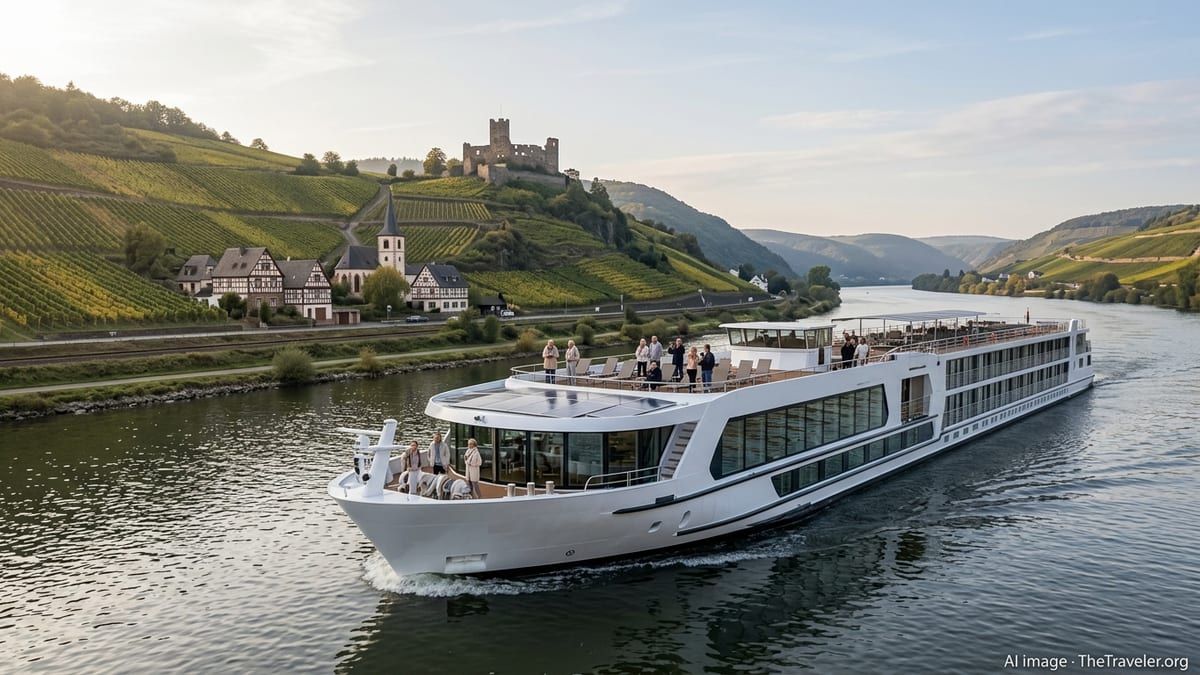
Major waterways are feeling the strain. Reports on the Danube and Rhine describe recurring periods of extremely low water levels, disrupting river cruises and freight navigation and revealing submerged historical relics. For river tourism operators, reduced navigability, shifting sandbanks and unpredictable water depths are becoming operational variables, leading to itinerary changes, capacity adjustments and in some cases the cancellation of entire seasons.
In mountain regions, heat and altered precipitation patterns are affecting both winter and summer tourism. Diminished snowpack and changing runoff regimes can undermine the reliability of water supplies that alpine towns have long depended on for drinking water, spa facilities and artificial snowmaking. European climate risk assessments suggest that many upland areas will need to prepare for more frequent oscillations between flood and drought, complicating infrastructure planning and insurance coverage for hotels and cable car operators.
Tourists themselves are beginning to encounter the visible signs of scarcity. Shorter shower times, notices about towel and linen reuse, closed fountains and brown hotel lawns are becoming more common across southern Europe in late summer. While many visitors accept such measures, surveys referenced in public campaigns indicate that a significant share of Europeans remain poorly informed about local water constraints, leaving room for confusion and reputational damage when restrictions are imposed abruptly.
Policy Responses and the Push for “Water-Wise” Tourism
European policymakers are moving to place water security closer to the center of climate and tourism strategies. The European Environment Agency’s recent “state of water” assessments call for improved efficiency across all sectors, with a particular focus on agriculture and public water supply. At the same time, initiatives such as the European Commission’s #WaterWiseEU campaign seek to reframe water as a finite strategic resource and encourage citizens, businesses and local authorities to adjust consumption habits.
Regional and municipal governments in tourism-intensive areas are experimenting with new tools. Published case studies from destinations such as the Algarve, Balearic Islands and Greek islands describe investments in desalination, leak reduction in ageing networks, seasonal pricing of water, and the use of smart meters in hotels and vacation rentals. Some resorts are marketing advanced recycling and rainwater harvesting systems as part of their sustainability credentials, while urban authorities explore caps on new water-intensive developments.
European tourism organisations, including national promotion boards and sector associations, are increasingly incorporating water resilience into crisis management frameworks. A 2024 report on crises in European tourism highlights how droughts and heatwaves now sit alongside pandemics and geopolitical shocks as key risk scenarios, prompting destinations to develop contingency plans that cover both emergency restrictions and long-term adaptation.
However, analysts note that technical fixes alone are unlikely to suffice in the most stressed regions. Studies on drought in southern Spain and other hotspots emphasise that enduring solutions will require rebalancing overall water demand across sectors, recalibrating growth expectations and, in some cases, reconsidering the carrying capacity of particular coastal and island destinations.
Rethinking the Future of Europe’s Tourism Model
For Europe’s travel industry, the emerging water crisis is not only an environmental concern but a strategic turning point. Tourism accounts for a substantial share of jobs and income in many southern European regions, yet those same regions are projected to face the greatest increases in water stress as the climate warms. Balancing economic dependence on visitors with the physical limits of water resources is becoming a central policy dilemma.
Industry observers point to several avenues of adaptation. These include shifting marketing to shoulder seasons when water demand is lower, promoting less water-intensive products such as cultural and nature-based tourism, and incentivising accommodation providers to meet stringent efficiency benchmarks. Urban planners and regional authorities are also examining how to align tourism strategies with broader water plans, ensuring that new hotels, marinas or golf courses fit within realistic resource scenarios.
Travelers themselves are emerging as part of the solution. Public campaigns increasingly invite visitors to participate in water-saving practices during their stay, echoing long-standing energy-efficiency messaging. As awareness grows of the pressures facing Mediterranean and continental destinations, some tour operators are beginning to provide clearer information about local water conditions and the measures in place to safeguard supplies for residents.
Whether Europe can continue to welcome record numbers of tourists while facing intensifying drought and water scarcity remains an open question. What is clear from recent assessments and on-the-ground experiences is that water resilience is moving from a background issue to a defining factor in the continent’s tourism future.