


More news on this day
Britons planning trips to Spain over the coming days are being urged to prepare for significant disruption, as updated UK government travel advice highlights a national strike, ongoing rail problems and tighter border checks that could affect journeys by air, rail and road.
Get the latest news straight to your inbox!
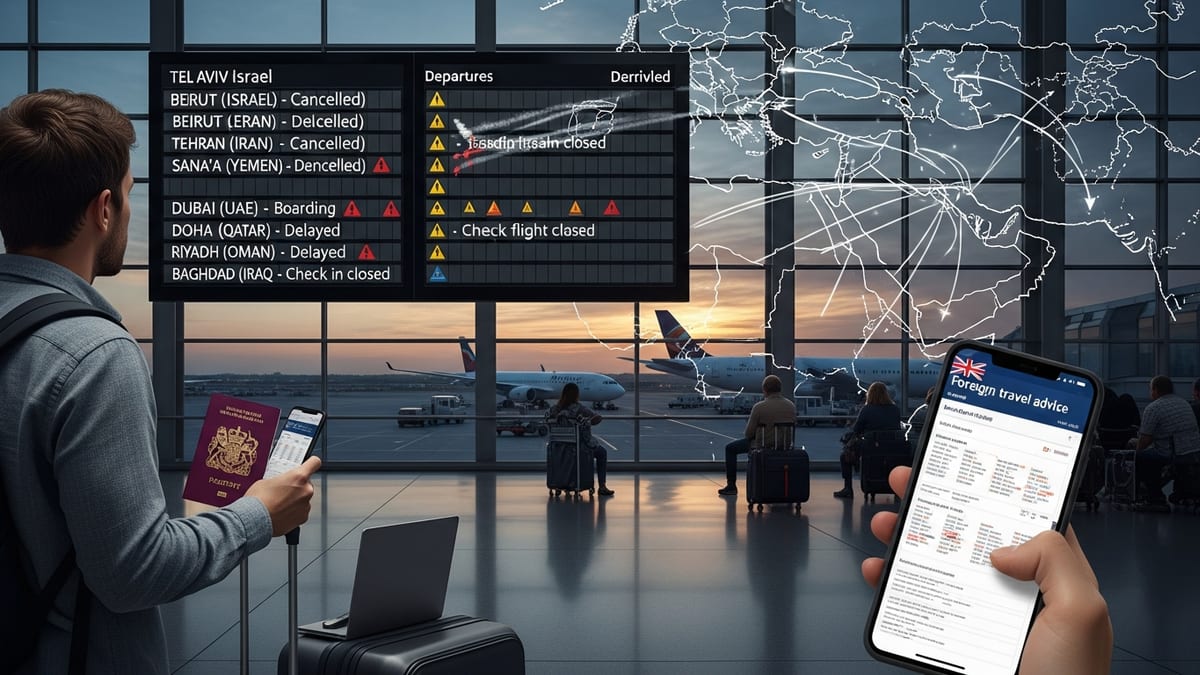
Government travel advice updated as national strike begins
According to the latest update to the UK government’s Spain travel advice, revised on 10 November 2026, a national strike called for 11 November is expected to affect transport systems across the country. The Foreign, Commonwealth and Development Office (FCDO) guidance notes that the industrial action could impact a range of services and advises travellers to check with their transport providers for the latest information before setting out.
The FCDO warning comes at the start of what is usually a busy period for winter sun travel from the UK to Spanish destinations including the Costa del Sol, the Balearic Islands and the Canary Islands. Airlines are expected to operate most scheduled flights, but there is potential for delays where airport staffing, handling services or public transport links are reduced.
Publicly available information from European travel news outlets indicates that rail, metro and local bus services are among the sectors likely to see the greatest impact from strike action. Travellers with tight connections between airports and city centres may be particularly exposed to disruption if frequencies are cut or services are suspended at short notice.
The national strike comes against a backdrop of wider infrastructure pressures across Europe in early November, including a wave of hoax bomb threats affecting passenger jets and media organisations. While there is no specific UK government warning advising against travel to Spain, the combination of local industrial action and regional disruption has prompted a renewed emphasis on contingency planning for trips.
Rail disruption following Toledo high speed collision
The UK advisory also reflects ongoing problems on parts of Spain’s rail network, following a high speed rail collision on 28 October between the towns of Mora and Orgaz in the province of Toledo. The FCDO notes that the incident has led to significant disruption to rail services in the affected corridor.
Spain’s national operator RENFE has published contact details for passengers seeking information on affected services, with a dedicated information line in operation. International travel advisory platforms state that services between Madrid, Ciudad Real and Andalucía, as well as through trains from Barcelona and Valencia towards Andalucía, remain suspended or heavily modified while investigations and repairs continue.
Australian and Canadian government travel advisories, updated in early November, echo the warning about reduced rail connectivity, recommending that travellers check the status of individual trains and consider alternative transport options if their route runs through central Spain. The guidance highlights that replacement buses may have limited capacity and may not match the speed or frequency of the high speed services they replace.
For British visitors planning multi‑city itineraries within Spain, the rail disruption increases the importance of flexible arrangements. Travel industry reports suggest that some tour operators are adjusting itineraries away from affected corridors or shifting longer journeys to domestic flights, adding further strain to busy airport schedules.
Longer queues expected at border control and key airports
In addition to strike and rail issues, travellers are being reminded about new digital border controls due to be phased in at external Schengen borders, including Spanish entry points used by British passport holders. Briefings from European aviation and tourism bodies indicate that the introduction of biometric systems is expected to lengthen processing times at airports during the early stages.
Regional media in Spain and Gibraltar have reported concerns about possible queues at busy crossing points, particularly where infrastructure has limited space for holding passengers during checks. Recent parliamentary publications in the UK have also referenced periodic congestion at the land border between Gibraltar and Spain, illustrating how relatively small changes in inspection procedures can quickly result in long tailbacks.
For holidaymakers, the practical effect is that more time may be needed to clear border control at major Spanish airports, especially during peak arrival waves from the UK. Travel trade coverage notes that families travelling with children and passengers unfamiliar with the new systems are likely to add to processing times in the initial weeks.
Airline and airport advice reviewed in recent days consistently recommends that passengers travelling from the UK to Spain allow additional time at both departure and arrival airports. Some carriers have issued reminders to complete online check‑in as early as possible and to arrive well ahead of the airline’s standard minimum check‑in and bag‑drop closing times.
Knock‑on effects from wider European disruptions
The warning to Britons heading to Spain also sits within a wider pattern of recent disruption across European transport networks. In early November, a series of hoax bomb threats targeted passenger flights and institutions in multiple countries, including Spain and the United Kingdom. Reporting from international news agencies and European broadcasters describes precautionary diversions and security checks that added delays to already busy schedules.
Separately, a technical failure at UK air traffic control provider NATS in September 2026 led to the cancellation of hundreds of flights at major airports such as Heathrow and Stansted, with repercussions lasting well into the following day. Industry analyses of that episode underline how quickly incidents away from a traveller’s intended route can cascade across interconnected European airspace.
While there is currently no specific technical failure affecting UK‑Spain routes, aviation experts quoted in public reports point out that high aircraft loads and tight turnaround times during peak travel periods limit the system’s ability to absorb additional shocks such as industrial action or weather‑related disruption.
For Britons travelling to or through Spain this week, these recent experiences are a reminder that itineraries involving connections, separate tickets or last‑minute changes carry added risk when networks are already stretched. Travel insurance policies that include disruption and missed connection cover are being highlighted by consumer groups as a practical safeguard.
Practical steps for UK travellers heading to Spain
Consumer travel organisations and government guidance outline a series of practical steps for passengers who intend to continue with planned trips despite the disruption risk. The FCDO advice for Spain stresses the importance of monitoring official travel updates in the days and hours before departure, and of maintaining direct contact with airlines, rail operators or tour companies regarding any change to schedules.
Travellers are being encouraged to build additional time into every stage of their journey on 11 November and the surrounding days, including transfers to UK departure airports, check‑in, security, border control and onward connections in Spain. Public transport strikes and revised timetables may make it harder to rely on tight same‑day connections between flights and trains.
International travel advisories from several governments continue to recommend that visitors keep flexible arrangements where possible, particularly for non‑refundable elements such as internal rail tickets and hotel nights linked to a specific train service. In situations where delays are likely, booking accommodation close to onward departure points is seen as one way to reduce the risk of missed connections.
Although Spain remains a popular and generally accessible destination for British holidaymakers, the combination of a national strike, rail disruption and evolving border procedures means that trips in mid‑November 2026 may require more preparation than usual. Travellers who stay informed and build in extra buffers are likely to be better placed to navigate any disruption that does occur.