


More news on this day
The United Kingdom’s latest travel alert for Saudi Arabia, one of the main Gulf destinations and transit hubs for Kenyan migrant workers, is sending fresh ripples through an already fragile labour migration corridor between Nairobi and the Middle East.
Get the latest news straight to your inbox!
New UK Guidance Targets a Region on Edge
Recent updates to United Kingdom foreign travel advice have tightened guidance on journeys to Saudi Arabia and parts of the wider Gulf region, reflecting heightened security and health concerns. Publicly available information shows that several Western governments, including the UK, have in recent weeks shifted parts of the Gulf into higher-risk categories and advised travelers to reassess non-essential trips.
The changes place renewed focus on Saudi Arabia, which functions both as an employment magnet and an aviation hub for East Africans heading to the Middle East. Gulf airports such as Riyadh, Jeddah, Doha, Dubai and Abu Dhabi serve as key connection points for flights originating in Nairobi and other African cities, meaning that updated risk assessments from the UK can affect not just final destinations but also commonly used transit routes.
Travel risk specialists in the education and corporate sectors in Britain are echoing official advice, with internal guidance circulated to staff warning of potential disruption at Gulf airports and recommending that travelers avoid routes that fall under the strictest advisories. Some institutional guidance seen in the public domain also points to the possibility that travel insurance may not be valid if journeys go ahead against official advice, an issue that has implications for both business travelers and contractors working in the region.
For Kenyan workers already in Gulf states, the UK advisories do not directly alter local rules, but they contribute to a changed perception of regional risk. The language used in recent updates highlights concerns about potential spillover from wider Middle East tensions and stresses the need for travelers to monitor host-government announcements and be prepared for short-notice changes to airspace or airport operations.
Kenyan Labour Migration Tightly Linked to Gulf Hubs
Kenya’s own policy papers and labour market assessments describe the Gulf Cooperation Council states as a central destination for the country’s migrant workforce. Official Kenyan documentation and regional research indicate that tens of thousands of Kenyans are employed across Saudi Arabia, the United Arab Emirates, Qatar and neighbouring states in sectors such as domestic work, construction, hospitality, security and retail, with some studies suggesting the figure runs into the hundreds of thousands.
The Kenyan government has, over the past several years, highlighted bilateral labour agreements with Saudi Arabia, the UAE and Qatar as a cornerstone of its overseas employment strategy. Government performance reports circulated in Nairobi point to new or upgraded accords with these states, aimed at expanding opportunities while addressing previous cases of exploitation and improving complaint mechanisms for distressed workers.
This reliance on Gulf labour markets means that any disruption affecting Saudi Arabia in particular can have outsize effects on Kenyan households. Saudi Arabia has been identified in Kenyan skills-gap and migration studies as accounting for the overwhelming majority of recorded overseas job vacancies for Kenyan workers, especially in lower and semi-skilled roles. Recruitment portals supported by the Kenyan authorities describe step-by-step procedures for deployment to Saudi Arabia, Qatar and the UAE, underscoring how institutionalised the corridor has become.
Nairobi also functions as a regional staging point for workers from neighbouring countries heading to the Gulf, according to migration-focused discussion papers. This role as a hub amplifies the impact of sudden route changes, airline diversions or temporary restrictions tied to events in the Gulf, whether they are related to health concerns, security developments or regulatory shifts in destination countries.
Health Curbs and Sudden Route Changes Add to Uncertainty
The latest UK alert comes as Saudi Arabia itself has introduced new public health measures affecting travel from Kenya. At the end of October 2026, the Saudi Press Agency reported that the Kingdom had suspended travel to and from Kenya and halted visa issuance for travelers arriving from the country as part of precautionary steps linked to Ebola risk assessments. The decision included provisions for barring entry to travelers who had recently stayed in Kenya, even if arriving via third countries.
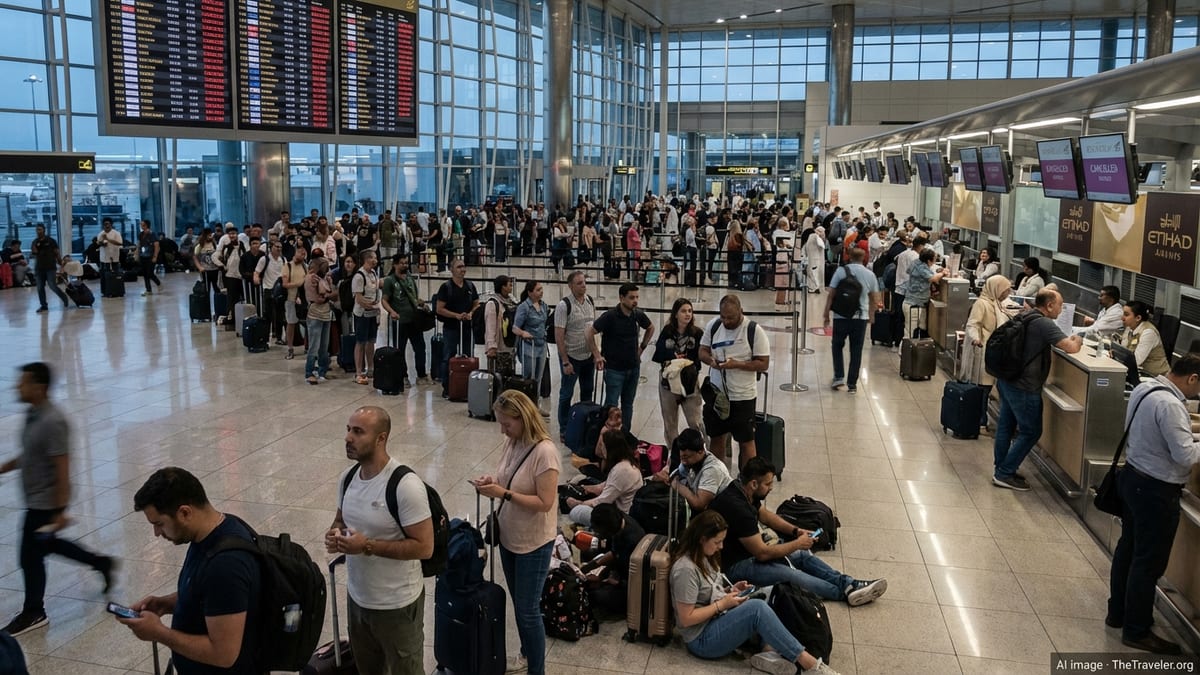
Kenyan media coverage in early November detailed how these restrictions translated into immediate disruption on the ground. Reports from Nairobi described more than 350 Kenyan workers with valid employment visas being denied onward travel to Saudi Arabia and Kuwait and eventually flown back to Jomo Kenyatta International Airport after several days stranded at a transit hub in the United Arab Emirates. Recruitment agencies quoted in that coverage warned that thousands of additional applicants could see their plans delayed or cancelled if the measures persisted.
The combination of Saudi health-related entry curbs and stricter foreign travel advice from partners such as the UK has introduced a new layer of complexity for Kenyan workers and recruiters. Even where flights are still operating, potential travelers must now navigate overlapping requirements, including possible transit restrictions, pre-departure health screenings and last-minute schedule changes as airlines respond to evolving risk assessments.
Travel industry guidance issued in Britain in recent weeks notes that some carriers have already adjusted routes to avoid sensitive airspace around parts of the Gulf and broader Middle East, while others continue to fly according to their normal schedules. Prospective travelers are being urged to check live airline updates and review their insurance coverage carefully before departure, particularly if any segment of their journey passes through areas subject to enhanced advisories.
Impact on Kenyan Jobseekers and Recruitment Agencies
The changing risk picture is being felt most acutely at the point of departure in Kenya. Publicly reported incidents of workers turned back from Gulf-bound flights have heightened anxiety among would-be migrants, who often invest significant resources in recruitment fees, medical tests and training before travel. For many households, Gulf employment promises higher wages and remittances that help offset economic pressures at home, making any delay or cancellation financially painful.
Kenyan parliamentary records and policy debates over the past year have already flagged concerns over transparency in the recruitment chain and the protection of workers once abroad. Lawmakers have questioned the extent to which public officials or politically connected individuals are linked to agencies that facilitate deployment to the Gulf, and have pressed for more stringent oversight, including mandatory travel insurance and clearer channels for workers to report abuse.
Against this backdrop, sudden travel alerts and entry suspensions can strain an ecosystem that is still in the process of reform. Recruitment businesses must now factor in the possibility that carefully arranged placements may be blocked for reasons beyond their control, such as third-country health measures or foreign governments’ security assessments. Some agencies have publicly urged both Kenyan and Gulf authorities to provide faster, clearer communication when restrictions change, to avoid scenarios in which workers are left in legal and financial limbo in transit.
The uncertainty also affects skills development programs that the Kenyan government has promoted as a way to align domestic training with Gulf labour demand. Official skills-gap reports list specific trade and service occupations that are in high demand in Saudi Arabia and neighbouring states, including construction trades, drivers, hospitality staff and health support roles. If corridors remain constrained for an extended period, policy analysts warn that carefully planned training pipelines could face bottlenecks, at least in the short term.
What the Alert Means for Travelers Using Gulf Gateways
For Kenyan workers who also interact with British systems, such as those holding UK residence or citizenship in addition to Kenyan nationality, the latest UK guidance carries practical implications. Insurance providers and employers in the UK often reference official advisories when determining whether trips are covered, which can influence decisions on whether to proceed with assignments routed through Gulf hubs such as Jeddah, Riyadh, Dubai or Doha.
Public-facing travel updates from universities and corporate mobility teams in the UK advise staff to track the Foreign, Commonwealth and Development Office’s country-specific pages, consider alternative routings that avoid the most affected airports where feasible, and maintain a contingency plan for overland exit from Gulf states should air travel be disrupted. Some guidance also recommends carrying sufficient funds and ensuring passports, residence permits and visas are in order in case extended stays become unavoidable due to cancelled flights.
For Kenyan travelers whose journeys do not involve the UK at all, the British alert still serves as an indicator of how international perceptions of Gulf risk are evolving. Travel advisories issued by major sending countries can influence airline route planning, global insurance pricing and even future bilateral discussions on labour mobility and safety standards. Analysts note that shifts in one government’s travel posture are often mirrored, in part, by others, gradually reshaping the operating environment for migrant workers.
As of mid November 2026, both Kenyan and foreign authorities are continuing to monitor security and health developments affecting the Gulf air and labour corridors. For now, published guidance converges on a few core recommendations for anyone traveling from Kenya to or through Gulf hubs: check the latest official advisories before booking or boarding, confirm that health and visa conditions are fully met, and be prepared for itineraries to change at short notice as governments and airlines respond to fast-moving events.