


More news on this day
A fresh hydrogen train concept emerging from the United Kingdom is drawing attention across the rail industry, promising a low-emission alternative for regional lines that are unlikely to be electrified and signalling a new phase in climate-focused transport planning.
Get the latest news straight to your inbox!
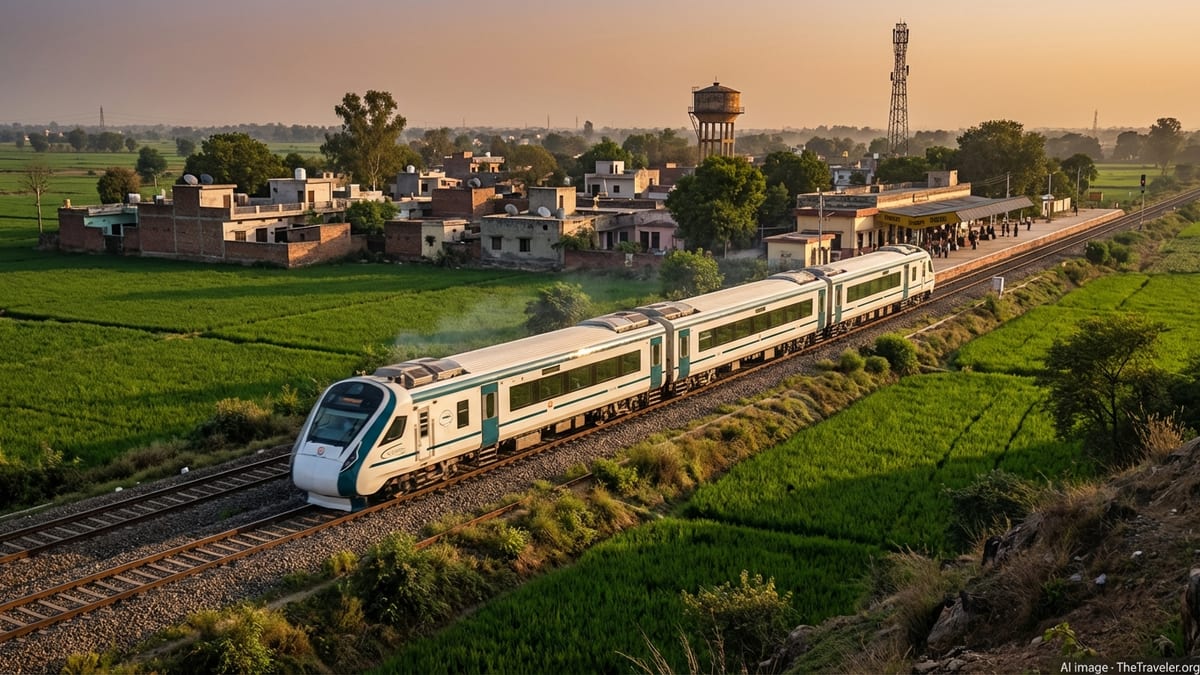
Concept builds on earlier UK hydrogen rail experiments
The UK has been exploring hydrogen traction for several years, but recent design work has turned those trials into a more coherent concept for future passenger fleets. Publicly available information traces the roots of the idea back to demonstration projects such as HydroFLEX and to earlier design studies developed by rolling stock partners for the domestic market. Those initiatives tested how fuel cells, hydrogen storage and batteries could be integrated into conventional multiple units without extensive route electrification.
The newly promoted concept positions hydrogen as a way to serve regional and rural corridors where overhead wires are unlikely to be installed, but where diesel use is increasingly at odds with national climate goals. Concept material indicates a focus on self-powered trains capable of running for several hundred kilometres between refuelling, using on-board fuel cells to generate electricity for traction motors and batteries that capture braking energy.
While the design is at an early stage, industry briefings suggest that it is being framed as a platform that could be adapted for different operators rather than a single bespoke prototype. That approach is intended to make hydrogen traction more commercially attractive, helping manufacturers reuse core components and maintenance regimes across different fleets and contracts.
Technical outline: fuel cells, batteries and flexible range
The concept train uses a hybrid architecture that combines hydrogen fuel cells with lithium-ion batteries, an arrangement that has become standard for most modern hydrogen multiple units in Europe and Asia. In this configuration, hydrogen stored in roof- or underfloor-mounted tanks is fed to fuel cells that produce electricity, which then powers the traction motors. Excess electricity can be diverted to charge the batteries, which support acceleration and capture energy during braking.
Design summaries describe modular power units that can be installed in one or more intermediate cars, keeping passenger saloons at each end of the train. That layout aims to protect capacity while making it easier to service complex equipment away from the main seating areas. Engineers are also studying how the modules could be swapped or upgraded during the life of the fleet, allowing future advances in fuel cell or battery technology to be integrated without full train replacement.
Range and refuelling cycles are central to the proposal. Project material points to target ranges that would allow a full day’s operation on typical regional diagrams with limited refuelling downtime, making the trains viable for busy timetables. At the same time, the design is being framed to accommodate different tank sizes and fuel cell stacks, so that operators can balance range, weight and capacity to suit specific routes.
Hydrogen supply, infrastructure and net zero strategy
The viability of the UK hydrogen train concept rests not only on the rolling stock but also on the development of a supporting fuel network. Recent announcements in the UK energy sector show a growing focus on hydrogen pipelines and production clusters along the east coast and in industrial regions, reflecting a broader government strategy to build a national hydrogen backbone. For rail, this opens the possibility of colocating refuelling depots with industrial users, ports and power plants that are also shifting to low-carbon hydrogen.
Planning documents for the concept highlight the importance of sourcing hydrogen with a substantially lower lifecycle carbon footprint than conventional diesel. Developers are therefore looking at both renewable-based electrolysis and low-carbon production routes linked to carbon capture. The aim is to ensure that the trains deliver genuine emissions reductions across their full energy chain, not only at the point of use where they emit only water vapour.
Integration with existing depots is another priority. Instead of building an entirely separate network of maintenance and refuelling sites, the concept assumes that key facilities would be upgraded with hydrogen storage, compression and safety systems. This incremental approach is intended to reduce upfront costs and make it easier for operators to pilot hydrogen fleets on a limited number of lines before expanding deployment.
Implications for passengers and tourism travel
For travellers, the most visible impact of the UK hydrogen train concept would be quieter, cleaner journeys on routes that today still rely on ageing diesel stock. Hydrogen multiple units typically offer smoother acceleration and lower interior noise, particularly when they draw on battery power at lower speeds. Concept material suggests that designers are also looking at panoramic windows and flexible interiors that can accommodate both daily commuters and tourists with luggage or bicycles.
Tourism agencies have highlighted the potential for low-emission trains to enhance the appeal of rail-based trips through coastal, rural and heritage landscapes. By cutting exhaust fumes and engine noise, hydrogen traction can make travel more comfortable for passengers while reducing disturbances in national parks and small communities that rely on seasonal visitor traffic. The concept is therefore being framed not only as an engineering project but also as part of a broader effort to market the UK as a more sustainable destination.
Improved reliability is another anticipated benefit. A new-build hydrogen fleet designed from the outset for modern signalling and accessibility standards could replace some of the oldest diesel units in the national portfolio. This would bring level boarding, better digital connectivity and contemporary interiors to lines that have sometimes lagged behind the busiest intercity corridors.
Positioning the UK within the global hydrogen rail race
The unveiling of the latest UK hydrogen train concept comes as railways worldwide experiment with alternatives to diesel. Continental Europe has already seen hydrogen multiple units enter passenger service on non-electrified lines, while new projects are under way in markets as varied as India, South Korea and North America. In that context, UK initiatives are being closely watched as a test of how a mature, congested network can introduce a new traction technology at scale.
Industry analysis suggests that success will depend on aligning rail projects with broader national hydrogen investments so that trains can benefit from shared infrastructure and predictable fuel costs. If that alignment can be achieved, the UK concept could evolve from drawings and demonstrators into a template for rolling stock that operates across multiple regions and possibly other countries that share similar network characteristics.
For now, the concept marks a visible step in the country’s ambition to decarbonise regional rail while keeping routes open that are unlikely to see full electrification. As feasibility studies continue, passengers, regional authorities and tourism boards will be watching how quickly the design can progress from concept to contract and, eventually, to regular service on some of the UK’s most scenic lines.