

Cais do Sodré has evolved from a gritty transport hub into one of Lisbon’s most magnetic neighborhoods, fusing a busy riverfront station, a powerhouse food hall, and some of the city’s liveliest nightlife.
Travelers will find waterfront promenades, ferries gliding across the Tagus River, warehouse clubs, rooftop bars, and a culinary scene anchored by the famous Mercado da Ribeira and Time Out Market. This guide walks you through how the area works in practice: how to get there, what to eat, where to go out, and what to expect on the ground from morning coffee to last call.
Getting Oriented in Cais do Sodré
Cais do Sodré sits on Lisbon’s central waterfront, at the western edge of downtown Baixa and just below Chiado and Bairro Alto. It is framed by the Tagus River on one side and a dense grid of 19th‑century streets on the other, with Avenida 24 de Julho running past the main market building. The area functions as a crucial transport interchange, but step a block away from the station and it quickly becomes a neighborhood of cafés, bars, hostels, and creative spaces.
The core landmark is Cais do Sodré Station, which brings together metro, suburban trains, ferries, and numerous bus and tram routes. The metro’s Green Line terminates here, offering quick access to Baixa, Rossio, and the broader network. Above ground, regional trains roll west along the coast toward Cascais, while ferries depart across the Tagus to Cacilhas, Seixal, and Montijo. This tight cluster of connections is part of why the neighborhood became such a convenient base for visitors.
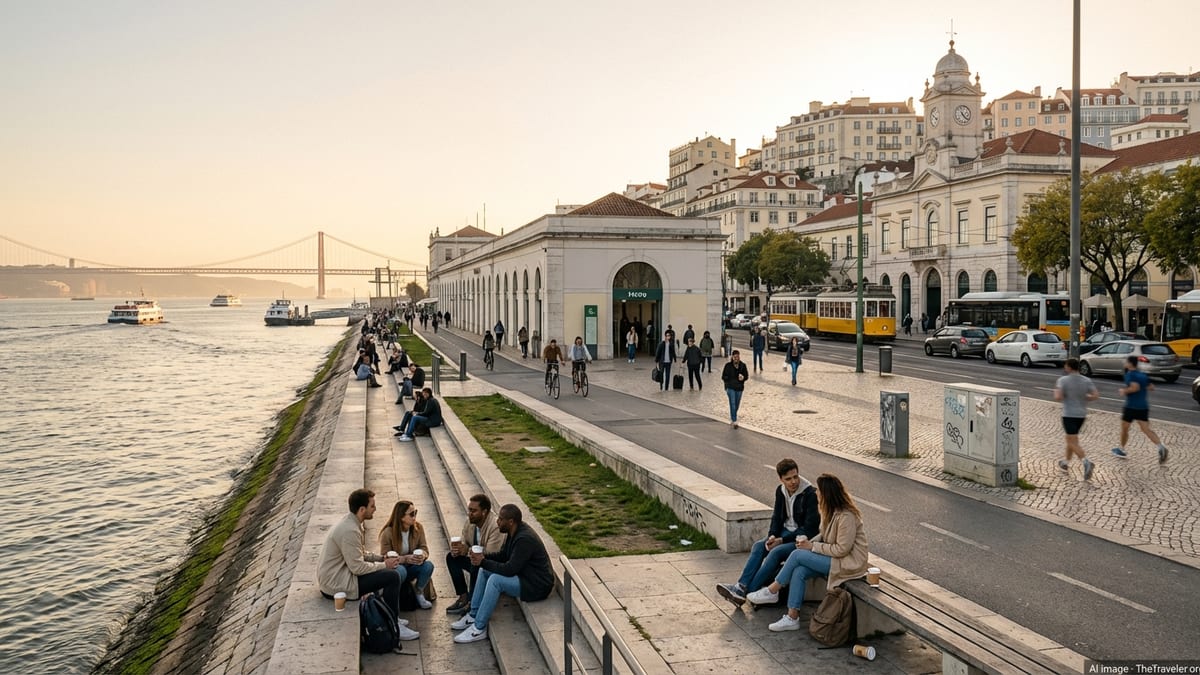
From the station forecourt, it is only a couple of minutes to just about everything. Cross the road in one direction and you are inside Mercado da Ribeira and the Time Out Market food hall. Walk the other way and you reach the riverfront lawns and promenades of Ribeira das Naus, which now acts as an “urban beach” with deck chairs, kiosks, and steps leading down to the water. A short stroll uphill connects you to the Chiado district and its boutiques, while Pink Street and many of the bars sit just behind the station on Rua Nova do Carvalho and surrounding lanes.
Because the area is compact and flat, you can comfortably explore Cais do Sodré on foot. Many travelers use it as a staging post: they might arrive by train after a beach day in Cascais, drop into Time Out Market for dinner, wander to Pink Street for a drink, then either walk or take the metro back to their accommodation elsewhere in the city. Understanding this flow will help you plan your own movements and avoid the densest crowds when possible.
The Waterfront: Promenades, Ferries, and River Views
The Tagus River is central to the feel of Cais do Sodré. Historically this was a working dockside neighborhood, and while much of the heavy industry has gone, the water is still full of ferries, pleasure boats, and the occasional cruise vessel. For visitors, the waterfront here offers some of Lisbon’s best easy-access river views without having to climb any hills.
Immediately east of the station you will find Ribeira das Naus, a renovated riverside area that functions like an urban beach. There is no sandy shore, but there are broad steps leading down toward the water, grassy patches, and wide paved walkways popular with joggers, cyclists, and evening strollers. On warm days, locals sun themselves on the steps and linger with takeaway coffees or beers from kiosk bars, while sunset often draws crowds who sit facing the April 25 Bridge and watch the light change over the river.
The ferry terminal, adjacent to the train and metro, is your gateway to the south bank. Frequent boats shuttle across to Cacilhas, where you can connect to buses for the clifftop viewpoint of Cristo Rei or small seafood restaurants on the Almada waterfront. Other routes reach Seixal and Montijo, opening up less touristy corners of the metropolitan area. Even if you are not planning a day trip, a short round‑trip ferry journey can be an inexpensive way to see Lisbon’s skyline from the water.
Along Avenida 24 de Julho, west of the station and the market, the riverfront feels more urban and fast‑moving, with traffic humming between central Lisbon and the Alcântara docks. Here you will find additional viewpoints, occasional pop‑up bars, and easy access to the cycling paths that run alongside the river. This corridor also leads toward the Santos and Alcântara districts, where several of the city’s larger nightclubs and converted warehouse venues are located, so it is worth getting your bearings if you plan to explore the nightlife beyond Cais do Sodré itself.
Mercado da Ribeira and Time Out Market: The Food Heart of the Area
Set just across the road from Cais do Sodré Station, Mercado da Ribeira is one of Lisbon’s historic food markets and now a dual‑purpose venue. On one side of the building, the traditional market operates in the mornings, with vendors selling fresh fish, seafood, vegetables, fruit, and flowers. This is where local chefs and residents still shop for ingredients. On the other side, the Time Out Market food hall brings dozens of curated restaurant stalls, dessert counters, and bars together under one soaring metal roof.
The food hall is one of the city’s most visited attractions. You will find more than 30 to 40 food and drink concepts, from kiosks run by Michelin‑recognized chefs to simple places serving petiscos, grilled seafood, steak sandwiches, gourmet burgers, sushi, and regional specialties. Communal wooden tables fill the center, surrounded by counters where you place your order, collect your food, and then find a seat. The atmosphere is informal and buzzy, particularly at lunch and in the evenings when both locals and tourists compete for space.
Time Out Market typically opens late morning and runs through to midnight most days, staying open later into the early hours on Thursday, Friday, and Saturday. The traditional produce market side opens much earlier and winds down by early afternoon. The upper floor of the building hosts additional venues, including an events hall, a cooking school, and coworking spaces, which means there can be special events or live music programmed on certain nights.
If you want to experience the food hall with less stress, aim for late morning or mid‑afternoon on weekdays, when it is lively but still manageable. Peak evening hours, especially Friday and Saturday from about 7:30 pm onward, can be extremely crowded, with long waits for seating and popular stalls. Prices are noticeably higher than at neighborhood tascas elsewhere in Lisbon, but you are paying for variety and convenience in one place. For a more local feel, consider visiting the traditional market section early in the day to see the fishmongers and produce stands at work before the crowds arrive.
Nightlife in Cais do Sodré: Pink Street and Beyond
Cais do Sodré has some of Lisbon’s densest nightlife, especially around Pink Street, known in Portuguese as Rua Nova do Carvalho. Once a rough‑edged red‑light district catering to sailors, it has been reborn as a neon‑lit strip of bars, small clubs, and music venues. The pavement is painted pink, giving the street its international nickname and making it a magnet for photographers during the day and for partygoers after dark.
By early evening, Pink Street feels casual and sociable, with people drifting between bar terraces and cocktails or wine served at sidewalk tables. As the night progresses, the energy rises. Bars that were nearly empty at 9 pm can be jammed by midnight, with music ranging from commercial pop and hip hop to rock and electronic. On warm nights, much of the social life spills into the street itself, with groups clustering under the colored lights and archways.
Signature venues reflect the area’s layered history. Pensão do Amor is a cocktail bar housed in a former brothel, retaining ornate details and a tongue‑in‑cheek cabaret aesthetic. Smaller clubs and bars along and around Pink Street take on different themes, from Caribbean‑influenced playlists to indie nights and occasional live bands. A little further from the main strip, venues like Lounge offer a more relaxed, alternative atmosphere, drawing a mix of locals, artists, and visitors who prefer a less frenetic scene.
Beyond Pink Street, nightlife radiates into the surrounding blocks and up the hill toward Chiado and Bairro Alto. Cais do Sodré is particularly strong on late‑night options, with many spots staying open into the early hours, especially from Thursday to Saturday. If you are looking for very large dance clubs with big‑room sound systems, several are located a short taxi or rideshare ride away in Santos and Alcântara, but many people start or end their night in Cais do Sodré because of its central location and range of choices.
Safety, Atmosphere, and Practical Tips After Dark
As with any entertainment district that draws large numbers of visitors, it helps to know what to expect from Cais do Sodré at night. The area is generally busy rather than empty, which many travelers find reassuring, but the combination of crowds, alcohol, and late hours calls for the same awareness you would apply in nightlife zones anywhere in Europe.
Pink Street and its immediate surroundings can become congested from around 11 pm onward, especially on weekends and during peak travel seasons. Pickpocketing is the most commonly reported petty crime, typically targeting people distracted by the scene or carrying phones loosely in their hands or back pockets. Keep your valuables zipped away, avoid leaving bags unattended on outdoor tables, and be especially mindful in the densest crowds near doorways and bar entrances.
Door policies at some venues are known to be inconsistent, and groups of men in particular may find entry more difficult at certain clubs or subject to abrupt refusals. Dress codes are not strict by big‑city standards, but clean casual clothing and respectful behavior at the door tend to make things smoother. If you encounter an unwelcoming door or feel the atmosphere in a bar is not right for you, the best option is simply to move on; there are plenty of alternatives within a few minutes’ walk.
Public transport remains a realistic option if you plan your night. Metro services do not run through the night, so check the last Green Line departure from Cais do Sodré before you head out. Ferries and suburban trains also wind down later in the evening, but taxis and rideshares are widely available at most hours. If you are staying within walking distance, stick to well‑lit streets, avoid overly quiet alleyways, and if you are alone late at night, consider pairing up with others from your group for the walk back.
Daytime Life, Cafés, and Local Color
Although Cais do Sodré is often discussed in terms of night‑time hedonism, it has a distinct atmosphere during the day. Commuters stream through the station, workers head to offices and coworking spaces, and a steady flow of visitors passes in and out of Time Out Market. The bars on Pink Street look almost subdued in daylight, some shuttered until evening, others repurposed as quiet spots for coffee or lunch.
Several streets between the station and Chiado are filled with cafés serving espresso, pastel de nata, toasts, and light lunches. These are good places to watch the city’s rhythms, from office workers on quick breaks to tourists plotting their day trips. Small specialty coffee shops and modern brunch spots have opened in recent years, adding to the traditional pastelarias and giving the neighborhood a more cosmopolitan flavor.
The area’s creative side is visible in its street art, independent galleries, and design‑focused shops sprinkled around the backstreets. Some former warehouses and docks have been converted into cultural spaces and studios, while small galleries and concept stores showcase Portuguese fashion, crafts, and homeware. Because of its strategic position between downtown and the western waterfront districts, Cais do Sodré attracts a mix of long‑term residents, students, digital nomads, and short‑stay visitors, creating an eclectic but mostly relaxed daytime energy.
Walking uphill, you quickly transition into Chiado’s elegant squares and theaters, while a riverside stroll can lead you all the way toward Belém if you are ambitious. Many travelers choose to start the day with a coffee in Cais do Sodré, explore the market, then either head off by train or ferry for an excursion or wander the neighboring districts on foot. Returning in late afternoon lets you see the shift as terraces fill for pre‑dinner drinks and the nightlife slowly sparks to life.
Getting To and Around Cais do Sodré
Reaching Cais do Sodré is straightforward from most parts of Lisbon. The neighborhood’s station is the final stop on the Green Line of the metro, linking directly to central hubs such as Rossio and Baixa‑Chiado. For many visitors staying along the metro network, this will be the fastest route, with trains running every few minutes during the day and early evening. The station is equipped with escalators and elevators, making it one of the more accessible waterfront entry points.
Trams and buses also converge on Cais do Sodré. Historic tram route 15, serving the riverside corridor toward Belém, stops nearby, and numerous bus lines connect the district to key areas such as Marquês de Pombal, the eastern waterfront, and residential neighborhoods further north. Surface stops are clustered around the station and Avenida 24 de Julho, which means you rarely need to walk far to make a connection. If you are carrying luggage and arriving from the airport, you can transfer to the metro at Alameda or connect by bus to reach Cais do Sodré.
From the same transport node, regional trains depart toward the beach towns along the Cascais line. This makes Cais do Sodré a natural springboard for day trips to coastal destinations like Estoril and Cascais. When you return in the late afternoon or evening, you step directly back into the neighborhood’s dining and nightlife options. Ferries across the river depart from the adjoining terminal; crossing times and frequencies vary by destination, but Cacilhas is particularly popular for an inexpensive ride and access to riverside seafood restaurants.
Within the neighborhood itself, walking is the norm. Distances between key points such as the station, the market, Pink Street, and the waterfront promenade are short, and the terrain is almost entirely flat until you begin climbing toward Chiado. Bicycles and electric scooters are options along the riverfront paths, but they are less comfortable on the cobbled side streets. Taxis and rideshares are easy to hail or book for late‑night returns, trips to larger clubs outside the immediate area, or early‑morning departures when public transport is less frequent.
The Takeaway
Cais do Sodré is one of Lisbon’s most dynamic districts, shaped by its history as a port, station, and nightlife quarter. For visitors, it offers a compact package: a major food hall set in a historic market, a waterfront of ferries and sunset views, and a dense cluster of bars and clubs that come alive after dark. Because everything revolves around the same few blocks, you can easily combine dinner, a stroll by the river, and a night out without ever needing more than a short walk.
At the same time, it helps to approach the neighborhood with realistic expectations. Time Out Market is vibrant but can be crowded and expensive compared with simple restaurants elsewhere in the city. Pink Street is atmospheric and fun, but the late‑night crush, door policies, and petty theft risks mean you should keep your wits about you. If you plan ahead, visit the market earlier in the day, take advantage of the riverfront for a breather, and choose venues that match your mood, Cais do Sodré can become one of the highlights of your stay in Lisbon.
Whether you use it as a base for day trips, a gateway to the south bank, or simply a place to eat and go out, this waterfront neighborhood is an essential part of understanding contemporary Lisbon. It embodies the city’s ongoing transformation, where historic buildings house modern concepts and old working docks now frame some of the most photographed streets and night scenes in Europe.
FAQ
Q1. Where exactly is Cais do Sodré and how long does it take to get there from central Lisbon?
Cais do Sodré sits on the riverfront just west of downtown Baixa and directly below the Chiado district. From central points like Rossio or Baixa‑Chiado, it is typically one or two stops on the metro’s Green Line or a 10 to 15 minute walk downhill.
Q2. Is Cais do Sodré safe at night for solo travelers?
Cais do Sodré is busy rather than deserted at night, which many solo travelers appreciate, but you should take standard big‑city precautions. Watch out for pickpockets in crowded areas like Pink Street, keep valuables secure, moderate your alcohol intake, and stick to well‑lit streets when walking back to your accommodation.
Q3. What are typical opening hours for Time Out Market and the traditional Mercado da Ribeira?
The traditional market side usually opens early in the morning and closes by early afternoon, while the Time Out Market food hall opens late morning and runs until around midnight, staying later into the early hours from Thursday to Saturday. Exact hours can change, so it is wise to check locally just before your visit.
Q4. How expensive is it to eat and drink in Cais do Sodré compared with the rest of Lisbon?
Prices in Cais do Sodré are generally higher than at small neighborhood eateries in less touristy areas. Expect to pay a premium at Time Out Market and many Pink Street bars, particularly for cocktails and craft drinks. You can still find more affordable options by choosing simpler dishes, sharing plates, or exploring side streets away from the main strips.
Q5. When does Pink Street get busy and what kind of nightlife can I expect?
Pink Street is relatively calm in the early evening and becomes much busier from around 11 pm onward, especially on Thursdays, Fridays, and Saturdays. The nightlife leans toward mainstream bar and club culture with commercial music, DJs, and a young, international crowd. Nearby streets and alternative venues offer more relaxed or eclectic scenes if you prefer something quieter.
Q6. Can I use Cais do Sodré as a base for day trips by train or ferry?
Yes. Cais do Sodré Station is the starting point for the coastal train line to Estoril and Cascais, making beach day trips very convenient. The adjacent ferry terminal connects to destinations on the south bank of the Tagus, such as Cacilhas, which is popular for riverside walks and seafood restaurants.
Q7. Is it worth visiting Cais do Sodré during the day if I am not interested in nightlife?
Absolutely. During the day, the neighborhood offers the historic market, the food hall, easy riverside walks at Ribeira das Naus, and good connections to other parts of Lisbon. The atmosphere is more relaxed, and it is a practical base for exploring the city and nearby coastal areas.
Q8. How should I dress for a night out in Cais do Sodré?
Dress codes are generally casual, but smart casual is a safe choice, especially if you plan to enter clubs. Comfortable shoes are helpful for walking on cobblestones. Some doors can be selective, particularly for large single‑gender groups, so a neat appearance and respectful behavior at the entrance can make access smoother.
Q9. Are there good options for vegetarians and people with dietary restrictions?
Time Out Market and many restaurants in the area offer vegetarian dishes and increasingly cater to vegan and gluten‑free diets. Because each stall or restaurant has its own menu, it is worth checking options in advance or asking staff directly about ingredients and potential adaptations.
Q10. How many hours should I plan to spend in Cais do Sodré on a first visit?
For a first visit, allow at least half a day. This gives you time to explore the market, enjoy a meal at Time Out Market, stroll along the waterfront, and linger over a drink as the evening begins. If you also want to experience the late‑night bar and club scene, expect to extend your stay well into the night.