

 Follow us on Google
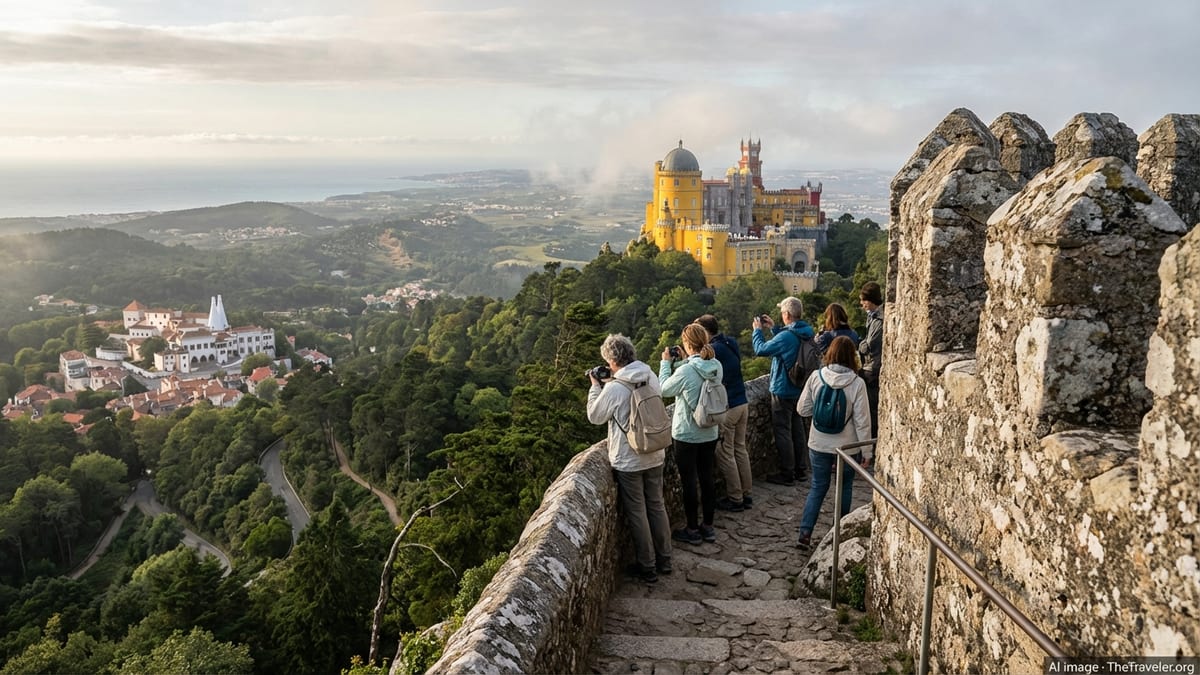
Sintra looks like it has been sketched from the pages of a storybook. Colorful palaces perch on misty hills, romantic gardens spill down the slopes of the Serra de Sintra, and crumbling castle walls offer sweeping views of the Atlantic and Lisbon’s coastline.
Just 40 minutes from Lisbon by train, this small town has become one of Portugal’s most visited day‑trip destinations, and its popularity only continues to grow. This guide brings together the latest practical information for 2025 and 2026, outlining how to experience Sintra’s palaces and viewpoints, how to navigate new crowd‑management rules, and what to expect once you arrive.
Why Sintra Captivates Travelers
Sintra was long a retreat for Portuguese royalty and aristocrats escaping Lisbon’s heat. The town’s microclimate, shaped by the nearby Atlantic Ocean and forested hills, creates cooler temperatures and a frequent veil of mist that adds to its mystique. Nineteenth‑century romantics fell in love with the landscape, commissioning palaces and villas that mixed Gothic, Moorish, and Manueline styles. Today those same silhouettes draw photographers and history lovers from around the world.
Unlike many historic towns centered on a single landmark, Sintra is really a cluster of major sights spread across the hills: the National Palace of Pena in its bright reds and yellows, the fortress walls of the Moorish Castle, the mysterious gardens of Quinta da Regaleira, and the white conical chimneys of the National Palace in town. Add to this smaller estates, forest trails, and ocean viewpoints, and you have far more than you can realistically see in a single day. That is why planning and prioritizing are essential.
Expect Sintra to feel busy year‑round, with a pronounced peak between June and September and on weekends. Tourism authorities have responded with timed‑entry systems, shuttle buses, and more active traffic management on the narrow mountain roads. Visitors who arrive early, buy tickets in advance, and build in time simply to wander the old town’s lanes will find that Sintra still delivers the same sense of wonder that inspired Lord Byron and countless travelers after him.
Getting to Sintra and Moving Around
For most visitors, the easiest and most reliable way to reach Sintra is by train from Lisbon. Direct services on the Sintra line run from Rossio or Oriente stations, taking around 35 to 45 minutes depending on the departure. Trains typically run every 20 to 30 minutes from early morning until just after midnight, and you do not need to reserve in advance. Fares are modest, and seniors over 65 generally receive a discount with valid ID. A rechargeable transport card used across Lisbon’s metro and buses is accepted on this route, and many city passes include the train ride as well.
Driving from Lisbon takes roughly 30 to 40 minutes via the main highway, but visitors should be aware that Sintra has tightened private car access near the main monuments. From 2025 into 2026, local authorities have been increasingly restricting traffic on the mountain roads leading to Pena Palace and the Moorish Castle, and parking near major sights is extremely limited. The most practical approach for drivers is to park in designated lots near Sintra train station or on the outskirts and continue by bus, shuttle, or taxi.
Once in Sintra, public buses and small shuttles link the historic center with the hilltop attractions. Classic circular routes connect Sintra station and town center with stops for Quinta da Regaleira, the Moorish Castle, and Pena Palace, typically running every 20 to 30 minutes in high season. Tickets can be purchased on board, and there are options for single rides or day passes that cover multiple routes, which may be better value if you plan to visit several sites in one day. Small tuk‑tuks and rideshares operate as well, but prices rise in peak periods and there can be queues at closing time.
Sintra is compact but steep. Distances between sights can look short on a map but often involve sustained uphill walking. From the center to Pena Palace, for example, it is roughly four kilometers with a significant elevation gain, which can take around an hour on foot. For reasonably fit travelers, one option is to take a bus uphill to the highest point of your day, such as Pena, then descend gradually on foot via signed trails and minor roads, stopping at the Moorish Castle and finally Quinta da Regaleira before returning to town.
Pena Palace and Park: Fairytale on the Hilltop
The Park and National Palace of Pena are Sintra’s most iconic sights, instantly recognizable by their vivid yellow and red towers, tilework, and sweeping terraces. Sitting at nearly the highest point of the Serra de Sintra, the palace is built atop a former monastery and surrounded by a vast romantic park filled with winding paths, ponds, and exotic trees. It is the single most in‑demand attraction in Sintra, and visiting now requires more advance thought than it once did.
As of late 2025 and into 2026, Pena Palace operates with timed entry for the interior. The park typically opens at 9:00 a.m. and closes at 7:00 p.m., while the palace interior opens at 9:30 a.m. and closes at 6:30 p.m., with last entry around 5:30 or 6:00 p.m. Tickets can be purchased for the park alone or for combined palace and park access. Adult palace‑and‑park tickets are around 20 euros, with slightly reduced prices for youths and seniors and family tickets for two adults and two children or teens. Buying online several days in advance not only secures a time slot but often unlocks small discounts and bundled savings with other Sintra monuments.
Your visit begins at the park entrance, where staff scan digital or printed tickets. From there, the palace stands further uphill. You can either walk about 15 minutes along a steep paved path or pay a small supplemental fee for the internal shuttle, which makes the climb in a few minutes and is particularly useful for families, older visitors, or anyone visiting during the heat of the day. At the top, you will join the queue for the palace interior at your assigned time. Even with timed entry, there can be lines, especially at mid‑morning and early afternoon, but they move steadily as groups are fed through the richly decorated rooms and terraces.
Inside, you pass through opulent salons, royal bedrooms, and a beautifully tiled cloister. However, some of the best moments at Pena come on the exterior walkways and viewpoints. The Queen’s Terrace looks out over the ridge to the Moorish Castle’s stone ramparts, while various balconies frame views down to the coastline and across the forest canopy. Weather can change rapidly here. What begins sunny in Lisbon can be misty and cool at Pena, so bring a light layer even in summer. Early morning and late afternoon tend to be less crowded and more atmospheric, with softer light for photography.
Quinta da Regaleira and the Magic of Hidden Gardens
If Pena Palace provides the fairy‑tale postcard view of Sintra, Quinta da Regaleira delivers its most intriguing and layered experience. Just uphill from the historic center, this estate is known for its lush gardens filled with grottos, tunnels, towers, and symbolic features, most famously the Initiation Well, whose spiral staircase descends deep into the earth. The site explores themes from alchemy and Freemasonry to Portuguese mythology, and rewards those who take their time.
Quinta da Regaleira generally opens at 10:00 a.m. year‑round. Closing times vary slightly, with the gardens usually closing between 6:30 p.m. and 7:30 p.m. depending on the season. From November 2025, the management has been enforcing stricter entry windows, with visitors required to enter close to the start time printed on their ticket and with only a short grace period for late arrivals. There is no parking on site, so visitors either walk from central Sintra in about 15 minutes or arrive by local bus or taxi.
While there is a palace to see, most of your time here will likely be spent outdoors. Paths wind past lakes, terraces, and small towers, with multiple levels connected by steps and sometimes slippery stone surfaces. The Initiation Well itself is often the most crowded area, and there can be a wait to descend. Once inside, expect low light and damp, narrow tunnels that emerge at surprising points around the gardens. Comfortable, grippy footwear is strongly recommended. Children generally find the estate captivating, but guardians need to keep an eye out near drops, dark passages, and water features.
Plan at least two hours at Quinta da Regaleira, longer if you enjoy photography or quiet corners. It is often a highlight for independent travelers because you can explore freely without a prescribed route. To avoid peak crowds, consider visiting in the late afternoon after many day‑trippers have already left for Lisbon or structured tours have departed. Audio guides and occasional guided visits are available for those who want more background on the estate’s symbols and history.
Moorish Castle, Sintra National Palace, and Other Highlights
Perched on a ridge not far from Pena, the Moorish Castle is a reminder of Sintra’s earlier history. Originally built by North African Moors in the early medieval period, its remaining walls and towers now form a dramatic silhouette above the town. Getting there requires a steep walk or a short bus or taxi ride from the center or from Pena, but the reward is a 360‑degree panorama that many consider the best view in Sintra. On a clear day, you can see the Atlantic, the Tagus estuary, and much of Lisbon’s metropolitan area.
The castle typically opens around 9:30 a.m., with last entry in the late afternoon and closing by early evening, slightly later in summer. Paths inside the site include stairs, uneven cobbles, and exposed wall walks with guardrails. It is not ideal for those with a fear of heights, but there are lower viewpoints and interpretive panels for visitors who prefer to stay off the highest sections. A combined ticket with Pena Palace is often available and can be a good value if you plan to visit both in a single day.
Back in town, the National Palace of Sintra stands out for its distinctive white chimneys and its location in the heart of the historic center. This palace was used over centuries by Portuguese monarchs and reflects a mix of Gothic, Manueline, Moorish, and Renaissance influences. Inside, rooms like the Swan Room and the Coat of Arms Room showcase painted ceilings and tiles that offer insights into court life. The palace normally opens by mid‑morning and closes in the early evening, and because it is close to shops and cafés, it works well as either a first or last stop on your route.
Other notable sites include the Palace and Gardens of Monserrate, further from the center but celebrated for their botanical diversity and romantic architecture, and the small Convent of the Capuchos, hidden in the woods and known for its austere cork‑lined cells. Opening conditions for some of these smaller sites can change due to conservation work, so it is worth checking locally once you arrive in Sintra if you intend to visit beyond the core trio of Pena, Quinta da Regaleira, and the Moorish Castle.
Planning Your Route, Timing, and Tickets
With limited hours and rising visitor numbers, effective planning is now the difference between a rushed, stressful day and a satisfying visit. The first choice is whether to visit Sintra as a day trip or to stay overnight. A full day from Lisbon allows time for two or three major sights, but you will be moving almost continuously. An overnight stay gives you a quieter evening and early morning in the town, with more flexibility to experience parks and viewpoints outside the busiest hours.
Most day‑trippers will want to secure a morning time slot for Pena Palace, then work downhill through the Moorish Castle and finally Quinta da Regaleira before returning to Sintra station. For this route, consider catching a train that arrives in Sintra between 8:30 and 9:00 a.m. This gives you time to walk or take a bus up to Pena’s park gates before the palace interior opens at 9:30 a.m. Once you have explored Pena and its terraces, you can either walk about 10 to 15 minutes down to the Moorish Castle or hop a short bus or tuk‑tuk ride.
After enjoying the castle walls and viewpoints, continue downhill toward the town, on foot or via a bus that stops near Quinta da Regaleira. Plan to reach Regaleira by mid to late afternoon, when lines for the Initiation Well may be slightly shorter and the low light can be particularly photogenic in the gardens. If you still have energy and time, you can finish with a quick look around the center or a brief visit to the National Palace of Sintra before taking an evening train back to Lisbon.
Ticketing strategy matters. Buying combined tickets online for multiple Sintra monuments often yields small percentage discounts and sometimes allows you to avoid ticket‑office lines. However, note that Pena requires a specific time slot for the interior, while access to parks and other sites is generally valid throughout the day. Factor in transit times between monuments and allow for queues at security or entry points. If you are flexible, visiting in the shoulder seasons of March to May and October to early November can offer more manageable crowds and pleasant weather.
Weather, Crowds, and What to Pack
Sintra’s microclimate is part of its charm but can surprise unprepared visitors. Even on hot summer days in Lisbon, Sintra can feel cooler and more humid, with mornings and evenings bringing fog and strong breezes on the hilltops. In winter and early spring, rain is common and slopes can become muddy. Throughout the year, temperatures at Pena Palace and the Moorish Castle are noticeably cooler than in the town below.
For most of the year, layered clothing is essential. Bring a light jacket or sweater that you can easily pack away when descending into the town or when the sun emerges. In summer, a hat, sunglasses, and sunscreen are important, especially for time spent on exposed castle walls and palace terraces. Comfortable, closed‑toe shoes with good grip are critical. You will be walking on cobblestones, uneven paths, and occasionally wet stone steps, particularly in the gardens and tunnels of Quinta da Regaleira.
In terms of crowds, expect the busiest conditions from June through September, on weekends year‑round, and on public holidays. Midday is the peak period at nearly all attractions, especially Pena. To ease your experience, aim to visit the most popular sites early in the morning or after 4:00 p.m. Many visitors with limited time try to see everything in a single circuit between late morning and mid‑afternoon, which is when queues and shuttle buses are fullest. Traveling in the shoulder seasons can reduce lines, but major sites are rarely empty.
Bring water and light snacks, as options around the monuments can be limited, especially in the late afternoon, and prices are generally higher than in town. That said, there are cafés and kiosks near entrances where you can pause, and the historic center offers plenty of places to sample local specialties such as travesseiros and queijadas. A small daypack, reusable water bottle, and rain cover or umbrella in cooler months will make your day much more comfortable.
Staying, Eating, and Experiencing Sintra Beyond the Sights
While Sintra works as a long day trip, staying overnight reveals a different side of the town. Once day‑trippers depart, the lanes around the National Palace grow quieter, and you can enjoy views of the illuminated hills without the daytime crowds. Accommodation options range from boutique guesthouses in historic mansions to modern hotels and budget hostels, with many properties clustered near the center or a short walk from the train station. Booking ahead is advisable from late spring through early autumn, especially on weekends.
Dining in Sintra leans toward traditional Portuguese cuisine, with plenty of restaurants serving grilled fish, hearty stews, and petiscos (small plates). Many establishments cater to visitors, so it is worth asking locals or your host for recommendations to avoid the more generic offerings directly on the busiest streets. For a quick break between monuments, cafés near the National Palace and in the back streets offer coffee, pastries, and light lunches. Trying a warm travesseiro, a flaky almond pastry associated with Sintra, has become an informal rite of passage for many travelers.
Beyond palaces and food, Sintra rewards those who slow down. Signed walking trails lead through the forested hills of the Serra de Sintra, revealing viewpoints and small chapels along the way. On the western slopes, roads lead out toward the Atlantic, where coastal spots such as Azenhas do Mar and Praia da Adraga showcase cliffs and rugged beaches. These require more time and transport than a focused palace itinerary, so they are best suited to visitors with at least two days in the region.
Even with only one day, you can find quieter moments by stepping away from the main flows. A short stroll behind the National Palace leads to residential streets and small viewpoints, while early morning walks around town let you admire tiled façades and flowering gardens before tour buses arrive. Approached in this way, Sintra becomes less of a checklist and more of a layered landscape that invites you to imagine its past residents and continue exploring whenever you return.
The Takeaway
Sintra’s combination of fantastical architecture, dramatic views, and dense history has made it one of Europe’s essential short‑break destinations. Yet its popularity has also brought crowding and logistical challenges, particularly at headline attractions like Pena Palace and Quinta da Regaleira. Recent years have seen the introduction and fine‑tuning of timed tickets, shuttle systems, and traffic restrictions, all intended to protect fragile sites and improve the visitor experience.
For travelers, this means that a successful trip now depends more than ever on timing and preparation. Plan to travel early from Lisbon or stay the night, book key tickets in advance, and build in enough time for the transfers and inevitable queues that come with such a coveted destination. Balance the must‑see palaces with slower moments in gardens, on castle walls, or in the town’s back streets, and remain flexible to weather and crowd conditions.
If you do, you will find that Sintra still lives up to its long‑standing reputation. The mist that curls around Pena’s towers, the cool echo of the Initiation Well at Quinta da Regaleira, and the sight of the Atlantic from the Moorish ramparts combine into a vivid memory that lingers long after you have boarded the evening train back to Lisbon. Prepare well, but leave space for surprise. Sintra has been captivating visitors for centuries, and with a thoughtful approach it can feel as magical today as it did to the romantic travelers of the past.
FAQ
Q1. Is Sintra realistic as a day trip from Lisbon, or should I stay overnight?
For many visitors, Sintra works as a full day trip, allowing time for two or three major sights if you start early and plan carefully. However, staying at least one night gives you quieter evenings, more relaxed visits to the palaces and gardens, and the chance to explore beyond the standard itinerary.
Q2. What is the best time of year to visit Sintra?
The most comfortable periods are generally spring (March to May) and autumn (October to early November), when temperatures are mild and crowds somewhat lighter than in high summer. June to September is the busiest, while winter can be wet and cool but atmospheric, with fewer day‑trippers.
Q3. Do I need to buy tickets for Pena Palace in advance?
Advance purchase is strongly recommended. Pena Palace uses timed entry for the interior, and same‑day slots can sell out in busy seasons. Buying online before you arrive lets you choose a preferred time and often gives access to small discounts or combination tickets with other Sintra sites.
Q4. How long should I allow to visit Pena Palace and its park?
Most visitors spend between two and three hours exploring Pena Palace and the surrounding park, including the shuttle or walk from the entrance, time in the interior rooms, and a circuit of the main terraces and viewpoints. If you enjoy gardens and photography, you might want even longer.
Q5. Is Sintra suitable for travelers with limited mobility?
Sintra’s terrain is naturally challenging, with steep slopes, cobblestones, and many stairs, particularly at Pena Palace, the Moorish Castle, and Quinta da Regaleira. That said, shuttle buses, internal palace shuttles, and taxis reduce some walking, and certain viewpoints and sections are more accessible than others. Travelers with reduced mobility should plan selectively and allow extra time.
Q6. Can I drive up to the palaces and park nearby?
Driving directly to the main monuments has become increasingly restricted, especially around Pena Palace and the Moorish Castle, where private vehicles are often prohibited on the narrow approach roads. The most reliable approach is to park in designated areas near Sintra town or the train station and continue by bus, shuttle, or taxi.
Q7. How crowded is the Initiation Well at Quinta da Regaleira, and can I avoid lines?
The Initiation Well is one of Sintra’s most famous features and is almost always busy in high season, with queues forming to descend the spiral staircase. Visiting early in the morning or later in the afternoon, especially outside peak summer weekends, can help reduce waiting times, but some delay is still likely at the busiest times.
Q8. What should I wear and bring for a day in Sintra?
Wear comfortable, closed‑toe shoes with good grip, as you will encounter hills, cobblestones, and sometimes slippery stone steps. Dress in layers to adjust to Sintra’s cooler, more humid microclimate compared with Lisbon, and bring a light jacket or sweater even in summer. A small daypack, water bottle, sun protection, and a rain layer in cooler months will make your day more comfortable.
Q9. Is it possible to see Pena Palace, the Moorish Castle, and Quinta da Regaleira in one day?
It is possible but demanding. To do all three in one day, you should take an early train from Lisbon, book a morning time slot for Pena, and use buses or taxis rather than walking between every site. Even then, expect a fairly fast pace and limited time at each stop. Many travelers prefer to focus on two main monuments and enjoy them more fully.
Q10. Are guided tours necessary in Sintra, or can I visit independently?
Guided tours are not required, and all major monuments can be visited independently with posted information and optional audio guides. However, organized tours can simplify transport between sites, help you navigate queues, and provide more context, which some visitors find valuable, especially if they have limited time or prefer not to manage logistics on their own.