

More news on this day
UN Tourism and the TUI Care Foundation are moving into the implementation phase of a multi-country programme that channels tourism funding, skills and visibility to rural artists and artisans across Africa in 2026, turning earlier grant announcements into concrete projects on the ground.
Get the latest news straight to your inbox!
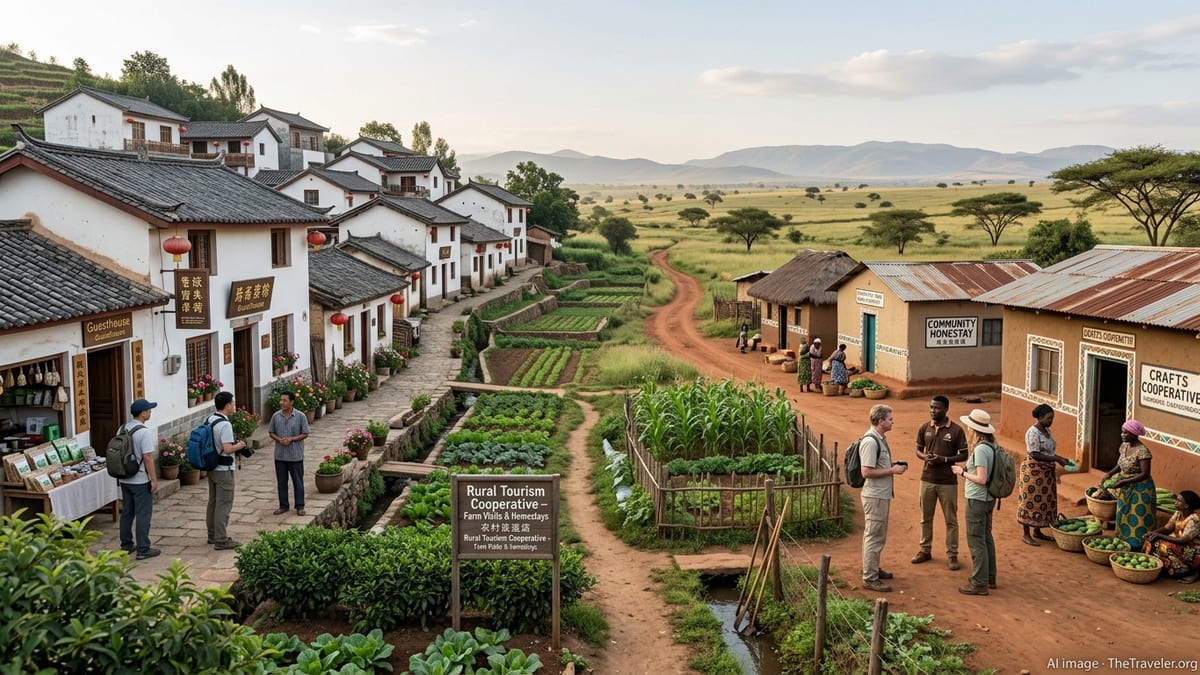
From Agreement To Action Across Rural Africa
The collaboration between UN Tourism and the TUI Care Foundation was first formalised in Madrid in July 2024 with a framework aimed at empowering artists and artisans in rural African destinations, particularly women and young people. Publicly available information shows that the partnership marked the pilot phase of UN Tourism’s Tourism for Rural Development Small Grants Programme, with TUI Care Foundation acting as the first implementation partner.
According to programme descriptions, the initiative is built around the “Colourful Cultures” call for proposals, designed to connect local creatives to the tourism economy. Initial eligibility focused on non-profit organisations operating in a group of African countries including Gambia, Morocco, Mozambique, Namibia, Rwanda, Senegal, South Africa, Tanzania, Tunisia and Zambia, where handicrafts and performance traditions are already closely linked with visitor experiences.
By late 2024, UN Tourism communications indicated that the partnership had moved beyond concept to concrete funding opportunities, with small grants inviting rural artisans and local organisations to compete for support. The emphasis is on strengthening livelihoods, protecting intangible cultural heritage and using tourism flows to deliver broader social benefits in remote communities.
Programme documents also link the collaboration to the wider Tourism for Development Fund, a joint commitment of UN Tourism and the TUI Care Foundation to mobilise millions of euros for projects in least developed and vulnerable tourism destinations through to 2030.
Colourful Cultures: A New Model For Small Grants
At the heart of the 2026 rollout is Colourful Cultures, a themed small-grants scheme that positions artisans and artists as key actors in rural tourism. Fact sheets on the programme outline a model in which non-profit organisations design projects that combine creative production with training, business mentoring, market access and community engagement.
The first call reportedly generated strong interest, with more than a hundred proposals submitted from across the continent. Selection criteria prioritise initiatives that can demonstrate both cultural value and economic impact, such as projects that revive traditional techniques, establish new visitor experiences, or open up routes to domestic and international markets for handmade products.
Rather than funding individual artists directly, the scheme backs organisations that work closely with producer groups, cooperatives and community associations. This structure is intended to keep administration manageable while ensuring that benefits reach multiple households, particularly in villages where tourism is emerging but infrastructure remains limited.
Public material on the programme also highlights a focus on environmental responsibility. Many of the proposed activities encourage the use of locally sourced and sustainable materials, positioning rural crafts as part of a broader responsible tourism offer that reflects local landscapes and biodiversity.
Five Pilot Projects In Mozambique, Namibia, Rwanda And Tanzania
By March 2026, a TUI Care Foundation announcement indicated that five African non-governmental organisations had been selected for the first wave of Colourful Cultures funding, with projects based in Mozambique, Namibia, Rwanda and Tanzania. Together, these pilots are framed as a testbed for how small, targeted investments can unlock tourism-related income for rural artisans.
In Mozambique, publicly available descriptions point to work around Gorongosa National Park, where an association representing people with disabilities is using the grant to support handicraft production and link artisans to guided forest experiences. The concept ties craft sales to conservation-focused visits, aiming to diversify livelihoods while reinforcing biodiversity protection.
In Namibia, the programme is reported to support rural craft producers who serve national parks and community conservancies. The focus is on upgrading product quality, improving storytelling around each item and expanding access to tourism retail points so that visitors can buy directly from community-linked outlets rather than distant intermediaries.
Rwanda and Tanzania host initiatives that connect crafts with cultural tourism and community-based experiences. Published coverage describes project elements such as establishing creative hubs, strengthening women’s cooperatives, and integrating craft demonstrations into village visits and nature excursions. Across the four countries, project designs share a common objective of turning local creativity into stable, tourism-driven income.
What The Partnership Means For Rural Tourism In 2026
Sector analysts note that rural African destinations face long-standing challenges, from limited infrastructure and finance to uneven access to tourism markets. The UN Tourism and TUI Care Foundation collaboration is presented as a response that uses relatively modest grants and technical assistance to target these gaps at community level.
Programme information suggests that participating organisations receive more than funding alone. Capacity-building components include training in product development, basic financial management, digital marketing and responsible tourism standards. This is designed to help groups meet quality expectations of international visitors while preserving distinctive local styles and stories.
The initiative also underscores a shift in global tourism policy discussions, where artisans and cultural producers are increasingly recognised as central to destination competitiveness rather than peripheral souvenir vendors. By embedding crafts, music and visual arts into curated visitor experiences, rural areas can differentiate themselves and encourage longer stays and higher local spending.
For 2026, observers of the initiative will be watching indicators such as the number of artisans engaged, income changes in beneficiary communities and new tourism products brought to market. Lessons from the pilot projects are expected to shape future calls for proposals and could influence how multilateral tourism funding is directed toward cultural and creative sectors across Africa.
How Artists And Artisans Can Engage With The Programme
Although funding flows through non-profit organisations rather than individuals, rural artists and artisans remain central to the programme’s design. Public guidance around Colourful Cultures encourages craft groups, cooperatives and cultural associations to connect with eligible NGOs that have experience managing grants and working in tourism development.
In practical terms, this means creators can engage by joining or forming local groups, documenting their craft traditions, and partnering with organisations that can help translate ideas into fundable project proposals. Activities that blend workshop spaces, visitor interaction and product sales are especially aligned with the initiative’s objectives.
Information materials signal that future calls may extend to additional destinations or themes, depending on the results of the first funding round and the availability of resources. Artists and artisans are therefore being encouraged, via public communications, to monitor announcements from UN Tourism and the TUI Care Foundation and to participate in local consultations when new opportunities arise.
As 2026 progresses, the partnership is positioned as a live test of how international tourism institutions can support grassroots creativity without overwhelming small communities with large-scale investment. If successful, it may offer a template for similar small-grant schemes linking culture, crafts and sustainable tourism in other regions.