


More news on this day
Travel plans for thousands of United Airlines passengers were upended on Friday as 389 flights were reported delayed and 16 canceled across the United States, leaving travelers stranded at major hubs including Chicago, New York, Los Angeles, Houston, and Miami.
Get the latest news straight to your inbox!
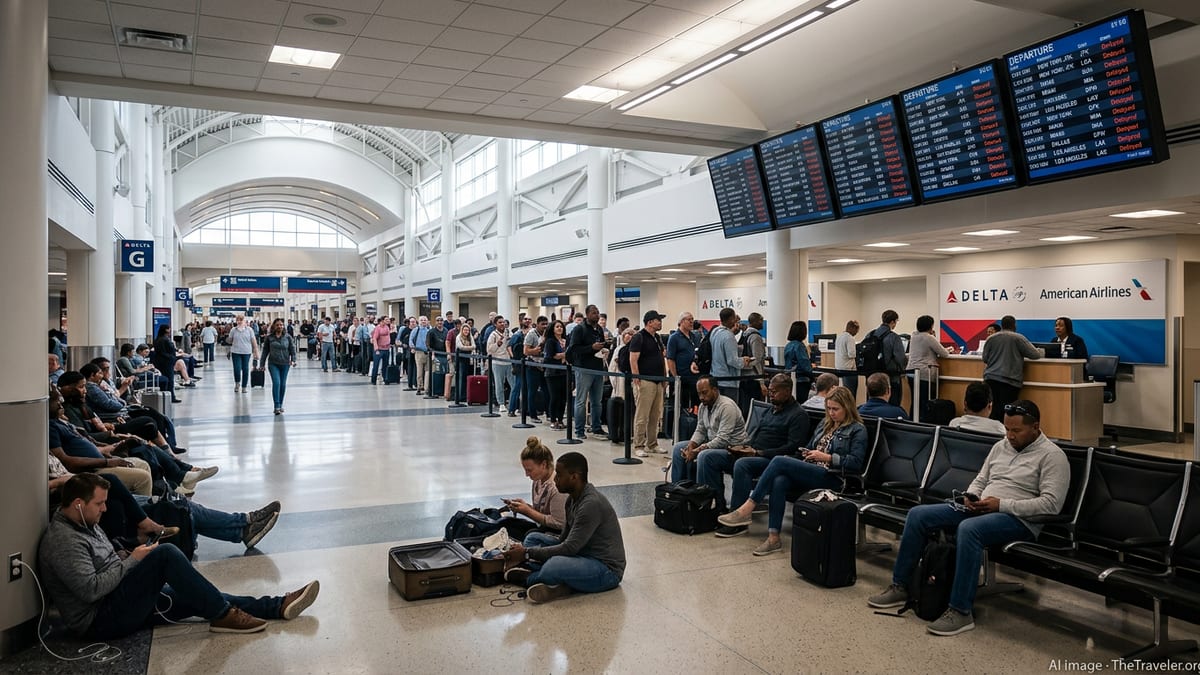
Widespread Disruptions Across the United Network
Publicly available flight-tracking data and operational dashboards on May 22 indicated a fresh wave of disruptions for United, concentrated at high-traffic hubs that serve as connection points for domestic and international itineraries. The pattern reflected a broader day of turbulence for US aviation, with several major airports already grappling with heavy delay volumes.
At Chicago O Hare International Airport, a core United hub, departure and arrival boards showed elevated delay levels through the morning and early afternoon, compounding ongoing concerns about congestion and scheduling pressure at the airport. Federal regulators recently ordered cuts to planned daily operations at O Hare through the summer to ease chronic capacity strains, a move that has already forced airlines to rework schedules and trim some regional routes.
Operations were also under pressure in the New York area, where disruptions at key airports have repeatedly spilled over into the wider national network this year. Recent traffic data from Newark Liberty and LaGuardia has shown how backups at East Coast hubs can quickly ripple across carrier networks, with downstream effects in the Midwest, South, and West Coast markets.
In Los Angeles, Houston, and Miami, travelers encountered familiar scenes of crowded gate areas, rolling delay announcements, and tight or missed connections as late-arriving aircraft and crews forced schedule adjustments throughout the day. These airports are critical nodes in United s system and serve as gateways to Latin America, Europe, and the Pacific, amplifying the impact of local disruptions on long-haul travel.
Weather, Congestion, and System Strain Behind the Delays
While a single cause was not immediately clear, recent operational patterns point to a combination of factors driving the latest wave of United delays. Industry trackers and recent coverage of nationwide flight disruptions highlight how even moderate storms or airspace restrictions at one or two major hubs can quickly strain schedules already operating near capacity.
Weather in and around Chicago and New York has frequently triggered ground delay programs this spring, slowing arrivals and departures in congested corridors. When those controls are in place, flights are often held at origin airports or spaced out on approach, which can leave aircraft and crews out of position for subsequent legs to cities such as Los Angeles, Houston, and Miami.
At the same time, longer running structural pressures are playing a role. Coverage of Federal Aviation Administration directives this year has detailed efforts to limit peak traffic at the busiest airports as a way to reduce chronic delays. For carriers like United that rely heavily on hub and spoke operations, those constraints can reduce flexibility to absorb unexpected disruptions later in the day.
Analysts tracking airline performance note that even when airlines technically operate the majority of their schedules, the clustering of delays in the afternoon and evening banks can create the perception of a broader meltdown for passengers who miss connections or face overnight rebookings. For travelers already at the airport, repeated short delays that accumulate into hours of waiting can be particularly frustrating.
Passengers Facing Missed Connections and Overnight Stays
The practical effect of Friday s delay and cancellation totals is being felt most acutely by connecting passengers, many of whom relied on Chicago, Newark area airports, Houston, Los Angeles, or Miami as transfer points. When a first leg is significantly delayed, even a relatively small number of canceled flights in the network can leave some travelers with limited same day options.
Recent passenger accounts shared via social platforms and forum posts on earlier disruption days describe travelers who arrived at hubs after their onward flights had already departed, only to find remaining departures oversold or significantly delayed. In similar situations, many have reported being rebooked on flights the following day or routed through additional hubs, extending journeys by many hours.
Families and business travelers caught up in these events often face additional challenges, including securing hotel rooms near busy airports, finding food as concessions close, and arranging last minute changes to ground transportation and accommodation at their final destinations. For those traveling for time sensitive events such as weddings, cruises, or international tours, even a single missed connection can derail entire itineraries.
Observers of previous disruption waves this year note that some passengers respond by proactively abandoning same day travel when rolling delays grow into late night departures, opting instead to rebook for early morning flights once the system has had time to reset.
What Travelers Can Do if Their United Flight Is Disrupted
Consumer advocates and widely shared travel guidance emphasize that preparation and rapid action are key in handling disruption events of the kind affecting United s network on Friday. Travelers are frequently advised to monitor their itineraries in the airline s app or on official status pages as soon as warnings of delays begin to appear, rather than waiting for airport display boards to update.
When a delay threatens a connection, many guides suggest using digital tools to search for alternative routings in real time, including earlier departures from the origin city or different hub connections that might avoid the worst congestion. Some passengers may be able to switch to flights connecting through less affected airports, while others might secure seats on later departures before they fill.
Travel industry information also underscores that passengers should review the terms of United s policies on schedule changes, refunds, and accommodations, which vary depending on the cause of the disruption and the type of ticket purchased. In some cases, travelers may be eligible to request a refund instead of accepting a new itinerary, particularly when a significant schedule change or cancellation makes the trip impractical.
Frequent flyers and online community discussions often recommend packing essential items in carry on bags, including medications, chargers, and a change of clothes, to better cope with unexpectedly long waits or overnight delays. For those with strict arrival deadlines, booking earlier flights in the day and allowing generous connection times at known congestion points like Chicago and New York can reduce the risk of being caught in network wide slowdowns.
Continuing Strain on the Summer Travel Outlook
The latest disruptions for United arrive as the US aviation system heads into what is expected to be one of the busiest summer travel seasons in recent years, with strong demand for both domestic and international trips. Analysts observing airline schedules note that major carriers, including United, have increased capacity on popular routes while also navigating staffing constraints, air traffic controller shortages, and infrastructure limits at key airports.
Recent federal directives requiring reductions in planned flights at major hubs such as Chicago O Hare are intended to ease some of the chronic congestion that contributed to widespread delays in previous summers. However, Friday s disruption figures underscore how vulnerable tightly wound schedules remain to even routine weather and airspace challenges.
Industry data on delays and cancellations in recent months shows that large scale disruption events are no longer limited to major winter storms or holiday peaks. Instead, a series of medium scale operational shocks, from thunderstorms to regional staffing gaps, has repeatedly produced days with thousands of delayed flights nationwide and knock on effects that linger for several days.
For travelers, the pattern around United s 389 delayed and 16 canceled flights serves as another reminder that flexibility, careful planning, and close monitoring of flight status are increasingly important parts of navigating modern air travel in and out of the country s busiest hubs.