


More news on this day
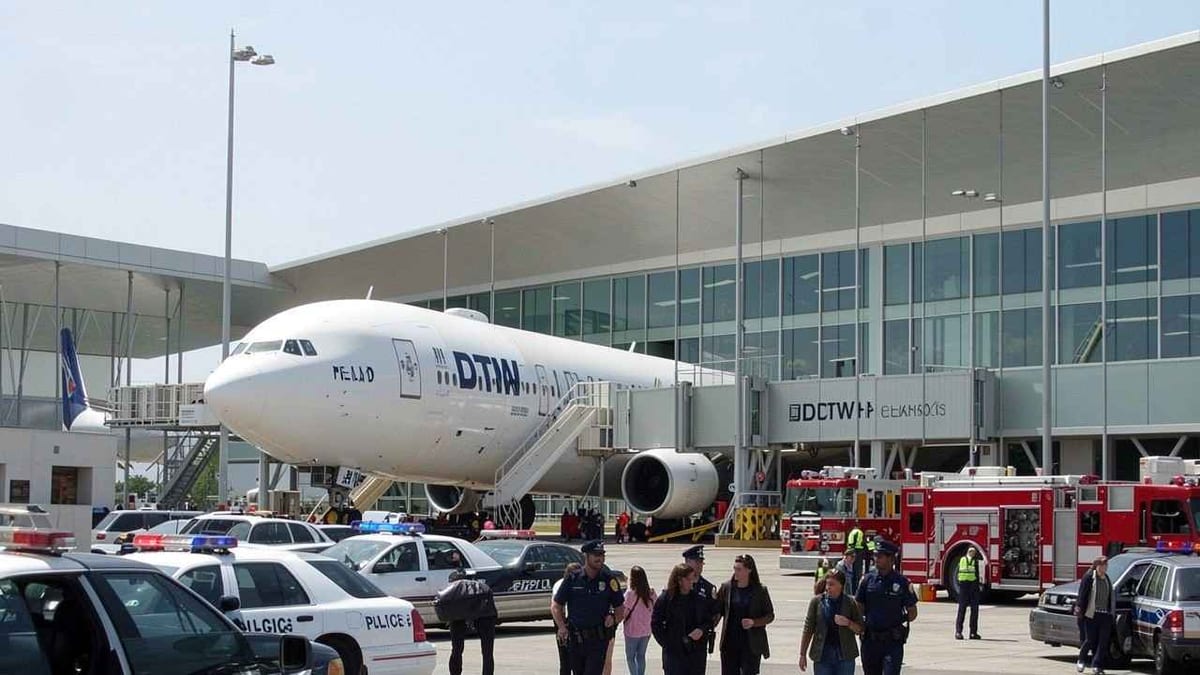
United Airlines Flight 592, an Airbus A319-132 scheduled to operate from Charleston, South Carolina, to Chicago O’Hare, diverted to Indianapolis instead, leaving travelers with an unexpected layover and unanswered questions about what prompted the change in course.
Get the latest news straight to your inbox!
Charleston to Chicago Service Breaks Off Course
Publicly available tracking data shows United Airlines Flight 592 operating the Charleston to Chicago route with an Airbus A319-132 and scheduled arrival into Chicago O’Hare in the early afternoon. Midway through the journey, the aircraft left its planned route and headed for Indianapolis, where it ultimately landed instead of continuing to Chicago.
Flight-tracking histories for the UAL592 callsign indicate that the service typically links Charleston and Chicago directly, making the diversion to Indianapolis an operational outlier. The change added both distance and time for passengers who had expected a routine trip into one of United’s largest hubs.
Although the flight completed a safe landing in Indianapolis, travelers on board and those awaiting arrivals in Chicago were left dependent on airport display boards and airline notifications to understand the revised schedule and onward options.
Weather, Traffic, and Operational Factors Under Scrutiny
As of now, there is no single, clearly documented reason for this specific diversion. However, publicly accessible airline and airport guidance notes that flights can be diverted for a range of causes including convective weather near the destination, congestion in terminal airspace, runway closures, and broader ground stop programs affecting a major hub.
Chicago O’Hare is particularly susceptible to weather-related disruption during periods of thunderstorms and low visibility. Historical diversion patterns into airports such as Indianapolis, Detroit, and other nearby fields show that carriers often reroute flights when arrival flows into Chicago slow significantly, in order to manage fuel limits and avoid prolonged holding patterns.
Operational documents explaining diversion protocols emphasize that pilots typically balance fuel considerations, air traffic control instructions, and available alternates when making a decision. In that context, routing a Charleston to Chicago service to Indianapolis would be consistent with standard contingency planning for flights bound for the upper Midwest.
Passengers Face Delays and Logistical Challenges
The diversion meant that passengers expecting to land at Chicago O’Hare instead found themselves in Indianapolis, a city roughly three hours away by road. For some travelers, this likely meant missed connections, rescheduled meetings, or last-minute accommodation changes while waiting for the airline to arrange onward transport.
Experiences shared in past diversion cases suggest a wide range of outcomes, from relatively quick rebookings onto later flights into Chicago to longer waits as aircraft and crews are repositioned. For travelers connecting internationally or to smaller regional destinations, even a short diversion can ripple through their entire itinerary.
Standard guidance shared by consumer advocates in similar situations encourages passengers to monitor airline apps, airport departure boards, and email or text alerts closely. In many recent diversions, carriers have opted to either relaunch the same aircraft to the original destination after refueling and clearance, or to transfer customers to other flights with available seats.
Indianapolis as an Alternate Gateway for Chicago Traffic
Indianapolis International Airport often functions as a practical diversion point for flights originally bound for Chicago. The airport sits within a manageable flying distance, has facilities capable of handling mainline Airbus and Boeing aircraft, and offers ground connections by road or rail for travelers who choose to continue their journey overland.
Records of previous Chicago-bound diversions show that multiple airlines, including United, have used Indianapolis as an alternate when storms, runway congestion, or operational constraints affected O’Hare. For airlines, diverting there can simplify refueling, maintenance checks, and crew rest scheduling while still keeping passengers reasonably close to the Chicago metropolitan area.
The arrival of United Flight 592 added one more example to a growing pattern of Midwest diversions, where nearby airports temporarily absorb traffic that cannot immediately be accommodated at O’Hare. For ground handlers and airport staff in Indianapolis, these events can generate short spikes in activity as additional aircraft and passengers pass through.
Unanswered Questions and Broader Context
For those on board United Flight 592, the most pressing question remains what, specifically, made the Charleston to Chicago service divert to Indianapolis on this particular occasion. Publicly available information so far does not indicate whether the decision was related to weather around Chicago, an onboard technical issue, crew scheduling limits, or a combination of factors.
Industry data and previous case histories show that such diversions are usually rooted in safety and operational prudence, even when the precise trigger is not clearly communicated in real time. Airlines routinely note that choices to divert can be influenced by evolving radar images, air traffic control flow restrictions, and real-time assessments of fuel and routing.
As passengers complete their journeys to Chicago, either by a subsequent flight or by ground transportation from Indianapolis, the diversion of United Airlines Flight 592 from Charleston underscores how even familiar domestic routes can change unexpectedly. For travelers, it serves as a reminder that flexibility, real-time information, and contingency planning remain important parts of flying through one of the country’s busiest hubs.