


More news on this day
Travellers using Manchester Airport on 30 July are facing a mix of cancellations and significant delays across several short haul and holiday routes, according to live departure boards and airline updates reviewed throughout the morning and early afternoon.
Get the latest news straight to your inbox!
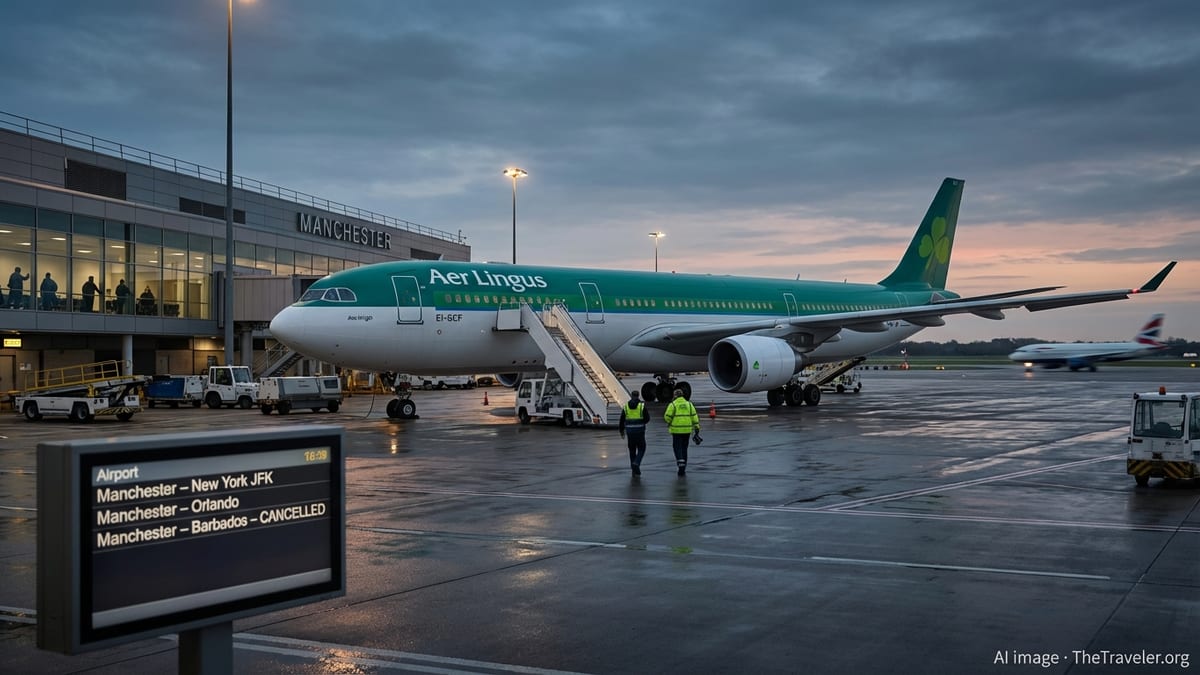
Snapshot of disruption across terminals
Publicly available departure information for Manchester Airport on 30 July shows a scattered pattern of disruption rather than a full-scale shutdown, with a minority of flights cancelled outright and a larger number subject to extended delays. The affected services span low cost, leisure and full service airlines operating from all three terminals.
Morning departures saw the first wave of disruption, with several early services pushed back by more than an hour and at least one short haul departure cancelled rather than rescheduled. As the day progressed into the midday and early afternoon peaks, the board reflected a familiar mix of “delayed,” “departed late” and “cancelled” statuses typical of a busy summer weekday.
While the majority of scheduled flights continued to operate broadly as planned, the pattern on 30 July underlined how individual technical issues, late inbound aircraft and wider European air traffic constraints can combine to cause very localised disruption for specific routes and departure times.
Key cancellations from Manchester on 30 July
On the cancellation side, 30 July brought a handful of notable withdrawn departures from Manchester Airport. Live-board checks during the day showed at least one intra-European flight scrubbed from the schedule rather than retimed, affecting passengers booked on a late morning service to a mainland European city break destination.
Another cancelled departure involved a leisure route serving a Mediterranean resort, with the aircraft removed from the board and passengers advised to seek assistance from the operating airline. The cancellation created knock-on rebooking challenges as alternative same-day options from Manchester and nearby northern airports were already heavily subscribed by peak season demand.
In several cases, cancellations on 30 July were tied to the late arrival or unavailability of inbound aircraft, compounded by tighter summer capacity constraints that leave little spare slack in the system. For travellers, this translated into airline offers of re-routing via hub airports, moving to later departures from Manchester, or shifting travel to the following day where accommodation and crew availability allowed.
Routes most affected by extended delays
Extended delays were more common than outright cancellations on 30 July, particularly on short haul routes linking Manchester with major European hubs and summer holiday destinations. Live updates during the day indicated departure times slipping by 60 to 120 minutes for some services, with boarding repeatedly adjusted as ground handling and air traffic slots were recalibrated.
Several services to southern European leisure markets experienced rolling delays, with aircraft waiting for improved slot timings amid busy regional airspace and high overall traffic. Passengers heading to coastal destinations and islands were advised through airport and airline channels to remain close to their departure gates and monitor announcements for updated boarding times.
Delays also affected a number of flights to continental hub airports, where congestion and weather-related air traffic management measures elsewhere in Europe contributed to revised departure estimates from Manchester. These knock-on effects highlighted how disruption far from northern England can quickly be reflected on the departure screens in the terminals, particularly for flights scheduled during the busiest mid-morning and late-afternoon windows.
Likely causes and operational context
The disruption pattern on 30 July sat against a backdrop of strong summer 2026 demand at Manchester Airport, which is operating with high load factors and dense schedules across much of the day. Capacity declarations for the current season highlight the tight margins between planned arrivals and departures at peak times, leaving limited room to absorb technical issues or weather-related constraints without visible impact on punctuality.
Reports and operational data from across the European network in recent weeks have pointed to a combination of staffing pressures, occasional air traffic control flow restrictions and isolated ground infrastructure issues contributing to delays. When coupled with late inbound aircraft, these factors can cascade into longer queues for departure slots and lengthier waits at the gate for passengers, as seen in some of the more heavily delayed flights from Manchester on 30 July.
For airlines, maintaining schedule integrity in these conditions often involves difficult choices between slightly delaying multiple services or cancelling a single rotation to allow crews and aircraft to be rebalanced. The cancellations observed from Manchester on 30 July appeared consistent with that pattern, with airlines consolidating capacity on busier routes and leaning on rebookings and interline arrangements where possible.
Advice for passengers travelling later on 30 July
For those still due to travel from Manchester Airport later on 30 July, publicly available information suggests that most flights are continuing to operate, but with a heightened risk of moderate delay compared with off-peak periods. The day’s disruptions underline the value of checking live departure information and airline apps regularly in the hours before leaving for the airport.
Travel experts generally recommend allowing extra time for check-in, security and potential gate changes during the peak holiday season, particularly when travelling with checked luggage or as part of a family group. This is particularly relevant on days such as 30 July, when even relatively small schedule adjustments can quickly translate into longer queues and a more crowded terminal environment.
Passengers already affected by cancellation or long delay remain entitled to assistance and potential compensation under applicable carriage conditions and consumer regulations, depending on the cause of the disruption and the airline involved. Those with tight onward connections or critical time commitments on arrival are advised to explore alternative routings or travel dates as soon as their flight status changes, as spare capacity can diminish rapidly during the busy summer period.