


More news on this day
A United Airlines Boeing 737-700 operating Flight UA1288 from Reno, Nevada to Chicago, Illinois diverted unexpectedly to Grand Rapids, Michigan, according to live flight-tracking data, leaving passengers contending with an unplanned arrival hundreds of miles from their scheduled destination and seeking clarity on what went wrong.
Get the latest news straight to your inbox!
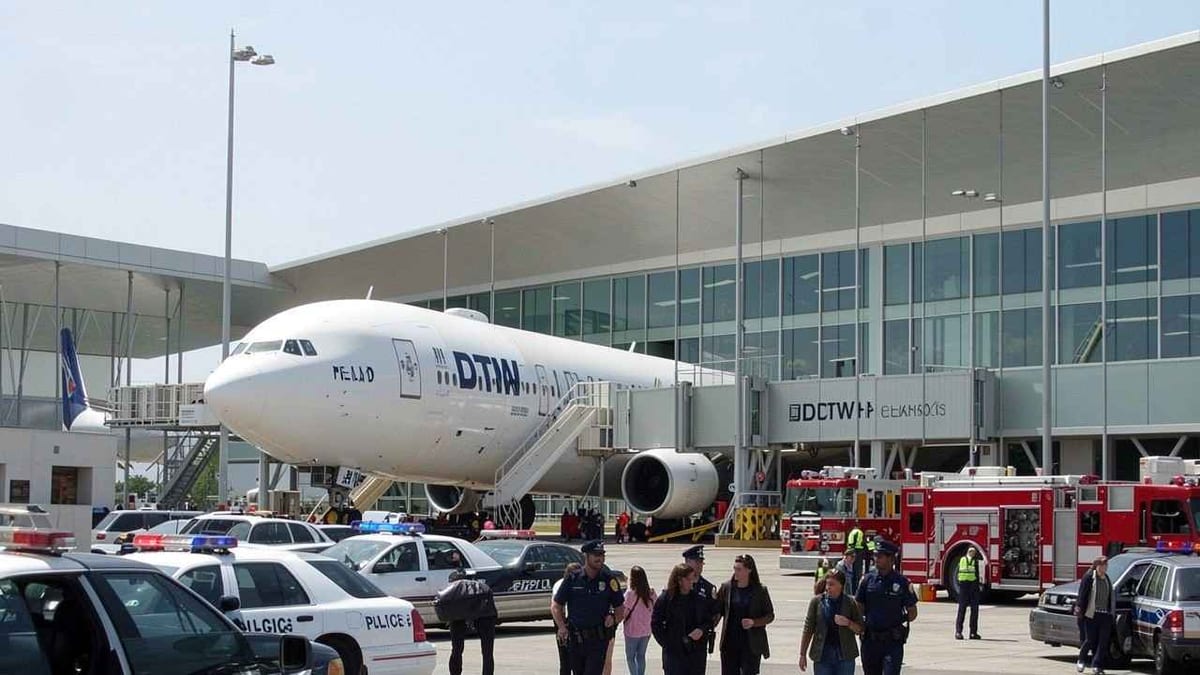
Unscheduled Turn Away From Chicago
Publicly available flight-tracking information shows United Airlines Flight UA1288 departing Reno for Chicago on its regular domestic routing when the Boeing 737-700 altered course partway through the journey and proceeded instead to Gerald R. Ford International Airport in Grand Rapids, Michigan. The diversion placed the aircraft at an airport that is not normally associated with the Reno to Chicago pairing, creating confusion among travelers and observers following the flight online.
Data from flight-tracking platforms typically record departure and arrival airports, altitude, and route changes, and these records indicate that the aircraft did not complete its originally scheduled approach into Chicago O’Hare International Airport. Instead, the flight continued on an alternate trajectory that concluded with landing in western Michigan, a location that generally serves as a regional destination and connection point rather than a primary alternate for transcontinental traffic from Nevada.
At the time of writing, publicly accessible records do not provide a definitive explanation for the change in routing. Diversions of this kind are commonly associated with weather conditions, air traffic flow constraints, or technical issues, but no single factor has yet been clearly identified in available reporting for this specific flight.
Weather, Traffic and Technical Issues All Under Scrutiny
When a scheduled flight diverts away from a major hub such as Chicago, aviation watchers typically look first to broader operating conditions. Real-time air traffic resources maintained by federal agencies and specialist data providers frequently highlight ground delay programs, thunderstorms, low visibility, or runway constraints that can force airlines to re-route arriving traffic. Chicago’s status as one of the busiest airports in the United States means it is particularly susceptible to rapid shifts in arrival and departure rates, with ripple effects on inbound flights from across the country.
Technical considerations on board the aircraft are another recurring cause of diversions. If crews become aware of a system irregularity, standard procedure is to evaluate nearby airports that offer suitable runways, maintenance access, and passenger-handling capability. A facility such as Grand Rapids can meet many of these criteria, especially for narrowbody aircraft like the Boeing 737-700, which routinely operates into regional airports with similar infrastructure.
Security-related concerns, while less common, also figure into airline decision-making when choosing to abandon an original destination. In such cases, carriers may route aircraft to locations where ground operations and law-enforcement coordination can be managed in a more controlled environment. So far, publicly available reporting about UA1288 does not point conclusively to a security trigger, and there has been no widely distributed account describing unusual activity after the aircraft reached the gate in Grand Rapids.
Passengers Face Missed Connections and Limited Information
For passengers, diversions often create a cascade of logistical challenges, particularly when the disrupted flight was intended to connect through a large hub like Chicago. Travelers on Flight UA1288 bound for onward destinations would have expected to continue from O’Hare on a variety of domestic and international services. Instead, they arrived at an airport with a more limited schedule, requiring rebooking, ground transfers, or overnight accommodation in order to continue their journeys.
Accounts shared on social media and aviation forums after similar diversions show that travelers commonly experience long lines at service desks, uncertainty around baggage handling, and evolving rebooking options as airline operations teams work through backlogs. While each incident unfolds differently, patterns seen in past United Airlines diversions indicate that passengers may be directed to later flights via other hubs, placed on partner airlines where available, or offered ground transportation if onward airports are within driving distance.
In situations like UA1288’s diversion, communication often becomes a central point of frustration. Travelers typically receive updates first through onboard announcements and later via mobile apps or airport screens. However, public commentary regarding past rerouted flights suggests that information can lag behind operational decisions, leaving passengers unsure of whether the cause relates to weather, equipment or other considerations and making it difficult to assess eligibility for compensation under airline policies or applicable regulations.
How Diversions Are Managed Behind the Scenes
Although unexpected for those on board, diversion decisions are the product of established airline and industry procedures. Operations control centers monitor fleets in real time using multiple data sources, including weather feeds, air traffic control programs and aircraft health monitoring systems. When a flight appears likely to encounter extended holding patterns, runway closures or technical concerns, dispatchers and flight crews work together to identify alternates that balance safety, fuel considerations and passenger handling.
Grand Rapids functions as a regional airport with experience handling mainline jets and irregular operations, making it a practical option for flights unable to continue to Chicago. The airport has previously accommodated diversions from major hubs when weather or airspace congestion created bottlenecks, and its location within driving distance of several Midwestern cities allows airlines to coordinate ground transportation or short repositioning flights once operating conditions stabilize.
Once a diverted flight lands, multiple teams engage simultaneously. Ground personnel guide the aircraft to a gate or remote stand, customer service agents begin rebooking efforts, and maintenance staff may inspect the aircraft if a technical issue is suspected. Meanwhile, the original schedule can be further affected, as aircraft and crews that were expected to continue to new routes must now be repositioned, adding complexity to an already tight daily operation.
What Travelers Can Expect After a Sudden Diversion
Events like the diversion of United Flight UA1288 highlight the value for travelers of understanding basic airline policies around delays and irregular operations. Publicly posted information from carriers and consumer-protection agencies outlines how weather, air traffic control restrictions, or issues outside an airline’s control are generally treated differently from disruptions directly attributable to the carrier, such as certain mechanical problems or crew scheduling issues.
When flights land at airports far from the original destination, passengers are usually rebooked at no additional fare to complete their journey on the same airline or a partner, although seating options and timing can be constrained by availability. Travelers may also be encouraged to work through mobile apps or online tools, which, in past incidents, have sometimes offered faster rebooking than waiting in line at a service desk.
For those on UA1288 and similar flights, keeping records of boarding passes, receipts for meals or lodging, and screenshots of flight-status updates can help when later seeking reimbursements or clarifications. While diversions remain relatively uncommon compared with the volume of flights that operate normally every day, the experience for those affected can be disruptive and stressful, particularly when information about what prompted the change of course remains limited.