


More news on this day
United Airlines has delayed the launch of 10 planned new routes from Chicago O’Hare International Airport after the Federal Aviation Administration ordered a sizable cut in the airport’s peak capacity for the 2026 summer season.
Get the latest news straight to your inbox!
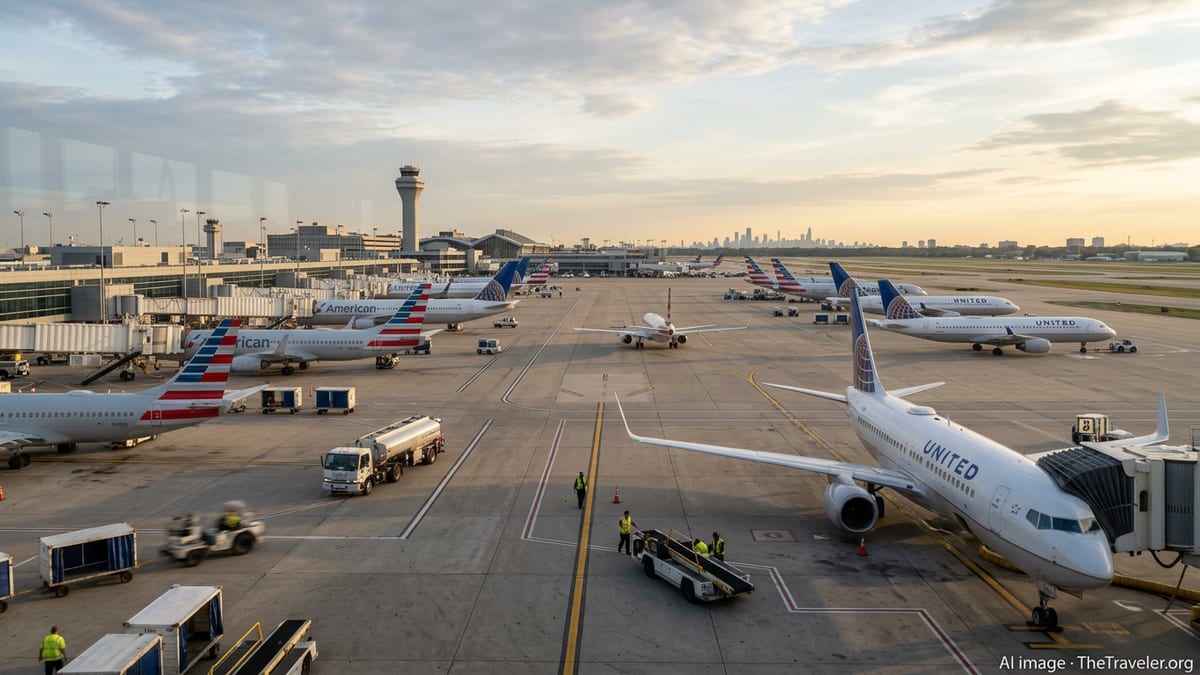
FAA Limits Force Rethink of United’s Growth Strategy at O’Hare
Publicly available federal documents show that the FAA has imposed a temporary schedule limitation at Chicago O’Hare, aimed at trimming planned operations during the busiest hours to ease congestion and improve on time performance. The order, in effect for the core summer travel period, requires airlines using the hub to scale back departures and arrivals compared with what they had scheduled.
In response, industry coverage indicates that United has opted to delay rather than cancel outright about 10 upcoming regional routes that were due to connect O’Hare with a mix of smaller Midwestern and neighboring state airports. These services were announced as part of United’s broader effort to deepen its hub network and channel more connecting traffic through Chicago, but the airline now faces an enforced cap on daily operations.
The FAA’s action follows several years of intense competition between United and American Airlines at O’Hare, with both carriers expanding schedules into peak hours. Analysts note that the construction work tied to O’Hare’s terminal and airfield modernization has also constrained available capacity at times, adding pressure on regulators to intervene to prevent widespread delays during the busiest months.
United’s decision to hold back the new routes underscores how sensitive network planning has become to federal capacity management. Rather than risk additional schedule compression at an already busy hub, the airline appears to be prioritizing its most established and highest yielding services while it navigates the new operating limits.
Which Markets Are Affected by the Postponement
While the airline has not issued a detailed public list of every affected market, regional airport notices and local media reports point to a cluster of Midwest communities that had been counting on new or restored nonstop links to Chicago. These include smaller cities in Illinois, Indiana, Michigan and neighboring states, many of which rely on O’Hare for one stop access to United’s national and international network.
Information shared by several impacted airports suggests that routes which were initially slated to debut in late spring or early summer have been pushed to later in the year, and in some cases shifted to the start of the winter timetable. Planned launch dates have been repeatedly revised as United aligns its schedule with the FAA’s capacity ceiling, leaving local officials emphasizing alternative connections while they wait for the new service to materialize.
Travelers in these markets are seeing the effects in booking channels, where previously announced flights have disappeared from sale or appear only from the autumn season onward. For passengers, the change means continued reliance on existing carriers or driving to larger airports for the time being, particularly for business itineraries that had been designed around new nonstop options.
The postponement also affects airport planning in the affected communities. Several smaller airports had highlighted the incoming United service as a key part of their growth and connectivity strategies, anticipating higher passenger volumes and new business travel. With the start dates now uncertain, local stakeholders are recalibrating expectations for 2026 traffic.
Impact on Travelers Using O’Hare This Summer
For flyers passing through Chicago, the immediate effect of the FAA cuts and United’s schedule adjustment is a leaner set of options during peak times. Reports from frequent travelers and schedule data show that while O’Hare remains one of the busiest hubs in the country, the number of daily movements has been trimmed compared with what airlines originally planned for the season.
Fewer regional spokes feeding into the hub can translate into longer connection times or additional stops for some itineraries. Passengers from smaller cities that expected a new one stop path via O’Hare may instead find themselves routed through alternative hubs or relying on existing competitors. At the same time, some aviation analysts suggest that the reduced pressure on the airfield could help limit the kind of cascading delays that have periodically affected Chicago at times of heavy traffic or bad weather.
Travel forums and passenger reports also point to a period of adjustment as airlines, including United, rebalance schedules around the new limits. Same day rebookings, rerouted connections and time changes have been recurring themes for some O’Hare based flyers. Travel advisers recommend that passengers build in extra time for connections through the hub during the restriction period and monitor itineraries closely for any schedule updates.
Despite the disruption, O’Hare continues to function as United’s central Midwest hub, with a substantial portfolio of domestic and international flights still operating. Industry observers note that the airline is prioritizing high demand trunk routes and long haul services while temporarily slowing the pace of network expansion into new regional markets.
Regulators Seek to Tame Congestion at a Critical Hub
The FAA’s decision to cap operations at O’Hare reflects broader concerns about congestion at major U.S. hubs. Federal filings describe the initiative as a targeted measure to address overscheduling during the most constrained hours of the day, with the goal of improving punctuality and reducing the risk of gridlock when weather or other disruptions occur.
O’Hare has long been one of the nation’s most complex airfields, handling a dense mix of mainline jets, regional aircraft and international widebodies. Although extensive runway modernization has improved efficiency over the past decade, peak hour demand still regularly pushes up against what controllers and airport infrastructure can accommodate without significant delay.
The current schedule reduction is limited in duration, covering the heart of the 2026 summer and early autumn travel season. Regulators have indicated that they will continue to monitor performance, including delay statistics and on time metrics, before deciding whether to relax, extend or modify the limitations in future seasons. Airlines, meanwhile, are expected to keep adjusting their schedules and fleet assignments to make the most of the capped capacity.
Industry commentators point out that O’Hare is not the first major U.S. hub to face temporary federal limits of this kind. Similar measures have been applied in the past at other congested airports when demand threatened to outstrip the operational resilience of the airspace system. The Chicago order, however, is notable for arriving at a time when airlines are still rebuilding networks and responding to shifting post pandemic travel patterns.
What Comes Next for United’s O’Hare Network
Looking ahead, United’s handling of the delayed routes will offer a window into how carriers adapt growth plans when regulatory limits change the assumptions underlying hub strategies. Publicly available scheduling information suggests that some of the postponed services could begin once the current FAA order expires, though the exact timing and scale may depend on how the O’Hare market evolves over the next year.
If congestion metrics improve and regulators are satisfied that O’Hare can safely support more movements, airlines could get more flexibility to restore deferred flights and launch new routes. In that scenario, United may revive its original plans to add more small city spokes, especially in regions where it sees strong corporate demand or limited competition.
Conversely, if capacity constraints remain tight or are extended, United may be compelled to permanently rethink some of the 10 routes now on hold, reallocating aircraft to other hubs or focusing on larger markets that generate higher yields. Analysts note that the carrier’s broader fleet expansion and long haul growth plans might still proceed, but with a more cautious approach to incremental flying at its most constrained airports.
For communities waiting on new United service, the coming scheduling cycles will be critical. Airport announcements and future timetable filings will signal whether the delayed O’Hare routes are simply postponed or quietly replaced by other priorities in the airline’s network. Until then, the FAA’s capacity cuts at Chicago continue to shape how one of the country’s largest carriers deploys its aircraft and connects smaller cities to the national air system.