


More news on this day
United Airlines has pushed back the launch of two new regional routes within Illinois, citing mandatory Federal Aviation Administration flight reductions at Chicago O’Hare that are reshaping the carrier’s plans for small and mid sized communities.
Get the latest news straight to your inbox!
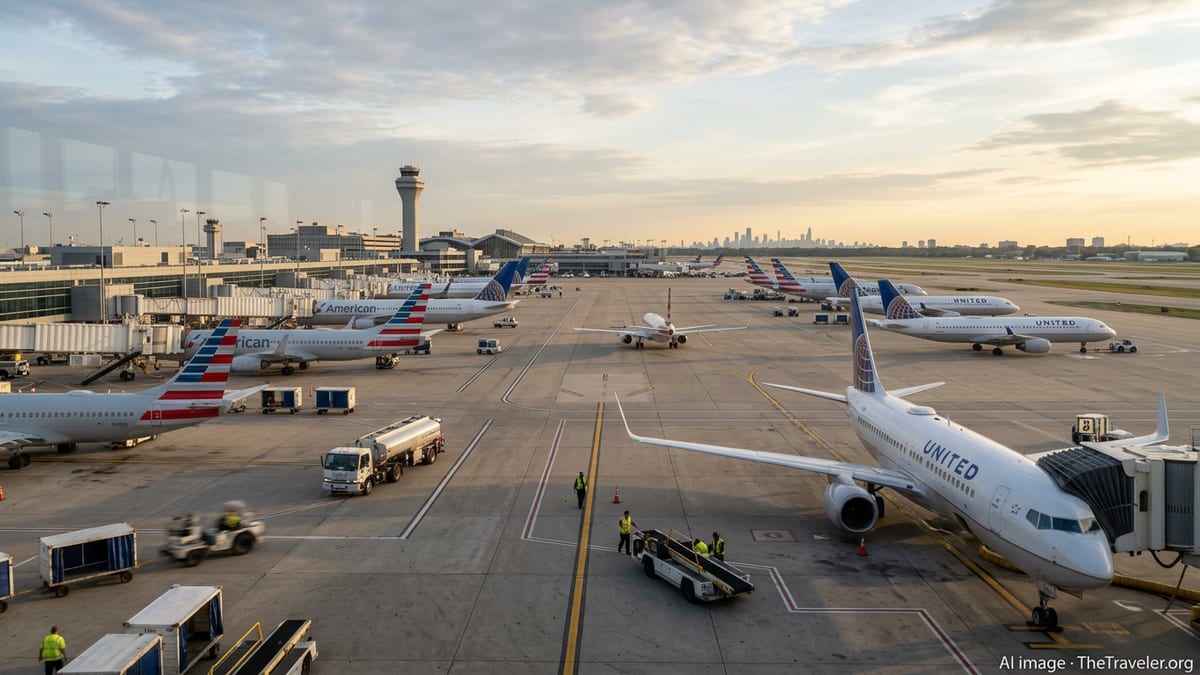
FAA Caps Squeeze O’Hare Schedules
Publicly available information shows that the Federal Aviation Administration has ordered airlines to trim schedules at Chicago O’Hare International Airport for the busy 2026 summer period, limiting the number of daily takeoffs and landings to manage congestion and preserve safety. Reports indicate the cap amounts to roughly a 12 percent reduction in planned operations during peak months, a change that is hitting hub carriers with large banks of regional flights particularly hard.
Coverage in local and aviation focused outlets notes that United, O’Hare’s largest tenant, had built up an ambitious slate of new and restored regional services from the airport, including additional links to downstate Illinois. Those plans were drawn up before the full scope of the FAA’s schedule reduction order became clear, creating a mismatch between what airlines hoped to operate and what regulators will allow at the airport this summer.
As the new constraints took effect, United began to reshape its O’Hare schedule, concentrating scarce slots on core hub to hub routes and higher volume domestic and international destinations. Within that broader restructuring, the airline has now delayed the launch of two intrastate Illinois routes that were intended to expand connectivity between smaller cities and Chicago.
Industry analysis suggests that regional routes relying on smaller jets are often the first to be adjusted when capacity is scarce, because they carry fewer passengers per movement than larger mainline flights. With O’Hare’s daily operations capped, each takeoff and landing has become more valuable, increasing pressure on airlines to redeploy aircraft toward markets that can support more seats and higher yields.
Impacted Illinois Communities Lose Near Term Connectivity
According to regional airport updates and community reporting, the affected routes involve new United Express links from Chicago O’Hare to smaller Illinois airports that had been targeting launches in late 2026. Promotional materials distributed earlier in the year highlighted plans to restore or expand connections between Chicago and downstate markets, amid broader messaging about strengthening the airline’s Midwest network.
More recent public statements and schedule filings show those start dates have now been pushed back, with service postponed until at least 2027. One example discussed in local coverage involves a planned O’Hare connection that has been delayed by roughly a year after initially being scheduled to begin this autumn. Airport communications attribute the shift directly to the FAA mandated reductions in movements at O’Hare.
For affected communities, the delay means an extended wait for added frequencies and one stop access to United’s global network through Chicago. Business groups and local travelers had been anticipating new options for same day trips and easier connections to the coasts and overseas, benefits that are now on hold while the carrier adapts to the new regulatory environment.
Travel industry observers point out that smaller markets are particularly sensitive to these kinds of disruptions, because they typically have limited carrier diversity and fewer daily departures. When a single planned route is postponed, it can significantly narrow choices for residents and visitors, pushing some demand toward road travel or larger airports several hours away.
United Reshapes Regional Strategy Under Constraints
Based on airline scheduling data and aviation analysis, United has taken a multi step approach to complying with the FAA order. The carrier has trimmed frequencies on a number of regional spokes from O’Hare, reduced or removed some thinly traveled routes, and delayed the introduction of new services that were still in the planning pipeline. The postponed Illinois routes form part of this broader recalibration.
Reports indicate that in deciding which flights to prioritize, United has focused on maintaining its long haul international operations and key domestic trunk routes, where larger aircraft allow more passengers to be moved within the same number of slots. By contrast, shorter regional flights that depend on smaller regional jets are more vulnerable when the total number of operations is capped.
Aviation commentators note that the economics of small city flying were already under strain because of high operating costs and a constrained supply of regional pilots. The new FAA limits at O’Hare add another layer of complexity, forcing airlines to reexamine whether new spokes can be justified when each additional departure displaces another potential flight in the schedule.
Some analysts suggest that opportunities for future growth may hinge on how long the current caps remain in place and whether the FAA adjusts them in response to operational performance. If delays and congestion ease over time, regulators could consider loosening restrictions, which might create room for postponed intrastate routes to be reintroduced.
Travelers Face Ongoing Uncertainty and Limited Alternatives
For travelers in the affected Illinois markets, the immediate impact is continued reliance on existing carriers and routings, or in some cases the absence of commercial air service from the local airport. Community discussions and traveler forums describe residents weighing whether to drive to larger airports in Chicago, St. Louis, or Indianapolis to access a wider slate of flights.
Schedule disruptions at O’Hare also mean that even travelers not directly affected by the postponed routes may feel the impact. Reductions in regional frequencies can make it harder to find convenient departure times, while fuller aircraft and tighter connections leave less flexibility when irregular operations occur. Some passengers report building in longer connection windows or choosing alternate hubs to reduce the risk of missed flights.
Travel advisors and industry commentators recommend that passengers monitor schedule changes closely over the coming months, as airlines continue to fine tune their operations under the new FAA constraints. It is possible that further adjustments to O’Hare’s regional network will emerge as carriers respond to demand patterns and operational performance through the summer.
In the meantime, local officials and airport managers in smaller Illinois communities are highlighting the importance of stable air links to Chicago for economic development and tourism. While the postponed United routes are expected to launch at a later date, the timing remains tied to how quickly the broader O’Hare network can adapt to the FAA’s flight caps without compromising reliability.