


More news on this day
Renewed cross-border strikes between Saudi Arabia and Yemen’s Houthi movement are sharpening traveler concerns across the Gulf, including whether trips to Dubai and Abu Dhabi remain safe and whether flights could be disrupted with little warning. Public travel advisories continue to emphasize a heightened regional security environment, even as the UAE’s main airports and tourism infrastructure remain broadly operational.
Get the latest news straight to your inbox!
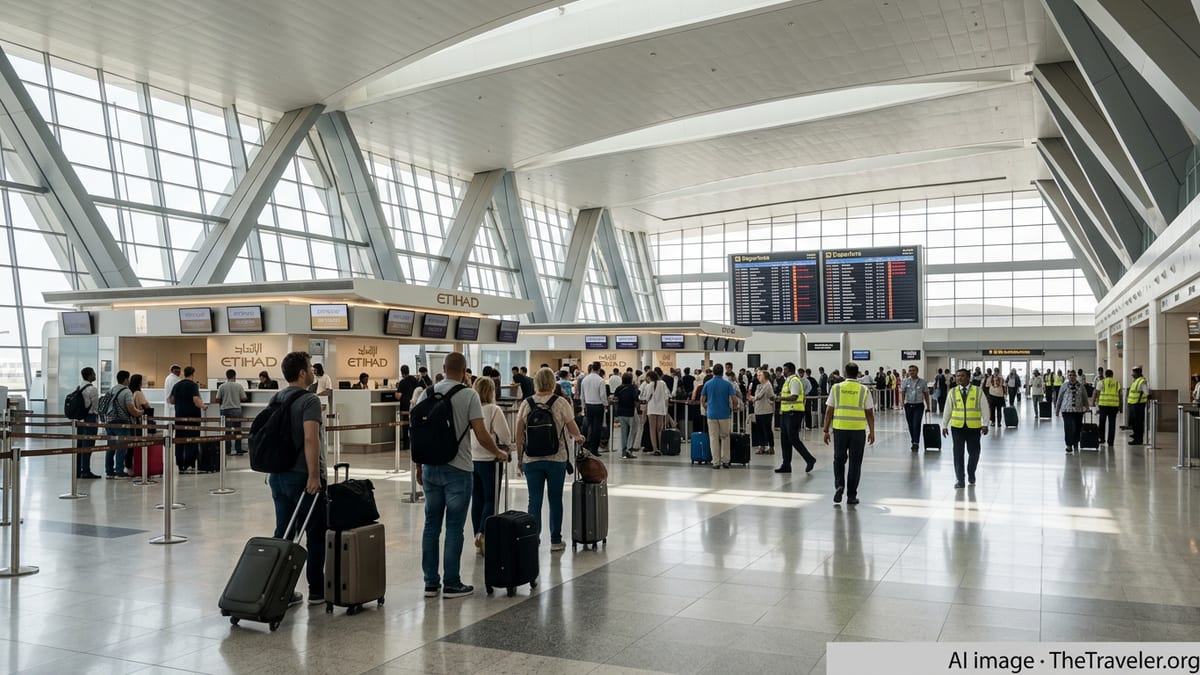
What the latest Saudi-Houthi escalation means for UAE travelers
Published coverage in mid-September 2026 describes an uptick in exchanges of fire between Saudi Arabia and the Houthis, including drone and missile activity and retaliatory strikes in Yemen. While the immediate fighting is centered on Saudi territory and Yemen, the wider risk travelers watch for in the UAE is spillover in the form of regional reprisals, attempted long-range strikes, or sudden shifts in air and maritime routing linked to conflict-zone risk assessments.
For travelers headed specifically to Dubai and Abu Dhabi, the key practical question is less about everyday street safety in the Emirates and more about low-probability, high-impact events that can affect transport and operations, including temporary airspace measures, flight cancellations, and heightened security around sensitive sites.
The risk environment is also shaped by the broader Gulf security picture in 2026, including an ongoing threat of drone and missile attacks and periodic disruptions to commercial flights in the region. That combination is why travel advisories can remain cautious even when hotels, attractions, and city services in Dubai and Abu Dhabi are functioning normally.
Latest official travel-advice signals for Dubai and Abu Dhabi
For U.S. travelers, the U.S. Department of State’s travel advisory for the United Arab Emirates is currently listed as Level 3, “Reconsider Travel,” dated August 29, 2026. The advisory highlights terrorism and armed conflict as concerns, and it notes an ongoing threat of drone and missile attacks and potential disruptions to commercial flights, alongside additional cautions connected to sensitive locations such as military bases and critical energy infrastructure.
Other governments have issued similarly cautious messaging focused on regional volatility and the possibility of rapid changes to flight operations. Australia’s Smartraveller, for example, advises reconsidering the need to travel and specifically flags that airspace may open or close at short notice, potentially affecting flights through Abu Dhabi and Dubai, and urges travelers to monitor developments closely and avoid locations that could be targeted.
UK travel advice for the UAE continues to publish safety and security guidance for Dubai and Abu Dhabi, including reminders that the Middle East security situation can evolve quickly and that travelers should keep informed through official channels. Travelers using any government advisory should read the full entry, local-law, and safety sections, since practical risk often relates to behavior and location choices rather than to tourist districts as a whole.
Flights, airspace, and airport operations: what travelers should expect
On the ground, Abu Dhabi’s tourism authority states that the emirate is operating normally, with hotels and attractions open, and that Zayed International Airport is open and operational. It also recommends checking flight status directly with airlines before leaving for the airport, a useful step in an environment where schedule changes can be driven by routing constraints beyond the UAE itself.
Airline advisories show how disruptions can be uneven across carriers. Emirates’ travel-updates page has recently advised customers to monitor flight status and operational messages closely, reflecting that delays and rebookings can happen for reasons ranging from regional security measures to third-country air-traffic issues.
At the same time, some foreign airlines have paused Dubai services for extended periods in 2026. KLM’s travel alerts indicate it has paused flights to and from Dubai through October 24, 2026, and also paused flights to and from Riyadh and Dammam through the same date, underscoring that even when UAE airports are open, individual carriers may make conservative operational decisions that affect connectivity.
Operationally, UAE civil aviation publications show that contingency procedures exist to manage capacity during disruptions, including measures that can temporarily stop departures from regional airports destined for UAE airports when arrival delays or other triggers occur. For travelers, the practical takeaway is to plan for short-notice changes, keep airline contact details updated in bookings, and avoid tight connections where possible.
How to reduce risk on the ground in Dubai and Abu Dhabi right now
In a heightened regional environment, many advisories converge on similar, practical risk-reduction steps. Travelers can limit exposure by avoiding military sites, critical energy infrastructure, and other sensitive facilities, even if these are not always obvious or signposted. Staying in well-established tourist and business districts, using reputable transport options, and keeping an eye on local announcements can help manage day-to-day risk.
It can also be wise to have a personal plan for what to do if conditions change quickly: know your hotel’s shelter-in-place guidance, keep a charged phone and backup battery, and save airline and accommodation contacts offline. If an alert indicates an imminent threat, advisories commonly recommend seeking shelter indoors away from windows and exterior walls.
Travelers should also be aware that the UAE’s aviation regulator has maintained restrictions affecting certain types of aerial activity. A UAE General Civil Aviation Authority safety decision issued April 27, 2026 describes a temporary suspension of unmanned aircraft systems (drones) and certain other categories within UAE airspace, with limited exemptions by written authorization. For visitors, this is a reminder not to pack or fly recreational drones without confirming current rules and permissions.
Booking and insurance considerations if you’re traveling soon
If you are traveling in the coming weeks, the most important planning decision is flexibility. Choose fares that allow changes, avoid last flight-of-the-day itineraries, and build buffer time for onward connections. Where possible, favor itineraries with multiple daily alternatives on the same route, and consider whether you are comfortable transiting through the Gulf if your final destination is elsewhere.
Before departure, review how your travel insurance treats “armed conflict,” “war,” and “civil unrest,” since these clauses can affect coverage for trip interruption, cancellation, and medical evacuation. Many policies vary sharply in what they cover when government advisories rise or when a carrier cancels flights for security reasons, so it is worth checking the policy wording and any optional “cancel for any reason” add-ons where available.
For travelers already in Dubai or Abu Dhabi, the most practical routine is to check flight status frequently, keep plans adaptable, and follow official channels for airport and airline updates. While everyday life in the UAE’s major cities can continue normally during regional tensions, the travel experience can still be shaped by aviation decisions made quickly in response to events elsewhere in the Gulf.