


More news on this day
Uruguay’s national football team arrived in Miami several hours behind schedule for its 2026 World Cup opener after a permitting error by the charter airline in Mexico delayed the squad’s flight to the United States.
Get the latest news straight to your inbox!
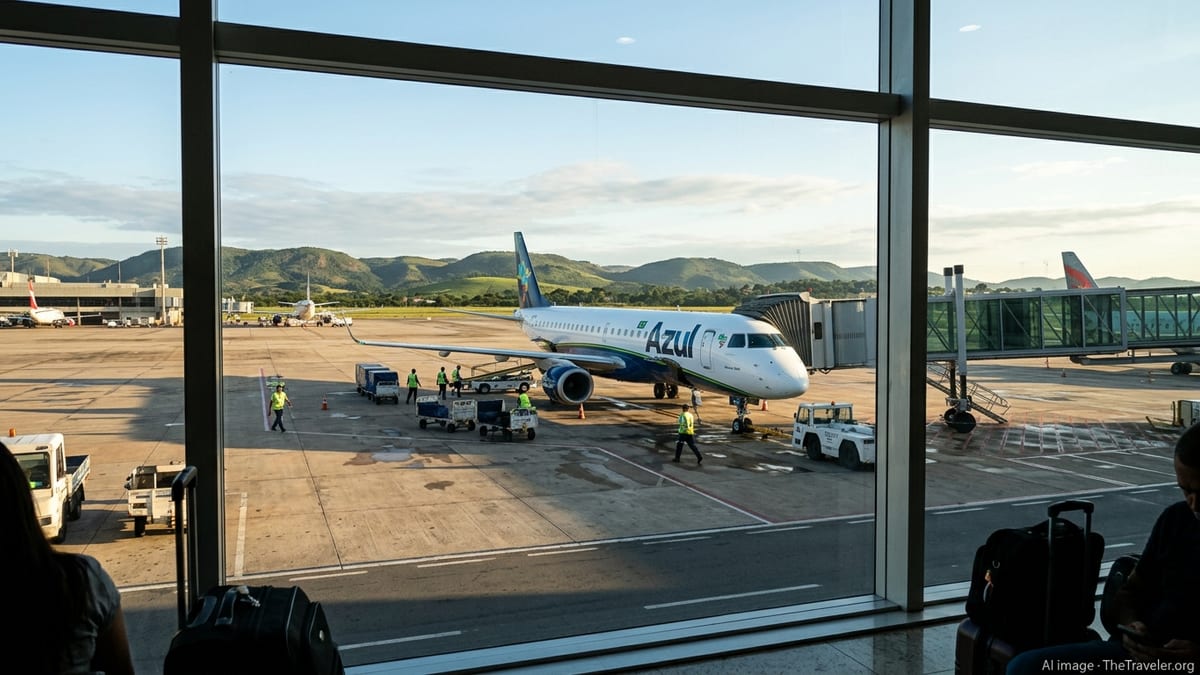
Documentation mix-up stalls charter in Cancún
According to published coverage from sports and general news outlets, Uruguay’s World Cup delegation was due to depart from Cancún on Sunday, June 14, for Miami, where it is based for its opening group match at the 2026 tournament. The team had been holding its pre-tournament camp in Playa del Carmen and was scheduled to make the short hop to the United States with time to spare before Monday’s game.
Reports indicate that the charter flight was unable to leave on time because the aircraft did not have the correct permits to operate the international leg into the United States. Travel and aviation reports describe the issue as a permitting or documentation problem discovered in Mexico, which prevented the plane from being cleared for the route as initially planned.
The situation left the players and staff waiting in Cancún while tournament organizers and the airline worked to resolve the paperwork. Publicly available information shows that, as checks continued, the original departure time had to be pushed back, creating uncertainty around when the squad would finally land in Miami.
The incident unfolded against strict World Cup logistics that organize team movements down to the hour, including required arrival windows in host cities before each match. Any deviation from those schedules can trigger operational and competitive concerns for both teams and tournament planners.
FIFA statement points to airline permitting error
Global coverage of the episode notes that the issue did not stem from immigration or security screening of the players themselves, but from the status of the aircraft and its approvals. Several outlets report that FIFA later described the delay as the result of an airline permitting error in Mexico that affected the charter arranged for Uruguay’s delegation.
According to these accounts, the permits needed for the aircraft to enter United States airspace and land in Miami were either incomplete or not properly processed before the planned departure. That discrepancy emerged close to takeoff, effectively grounding the plane until the paperwork could be corrected or alternative arrangements agreed.
Reports indicate that tournament organizers coordinated with the airline, local airport authorities in Cancún, and receiving partners in Miami to clear the flight. Coverage suggests that contingency planning focused on ensuring that Uruguay would still arrive within the minimum rest and preparation window mandated before a World Cup match.
While such permitting issues are rare at the elite level, the incident highlights the complexity of operating special charters during a global event, where aircraft, crews, and routes are often tailored specifically for team movements rather than regular commercial schedules.
Arrival in Miami compresses preparation time
Despite the setback, news reports confirm that the Uruguayan squad ultimately arrived in Miami on Sunday night, several hours later than initially planned but still in time to complete the formalities required before its opening match. Images and descriptions from local media in Uruguay and the United States show the team going through expedited arrival procedures on landing.
The delay, however, compressed the team’s final preparations. Instead of a more relaxed schedule with additional time for recovery, walkthroughs, and media duties, Uruguay’s players faced a tighter turnaround between travel, rest, and pre-match routines. Sports coverage notes that coaching staff had to adjust plans, with some optional activities reportedly scaled back or condensed.
For traveling supporters and tournament planners watching from afar, the incident revived memories of past logistical challenges at major events, where travel disruptions can have knock-on effects on training, media access, and fan expectations. In this case, published reports emphasize that match timing and venue arrangements in Miami were not altered, and the game went ahead as scheduled.
The episode nevertheless underlined how even a relatively short regional flight can become a flashpoint when it is part of the finely balanced timetable surrounding a World Cup fixture, particularly in a tournament spread across multiple countries and long distances.
Spotlight on World Cup travel logistics
Travel specialists and tournament watchers note that Uruguay’s experience fits into a broader pattern of scrutiny on logistics for the 2026 World Cup, which is being staged across a vast geographic footprint. Team movements rely heavily on bespoke charter operations, with complex layers of permits, slots, and coordination between host nations.
Publicly available information on aviation procedures highlights that charter operators must secure route and landing permissions well in advance, especially when flying into the United States. Any discrepancy in documentation, aircraft registration, or operating rights can result in delays similar to the one faced by Uruguay, even when high-profile passengers are on board.
The incident also draws attention to the role of governing bodies in centralizing travel arrangements. For many teams, flights and ground transport are organized through tournament structures rather than directly by national federations. That model can streamline operations, but it can also concentrate risk if a permitting or scheduling error affects multiple delegations.
As the World Cup progresses, analysts expect organizers and airlines involved in charter operations to revisit permit timelines, verification processes, and communication channels to avoid a repeat of the disruption that briefly stranded the Uruguay squad in Mexico on the eve of its opener.
Implications for fans and future team travel
For visiting supporters in Miami, Uruguay’s late arrival was largely a behind-the-scenes issue, with no reported impact on stadium access times or match scheduling. Nevertheless, the story resonated widely on social media and fan forums, where travelers frequently discuss the risks of tight itineraries and last-minute changes during major tournaments.
Travel commentators point out that while elite teams benefit from dedicated check-in areas, charter flights, and expedited processing, they are not fully insulated from the same operational pitfalls that affect regular passengers. Airline permitting, airspace restrictions, and airport capacity constraints remain critical variables that can derail even meticulously planned movements.
Looking ahead, some analysts suggest that federations and tournament organizers may place additional emphasis on redundancy in travel planning, including earlier arrivals where feasible, backup aircraft options, and more aggressive verification of cross-border operating rights. For a World Cup spread across several countries, these measures could prove central to maintaining sporting integrity and minimizing disruption.
For Uruguay, the incident now becomes part of the narrative surrounding its 2026 campaign, a reminder of the fine margins that separate seamless preparation from unexpected turbulence in the air and on the ground.