


More news on this day
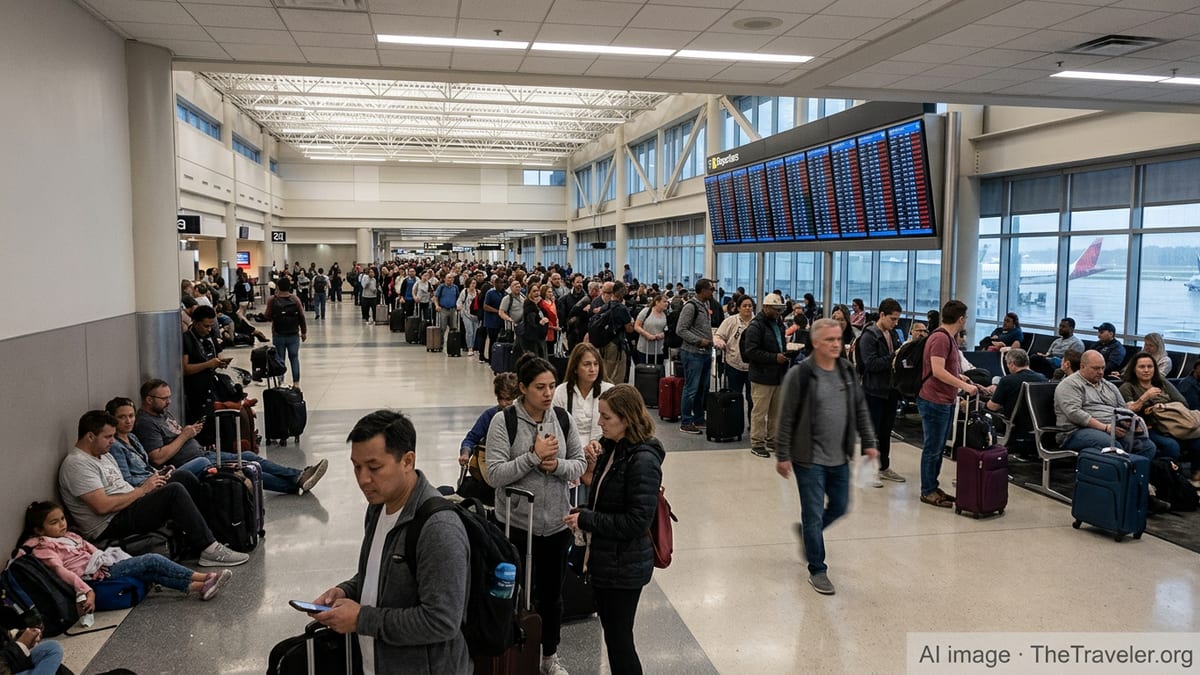
Travelers moving through Ronald Reagan Washington National Airport on June 30 faced another bruising day in a turbulent summer for U.S. aviation, with publicly available tracking data indicating roughly 300 departure and arrival delays as carriers and passengers alike began adjusting to preannounced July 4 airspace restrictions over the nation’s capital.
Get the latest news straight to your inbox!
Day 91 in a Summer of Repeated Flight Disruptions
The June 30 disruptions at Reagan National formed part of a longer pattern of turbulence that aviation watchers have been tracking across the United States since early spring. Industry-focused coverage and flight-tracking dashboards show repeated spikes in delays and cancellations in recent weeks, with severe weather, tight schedules and localized operational issues all contributing to rolling backlogs across major hubs.
Analyses of June travel patterns published by aviation and travel outlets point to several heavy disruption days earlier in the month, including events where nationwide delays climbed into the thousands and cancellations crossed into triple digits. These incidents often began at a handful of pressure points in the network before spreading outward as late-arriving aircraft, displaced crews and ground holds cascaded through airline schedules.
Against that backdrop, June 30 has been described by some data-driven travel briefings as effectively “Day 91” in a prolonged spell of irregular operations, reflecting nearly three months of recurring turbulence since the start of the main spring and summer travel period. While day-to-day totals fluctuate, the cumulative effect for passengers has been a greater likelihood of missed connections, rebookings and extended waits at crowded terminals.
Passenger advocates note that even when headline national disruption totals fall short of the worst spikes, busy connecting airports can still experience conditions that feel chaotic for travelers on the ground. A figure on the order of 300 delays concentrated at a single Washington-area facility is enough to ripple through early morning banks, midday shuttles and evening returns, particularly on routes where aircraft turn times are short.
Reagan National’s June 30 Backlog in Context
Operational summaries compiled from publicly available arrival and departure boards for June 30 indicate that Reagan National handled several hundred scheduled flights, with roughly 300 of those experiencing some degree of delay rather than operating on time. While the majority of affected services were ultimately completed, the concentration of late departures and arrivals placed visible strain on gate space, ramp operations and connecting times throughout the day.
Comparative data for June shows that Reagan National has already played a prominent role in several recent disruption events. On mid-June days when severe thunderstorms affected a wide swath of the East Coast, consumer-focused aviation reports documented that the airport recorded both triple-digit cancellations and several hundred delays, placing it among the hardest-hit facilities nationwide during those weather episodes.
By contrast, June 30’s profile at Reagan tilted more toward extensive delays than outright cancellations. That dynamic can be a mixed experience for travelers. Fewer cancellations may mean more passengers ultimately reach their destination the same day, but prolonged departure holds and rolling delays can make it difficult for travelers to predict when they will actually leave or arrive, complicating ground transport, hotel plans and onward connections.
Airport-status dashboards show that once delay volumes at a slot-restricted airport such as Reagan National reach a certain threshold, recovery can take hours even after the original trigger eases. Tight spacing on the region’s airways, limited runway capacity and strict perimeter and slot rules all limit the ability of airlines to rapidly add extra sections or re-time banks to smooth out operational bumps.
America 250 Celebrations Bring July 4 Flight Warnings
June 30’s problems arrived just as Washington-area travelers were being reminded of an entirely separate source of disruption: extensive airspace and operational restrictions tied to Independence Day and America 250 commemorations. Public advisories and regional news coverage have highlighted that Reagan National is expected to halt most commercial operations for significant portions of July 4 to accommodate flyovers, fireworks and other aerial displays associated with the country’s 250th anniversary celebrations.
Information published by the regional airport authority and summarized in national and local reporting indicates that flight activity at Reagan will also be affected on adjacent dates, including parts of July 3 and additional days in late June, July and August when aerial demonstrations are scheduled over central Washington. Airlines serving the airport have already begun adjusting schedules and issuing flexible-travel waivers in response.
Some major carriers have publicly outlined steps to reduce their July 3 to 4 flight programs into and out of the capital region, citing America 250 airspace restrictions and anticipated congestion. Travel waivers allow affected customers to rebook for nearby dates without change fees or fare differences in certain fare classes, provided changes are made within specified windows. These measures are intended to spread demand away from the tightest closure periods and to reduce the number of passengers who might otherwise be stranded by last-minute cancellations.
For passengers who must travel around the holiday, publicly available airline guidance emphasizes the importance of monitoring itineraries closely and being prepared for schedule changes up to departure time. With large parts of the July 4 operating day at Reagan effectively blocked out for ceremonial activities, remaining flights in the morning and late evening are expected to be heavily subscribed, raising the risk of crowding at check-in, security and boarding.
What the Numbers Say About Summer Reliability
Recent summaries of federal air travel consumer data show that, even before the height of the July travel season, delays have been a persistent feature of U.S. flying. The latest publicly available monthly report from transportation regulators covering earlier spring operations recorded hundreds of thousands of domestic flights, with a sizable minority arriving late for reasons including weather, air traffic control constraints, heavy traffic volume and carrier or airport-related issues.
Within that dataset, national aviation system delays a category that includes factors such as airspace congestion and air traffic management decisions account for a significant share of late operations. Aviation analysts say that as schedules tighten during the busy summer period, even modest slowdowns in this category can reverberate quickly along popular corridors, particularly on the East Coast where multiple major airports share dense airspace.
Private-sector travel trackers have documented several June days in 2026 when total U.S. delays climbed into the several-thousand range, coinciding with convective weather systems in the central and eastern United States and localized problems at large hubs. On those days, airports like Reagan National, New York’s LaGuardia, Philadelphia and Atlanta often recorded hundreds of late flights each, underscoring how quickly network stress can concentrate at key nodes.
For policymakers and industry planners, this summer’s pattern is likely to feed into ongoing discussions about staffing levels, modernization of air traffic systems and the resilience of airline schedules. While structural improvements to infrastructure and technology tend to unfold over years, short-term responses may include more conservative scheduling on peak days, larger buffers between flights and greater use of preemptive rebooking when severe weather or airspace restrictions are forecast.
Practical Advice for Travelers Heading Into the Holiday
As the United States approaches the July 4 weekend with a fresh example of disruption at Reagan National, travel experts and consumer advocates are reiterating familiar but timely guidance. Publicly accessible planning resources suggest booking earlier flights in the day when possible, as morning departures are statistically less exposed to cumulative delays that build up over successive banks of operations.
Travelers flying to or from Washington around July 3 and 4 are being advised in public-facing airline notices to pay special attention to any messages from their carrier about voluntary rebooking options. Moving to July 2 or July 5, where feasible, could reduce the risk of encountering cancellations linked to America 250 airspace closures or capacity limits at Reagan National and nearby airports.
Passengers with critical time-sensitive obligations, such as international connections or fixed cruise departures, are also encouraged by travel-planning guides to build extra buffer days into their itineraries during this period. While such strategies cannot eliminate the risk of disruption, they can increase the chances of absorbing a missed leg or overnight delay without losing an entire trip.
For many travelers, the June 30 experience at Reagan National will serve as an early warning of how fragile schedules can be during a peak holiday in an already strained summer. With clear signals that July 4 itself will bring intentional pauses in operations over the capital, those planning to fly would benefit from treating flexibility, advance preparation and close monitoring of flight status as essential parts of their holiday packing list.