


More news on this day
UAE residents are navigating another day of uneven travel conditions and elevated regional risk as the US-Iran war continues to disrupt air routes and pressure Gulf shipping lanes, with knock-on effects for flights, freight, and household costs.
Get the latest news straight to your inbox!
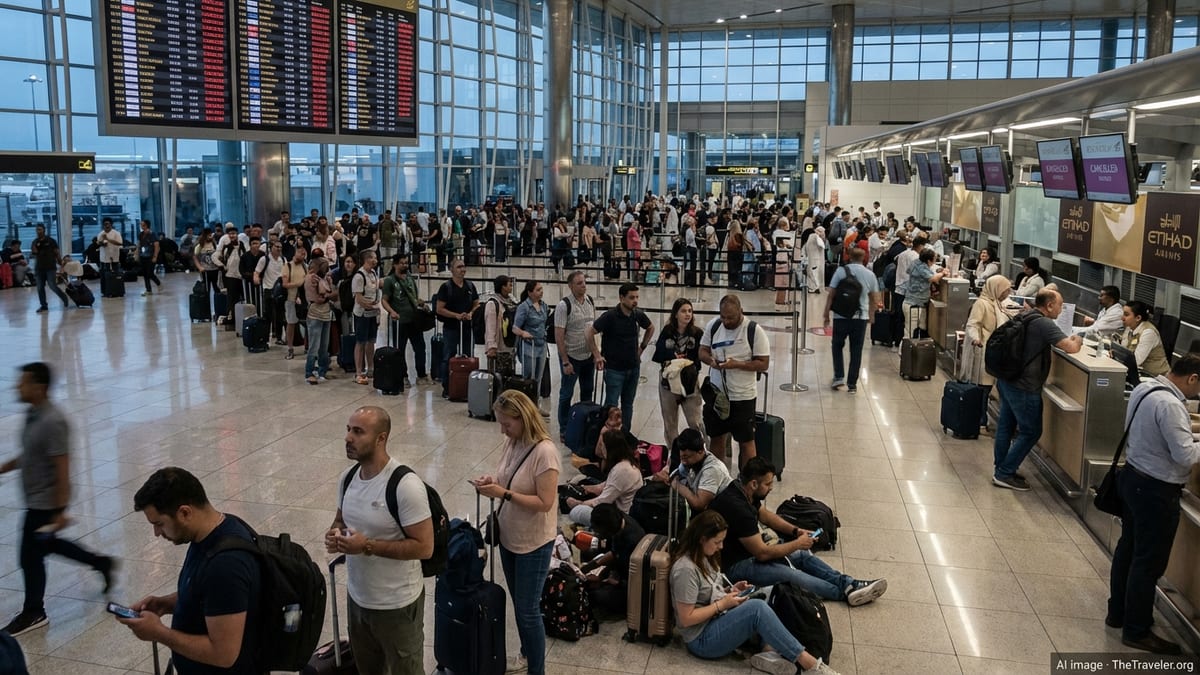
1) Flights are operating, but disruptions can change fast
Published coverage and airline advisories show UAE aviation hubs remain open, with Dubai International and Abu Dhabi’s Zayed International Airport continuing to handle large volumes of passenger traffic. Even so, routings and departure times can shift quickly when nearby airspace restrictions tighten or when earlier disruptions ripple through aircraft rotations.
As of Tuesday, September 15, 2026, published coverage indicates Emirates, Etihad, flydubai and Air Arabia are continuing to operate services, alongside cancellations and delays affecting selected flights from Dubai and Abu Dhabi. Reports also point to cancellations affecting some UAE links with Kuwait and Bahrain, a reminder that short-haul Gulf sectors can be especially vulnerable when airspace or overflight corridors change at short notice.
For travellers departing today, the most reliable routine is to verify your specific flight number on your airline’s live status tools before leaving home, then re-check a few hours later. In periods like this, a flight can remain scheduled but still depart late due to crew positioning, late-arriving aircraft, or last-minute reroutes that add time in the air.
2) The Strait of Hormuz remains the central pressure point for prices
The Strait of Hormuz continues to be the most important chokepoint for the practical, everyday impact of the war on Gulf residents. Public reporting indicates oil flows through Hormuz remain below pre-war levels, and shipping patterns are still being adjusted in response to risk and protection measures at sea.
Recent US-focused assessments have tied a significant share of the war’s economic impact to reduced oil and natural-gas shipments through Hormuz and wider disruptions to shipping corridors. That matters for the UAE because higher shipping risk tends to filter into freight costs, insurance premiums, and the price of moving fuel and goods, even when local supply remains available.
Insurance pricing is a key transmission channel. Industry reporting earlier in 2026 described war-risk premiums for transits through Hormuz rising sharply versus peacetime levels, and recent market coverage has continued to highlight elevated costs for hull war-risk cover and voyage risk pricing. For consumers, this is one reason why price pressure can appear in areas that are not directly tied to crude oil, including imported products and shipping-dependent services.
3) Fuel costs: September 2026 UAE pump prices are already set
For day-to-day household budgeting, one concrete data point is already official: the UAE Fuel Price Committee’s announced retail prices for September 2026, which apply from September 1 through September 30. These are the rates motorists will see at the pump regardless of daily headlines.
Publicly available information from the official announcement shows diesel for September 2026 is set at AED 4.30 per litre. Petrol categories were also adjusted for the month, with the committee noting percentage changes versus the prior period.
For residents who drive frequently or operate delivery-dependent businesses, the key practical step is to treat transport costs as a fixed September input and plan other variable spending around it. If you are booking road-based travel within the UAE, it can also be useful to confirm whether your provider’s pricing is locked in or subject to fuel surcharges during periods of heightened regional volatility.
4) Travel advice is being updated, and it can affect transit plans
International travel advisories have increasingly referenced the conflict and its impacts on flight operations. For UAE-based travellers, this matters most when you are transiting through third countries, planning stopovers, or coordinating travel for visiting friends and family who rely on their home government’s guidance.
As of early September 2026, the US State Department’s UAE travel advisory referenced terrorism and armed conflict risks and noted that, since the onset of hostilities between the United States and Iran on February 28, 2026, there has been an ongoing threat of drone and missile attacks and significant disruptions to commercial flights. The advisory also points travellers to alert systems such as STEP for updates.
UK government travel advice for the UAE has also highlighted the risk of sudden flight cancellations and periodic airspace closures in the wider region, urging preparedness for disruptions. For practical trip planning, this can influence airline rebooking flexibility, travel insurance exclusions, and the time buffer you may want before critical meetings or onward connections.
5) UAE residents should monitor official emergency guidance and documentation needs
During prolonged regional disruptions, the most useful official information is often operational rather than political: what remains open, what services have contingency plans, and what documentation you might need if schedules change quickly.
UAE government channels tied to emergency and crisis management continue to publish guidance and preparedness messaging, including reminders about coordinated national response planning. Earlier in 2026, publicly available statements also described evacuation planning for UAE nationals abroad in response to regional developments, underscoring that contingency operations can be activated quickly when conditions deteriorate.
For residents, the immediate practical takeaway is to keep essential travel documents valid and accessible, confirm visa and entry requirements if your itinerary reroutes through a different transit point, and store key booking confirmations offline. If you are travelling with children or elderly family members, consider building in additional airport time and choosing routings with fewer tight connections until regional airspace patterns stabilize.