

More news on this day
The sudden eruption of full-scale war involving the United States, Israel and Iran has sent shockwaves through the global travel industry, shuttering airspace across the Middle East, stranding hundreds of thousands of passengers and putting tens of billions of dollars in tourism revenue at immediate risk.
Airspace Closures Turn a Regional War into a Global Travel Crisis
Since coordinated US-Israeli strikes on Iran began on February 28, sweeping airspace closures from Israel and Iran to Qatar, Iraq, Kuwait, Bahrain and the United Arab Emirates have severed some of the world’s busiest aviation corridors. Key hubs that connect Europe and North America with Asia and Africa have seen regular schedules suspended, with many airports limiting operations to evacuation and emergency flights.
Flight-tracking data cited by airlines and travel analysts shows that thousands of services were canceled in the first four days of the war, with estimates climbing above 19,000 flights wiped from schedules and more than a million passengers affected as diversions and rolling suspensions ripple outward. Long-haul routes that typically overfly the Gulf and Levant are being rerouted over longer paths, adding hours to journeys and sharply increasing fuel costs for carriers.
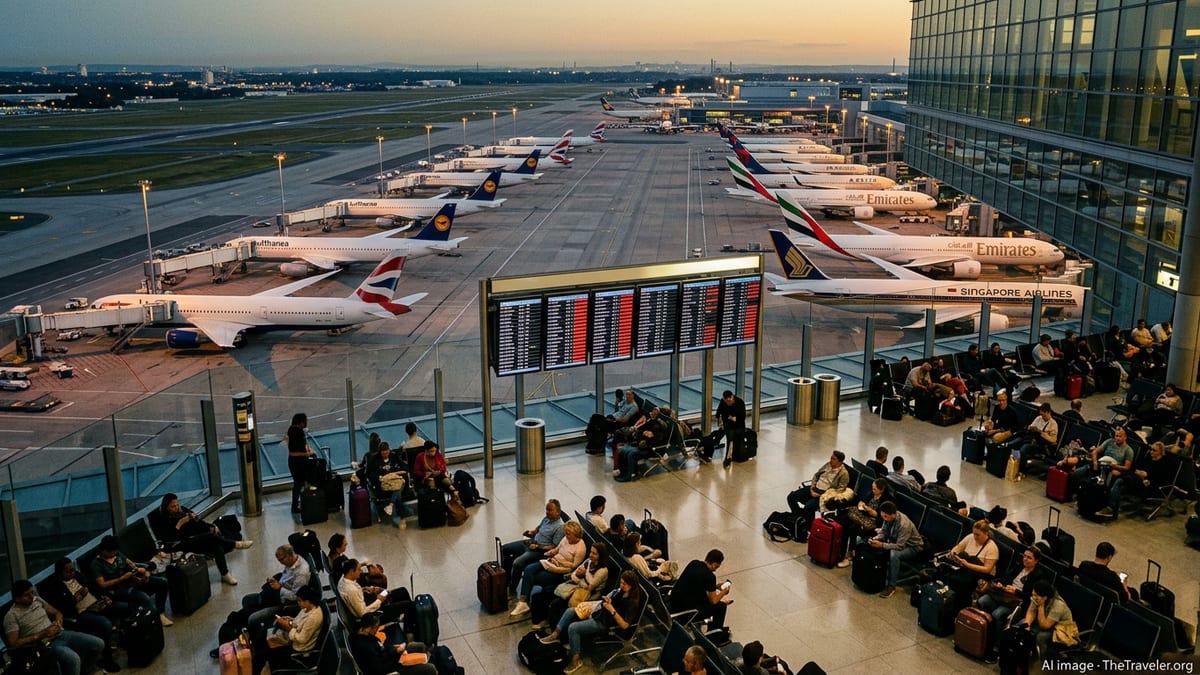
In Israel, a formal state of emergency has effectively shut civilian aviation, while in the Gulf, national carriers including Emirates and Etihad temporarily halted regular services before resuming limited operations for repatriation flights. For travelers, that has translated into chaotic scenes from Dubai to Athens as tourists sleep on terminal floors, compete for scarce hotel rooms and scramble to secure any available seat out of the region.
Even destinations far from the fighting are feeling the squeeze. Airlines in Europe, Asia and North America have issued broad travel waivers for tickets touching the Middle East, warning that schedule instability could persist for weeks. Cruise operators with itineraries in the Eastern Mediterranean and around the Arabian Peninsula are redirecting ships at short notice, in some cases abandoning entire seasons in favor of safer waters.
Tourism Windfall Reverses as Demand Collapses Overnight
The conflict has hit just as the Middle East’s tourism boom was gathering pace. Gulf Cooperation Council states reported record international tourism revenues in 2024, with the region attracting roughly 100 million visitors in 2025 and outpacing pre-pandemic levels by a wide margin. Flagship destinations such as Dubai, Riyadh, Doha and Abu Dhabi had positioned themselves as safe, modern hubs at the crossroads of global travel.
That narrative has unraveled in a matter of days. A new forecast from Tourism Economics projects that inbound arrivals to the wider Middle East could decline by 11 to 27 percent in 2026 compared with last year, instead of the strong growth previously expected. In spending terms, the research firm warns of a potential shortfall of 34 to 56 billion dollars in regional visitor receipts if hostilities drag on.
Hotel groups and tour operators are reporting an immediate wave of cancellations across city breaks, desert safaris, religious tours and cruise-and-stay packages. Large European and Asian wholesalers say new bookings to the Middle East have “fallen off a cliff,” with corporate travel departments freezing non-essential trips and leisure customers switching to Mediterranean, Southeast Asian or domestic alternatives.
For smaller operators that had only just recovered from the pandemic, the timing is particularly painful. Independent guides, boutique hoteliers and activity providers who had ramped up staff and inventory for a busy spring high season now face occupancy rates plunging toward single digits, with cash flow stretched by refunds and credits for future travel.
Security Warnings and Insurance Gaps Deepen the Shock
Government advisories are amplifying the collapse in demand. The US State Department has urged American citizens to leave numerous Middle Eastern countries immediately, citing serious safety risks related to ongoing strikes, missile launches and protests. Several European foreign ministries have followed suit with “do not travel” or “leave now” guidance covering Israel, Iran and neighboring states.
Such warnings do not just deter new visitors. They can also void coverage for trips already booked, because many standard travel insurance policies exclude claims arising directly from war or armed conflict. Consumer advocates report a surge in complaints from travelers who suddenly find that non-refundable hotel stays, tours and internal flights are not covered when they cancel on security grounds.
At the same time, aviation security protocols are tightening. Airlines are avoiding airspace deemed at risk from drones or missiles, which increases flight times and fuel burn. Industry analysts say sustained reroutings could lead to higher fares worldwide, not just on Middle East routes, as carriers try to recoup rising operating costs linked to the conflict and to volatility in oil prices.
Travel risk consultants note that even destinations not directly affected by strikes can suffer from a broader perception of regional instability. Online booking platforms are already seeing search volumes for the Middle East sink, with spikes instead for Southern Europe, East Africa and parts of Asia viewed as safer substitutes, at least for now.
From Gulf Hubs to Holy Sites: A Billion-Dollar Tourism Web Unravels
The war is reverberating through every segment of the Middle East’s complex tourism ecosystem. Gulf hubs that rely heavily on connecting traffic are seeing premium transit passengers rerouted through alternative gateways in Europe and Central Asia. Airlines warn that once high-yield customers shift their loyalty, it can be difficult to win them back, especially if competing hubs use the disruption to lock in new partnerships and routes.
Religious and heritage tourism has also been hit hard. Pilgrimage itineraries that combine visits to Israel, Jordan, Lebanon or Gulf countries have been suspended, cutting off income to local communities that depend on tour groups for livelihoods. Guides, drivers, restaurateurs and handicraft sellers who tailor their businesses around seasonal pilgrimage flows now face the prospect of months without work.
Beyond the Middle East, destinations intricately linked to the region by cruise routes and air connectivity are bracing for knock-on effects. Mediterranean islands and Red Sea resorts that feature heavily on Eastern Mediterranean cruise programs fear losing visitors as ships are redeployed. European airports that had invested heavily in transfer traffic to and from Gulf carriers are recalibrating capacity plans and revenue forecasts.
Stock markets have taken note. Listed airlines, hotel chains and travel booking platforms with heavy exposure to Middle East traffic have come under pressure, with analysts flagging risks to fourth-quarter earnings if disruption continues through the Northern Hemisphere summer. For investors who had bet on a long, smooth tourism upcycle after the pandemic, the US-Israel-Iran war is a stark reminder of how quickly geopolitical risk can upend the sector.
Uncertain Timeline Leaves Travelers and Industry in Limbo
What happens next for global tourism hinges on the duration and geographic spread of the fighting. Travel analysts draw parallels with previous conflicts in the region and with the early months of the war in Ukraine, noting that demand tends to recover once a clear ceasefire is in place and airlines can safely restore predictable schedules. Until then, however, both travelers and industry planners are largely flying blind.
For now, major carriers are extending waivers and allowing customers to rebook or reroute trips without change fees, but typically only within a defined window. Tour operators are rewriting itineraries week by week, trying to balance safety, contractual obligations and cash preservation. Travel agents, once again on the front line of crisis management, are fielding calls from anxious clients unsure whether to cancel, postpone or simply wait.
In the Middle East, tourism ministries are launching rapid-response task forces to coordinate with airlines, hotels and ground operators, and to plan for eventual recovery campaigns. Officials acknowledge privately that the immediate priority is evacuation and basic traveler safety rather than marketing, but they are already considering incentives and reassurance measures that might be needed to lure visitors back once the guns fall silent.
Globally, the conflict adds a new layer of volatility to an industry still navigating inflation, labor shortages and climate-related disruptions. If airspace closures and security fears persist, the multi-billion-dollar tourism engine centered on the Middle East could face not just a temporary setback but a structural reset, reshaping how and where the world travels for years to come.