


More news on this day
The U.S. government has issued a renewed security warning tied to heightened tensions across the Middle East, urging Americans to reconsider travel through the region as Houthi missile and drone attacks on Saudi Arabia add to risks of sudden airspace closures, flight cancellations, and broader instability.
Get the latest news straight to your inbox!
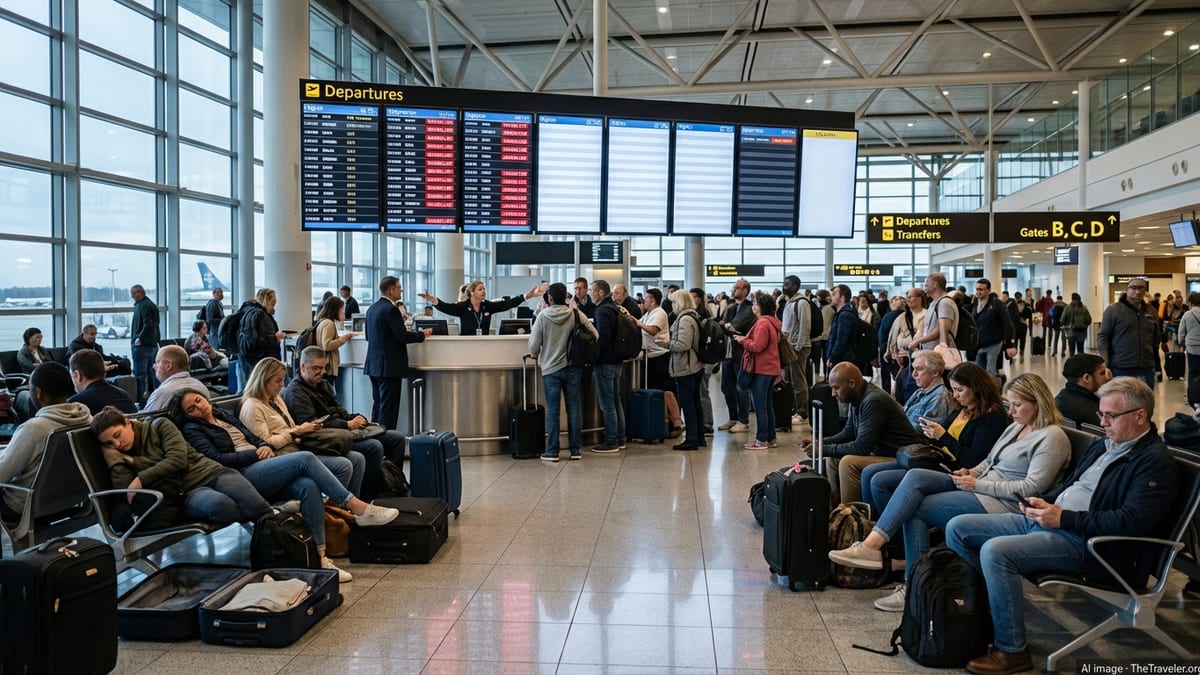
What the new advisory says and why it matters to travelers
The State Department’s most recent regionwide caution highlights a fast-moving security environment in the Middle East and the potential for rapid escalation. The guidance emphasizes practical travel impacts that can occur with little notice, including periodic airspace closures, route suspensions, and last-minute cancellations.
For travelers, the message is less about one specific destination and more about the way a regional security shock can ripple across airline networks. In recent months, published coverage has shown airlines intermittently adjusting schedules in response to geopolitical developments, with some carriers delaying the resumption of earlier operations while others cancel selected routes. Even passengers whose final destination is outside a conflict zone can be affected if their itinerary relies on transiting major hubs in the Gulf or the broader Middle East.
The advisory also underscores that Americans should factor in the possibility of disruptions at diplomatic facilities and heightened security precautions in certain locations. In practice, that can translate into delayed consular appointments, shifting local security measures, and sudden changes to the operating posture of U.S. missions.
Houthi strikes on Saudi Arabia raise risk of spillover
Houthi attacks have been a central driver of the latest travel-risk calculus, particularly for Saudi Arabia and nearby air routes. Over the past week, publicly available reporting has described attempted missile and drone attacks, including an incident Saudi Arabia described as a ballistic missile targeting Riyadh, and separate reports tied to drone activity in or near high-profile locations.
Recent incidents have also illustrated a lesser-known travel hazard: falling debris. Published coverage has described at least one fatality attributed to debris after an intercepted drone, an example of how risk can extend beyond the immediate target area and affect bystanders.
For travelers, the practical concern is not only the possibility of an attack near infrastructure, but also the likelihood of temporary restrictions around airports, sudden changes to flight paths, and local sheltering guidance when alert systems are activated. These disruptions can be especially consequential for passengers with tight connections, group tours, cruise-to-flight transfers, or time-sensitive travel like pilgrimages and events.
Saudi Arabia’s travel advisory level and key restrictions
Saudi Arabia is currently listed by the State Department at Level 3, “Reconsider Travel,” reflecting risks that include armed conflict dynamics, terrorism concerns, and drone or missile threats. The advisory also flags the potential for exit bans and emphasizes that travelers should pay close attention to local laws, including the possibility that social media activity can have legal consequences.
The U.S. advisory also continues to warn against travel to the Yemen border area, where the security environment can be markedly different from major Saudi cities and tourism corridors.
For religious travel, publicly available U.S. guidance continues to point pilgrims toward the Kingdom’s official process. Travelers planning Hajj should be aware that permits and visas are handled through Nusuk, described as the official platform used to authorize pilgrims. That makes documentation and timing especially important for travelers booking packages, as last-minute itinerary changes can be harder to resolve when travel demand peaks.
Air travel disruptions: what to watch before you fly
With the advisory explicitly mentioning potential airspace closures and cancellations, travelers are being urged to monitor airline operations closely. The most useful step is confirming flight status directly with the carrier before heading to the airport and again on the day of travel, particularly for itineraries that transit through Gulf hubs.
Travelers should also anticipate knock-on effects: reroutes can increase flight times, disrupt crew schedules, and create cascading delays that affect onward connections. If you are traveling on separate tickets, a disruption on the first leg can lead to missed onward flights without protection, depending on fare rules.
Because conditions can change quickly, travelers may want to consider booking itineraries with longer connection windows, choosing fares with clearer change flexibility, and keeping essential items in carry-on luggage. For those already in the region, enrolling in the Smart Traveler Enrollment Program and monitoring U.S. embassy security alerts can provide timely updates when conditions shift.
Planning decisions: who should reconsider travel now
In practical terms, the renewed warning matters most for travelers with discretionary trips, complex multi-country itineraries, or transits through airports that could be affected by short-notice closures. Those traveling for time-sensitive reasons should review their contingency plans, including alternate routes and backup lodging in case an overnight delay becomes unavoidable.
Families and group travelers may want to weigh the added complexity of responding to a sudden disruption, especially when traveling with minors or elderly relatives. Business travelers should ensure they can pivot to remote arrangements if meetings are cancelled, and should confirm that travel insurance and employer policies align with a Level 3 advisory environment.
Finally, travelers should distinguish between a regionwide caution and country-by-country advisory levels. Several Middle East destinations remain at elevated advisory levels, and the risk profile can vary sharply by location, purpose of travel, and proximity to sensitive infrastructure. The most actionable approach is checking the current advisory for each destination and transit point before booking or departing, then monitoring for updates through the travel period.