


More news on this day
Riyadh’s King Khalid International Airport (RUH) moved back toward normal operations Sunday after an overnight attack alert and smoke near the airfield disrupted flight schedules, triggering delays, cancellations, and short-notice changes for travelers connecting through Saudi Arabia’s capital.
Get the latest news straight to your inbox!
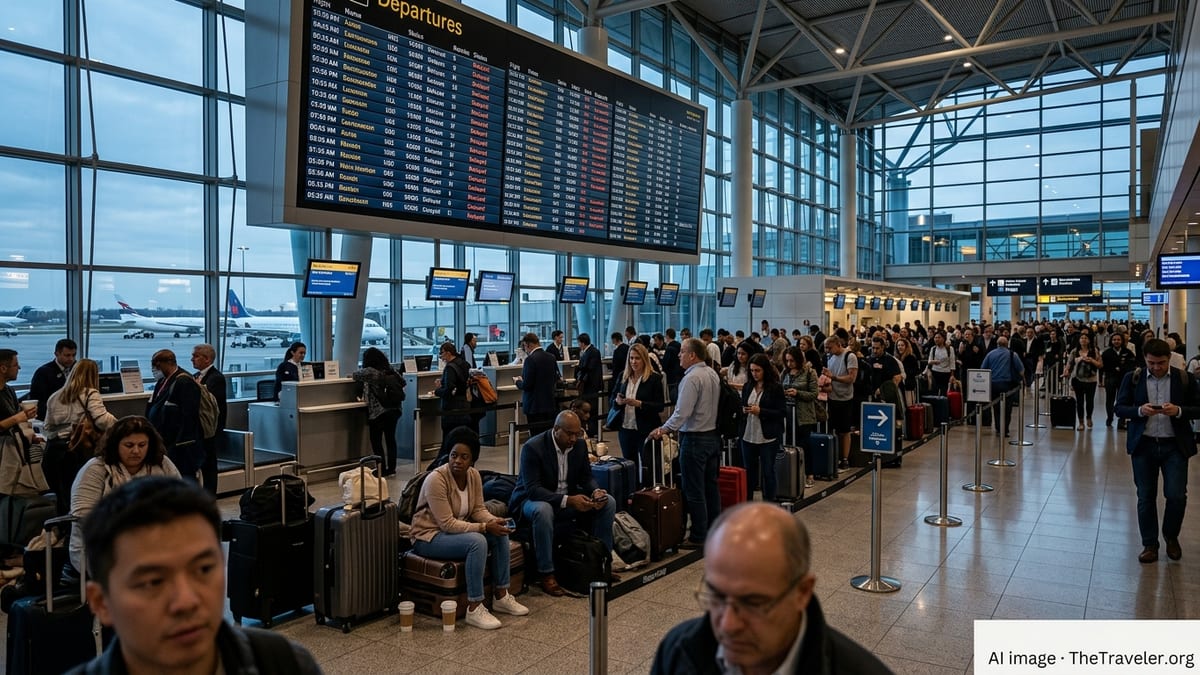
What happened at RUH and why operations were disrupted
Published coverage from multiple international outlets described explosions heard in Riyadh and a plume of smoke visible near the airport area early Saturday, September 19, 2026, after residents received phone alerts warning of a potential aerial threat. Separate reporting tied the smoke to a fire involving a fuel tank at or near an airport fuel storage area, with images and video showing heavy black smoke.
International reporting also linked the episode to a renewed round of regional strikes claimed by Yemen’s Houthi movement. Associated Press coverage published Saturday said Saudi Arabia reported a ballistic missile attempt toward Riyadh, describing it as the first targeting of the capital since a recent escalation in fighting with the Houthis, and noted that smoke was later seen near the airport.
For air travelers, the practical effect was a sudden operational slowdown at one of the Gulf region’s most connected hubs, where a brief pause or disruption can cascade into missed onward connections, aircraft rotation issues, and crew scheduling problems that ripple through the day.
Signs of recovery: flight tracking shows services resuming
By Sunday, September 20, flight tracking data indicated the airport was again handling regular departures and arrivals, following the heavy disruption reported on Saturday. Services that had been delayed earlier in the weekend began to reposition, with airlines gradually rebuilding their schedules and recovering aircraft and crews.
Some outlets focusing on aviation disruption referenced Flightradar24’s disruption indicators for RUH, which had shown major problems during the peak of the incident, with delays and cancellations reflected across the live boards. As the weekend progressed, the primary signal of stabilization was the return of consistent departure flows rather than a stop-and-go pattern.
Even when airports reopen quickly after a security or safety incident, passengers often feel the effects longer than the event itself. Delays can persist as airlines work through backlogs, rebook stranded travelers, and reposition aircraft that may have diverted or arrived late.
Airline impacts and knock-on effects across regional networks
Travel disruption was not limited to Riyadh. Published coverage described knock-on impacts to services across the region as flights were delayed, rescheduled, or canceled while carriers adjusted to shifting conditions at RUH and surrounding airspace.
Reports also highlighted that some travelers encountered abrupt cancellations or aircraft swaps tied to the broader disruption environment. In practical terms, when a major hub experiences irregular operations, airlines often prioritize long-haul or high-load flights first, while lower-frequency services may see longer delays because fewer spare aircraft are available.
For passengers transiting Riyadh, the biggest risk during recovery periods is missed connections. That can be especially consequential on itineraries with a single daily onward flight, where rebooking may mean waiting until the next day, or rerouting through other Gulf hubs if seats are available.
What travelers should do now if flying via Riyadh
With operations trending back toward normal, travelers with upcoming departures or connections at RUH are likely to see improving reliability, but published coverage suggests schedules may remain uneven as airlines clear the remaining backlog from Saturday’s disruption. The most useful step is to rely on airline-issued notifications and the live status of your specific flight rather than general airport conditions.
Travelers connecting through Riyadh should consider building extra connection time where possible, especially on separate tickets. Those with tight connections may want to evaluate alternatives that route through other large hubs in the region, depending on airline policies and seat availability.
For anyone who experienced a cancellation or long delay, re-accommodation rules generally depend on the ticket type and the carrier’s conditions of carriage, and can differ when irregular operations are tied to security or airspace events. Travelers should keep boarding passes and receipts, and verify rebooking and baggage status before leaving the airport or changing terminals.
Why disruptions at RUH matter for Saudi Arabia’s travel surge
King Khalid International Airport is central to Saudi Arabia’s expanding aviation and tourism plans, with Riyadh positioned as both a business travel destination and an increasingly important transfer point. Publicly available information from Riyadh Airports Company in recent months has highlighted record operational volumes, underscoring how quickly traffic has been growing.
Against that backdrop, short disruptions draw disproportionate attention because RUH functions as a critical node for domestic Saudi connectivity as well as international links across the Gulf, South Asia, Europe, and beyond. When schedules are stressed, travelers can see the impact in missed domestic connections, hotel costs for unplanned overnight stays, and limited rebooking options on peak flights.
For now, the dominant takeaway for travelers is that Riyadh’s airport is moving back toward normal service after the September 19 disruption, but a full return to on-time performance can take longer than the incident itself as airlines work through delayed aircraft rotations and passenger rebookings.