


More news on this day
US authorities have revoked more than 600 visas in recent months as part of an intensified campaign against travel fraud, false documentation and misrepresentation of purpose, according to publicly available government notices and immigration policy updates.
Get the latest news straight to your inbox!
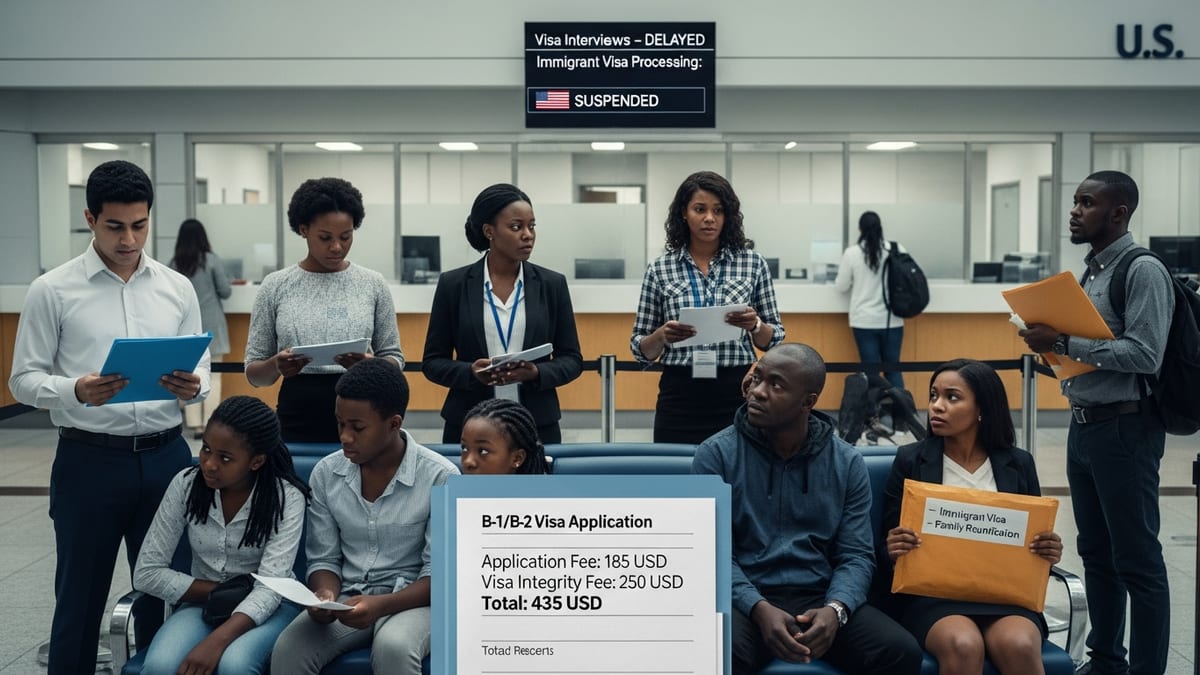
Targeted Revocations Highlight Shift in Enforcement
Recent Federal Register notices and immigration policy summaries indicate that over six hundred visas have been rescinded following findings of fraud, document irregularities or material misrepresentation during the application process or subsequent travel. The figures emerge from case summaries where applicants were found to have concealed prior immigration violations, misrepresented employment or study plans, or relied on forged financial and identity documents.
Publicly available information shows that the numbers, while a fraction of total annual visa issuances, point to a sharpened focus on integrity within the nonimmigrant and immigrant visa systems. Authorities are increasingly using post-issuance vetting tools to reassess whether travelers continue to qualify for the visas they hold, rather than limiting scrutiny to the initial consular interview.
Policy trackers note that many of the affected visas involve categories vulnerable to abuse, including some student, temporary work and visitor visas. In several instances, case summaries describe individuals who allegedly used educational or business categories as a pretext for long term work or residency plans that were not disclosed to consular officers.
Government documentation underscores that visa revocation can occur even after entry to the United States, once indicators of fraud or ineligibility surface through data-matching, criminal records checks or reports from other agencies. This has raised concerns among immigration attorneys and advocacy groups about the breadth of discretion embedded in the revocation process.
Continuous Vetting and Data Sharing Expand Screening Net
According to published coverage of current policies, US agencies are increasingly relying on continuous vetting systems that monitor visa holders throughout the life of their status. These systems are designed to flag new information, such as arrests, immigration violations in third countries, or discrepancies between stated and observed travel patterns, which may suggest misrepresentation at the time of application.
Publicly available briefings describe a sophisticated network of data-sharing arrangements between the State Department, Department of Homeland Security and other federal and state entities. Airline reservation data, entry and exit records, and certain public databases can be cross checked to identify inconsistencies in claimed itineraries, employment, or study plans.
Analysts point out that this infrastructure allows officials to act quickly when potential fraud is detected, often resulting in visa revocation before a traveler attempts a new trip to the United States. In some cases, notifications are reportedly transmitted to airlines and border officers so that canceled visas cannot be used for boarding or admission.
At the same time, legal commentators highlight that the increasing use of algorithmic risk assessments and automated alerts raises questions about transparency and redress. Travelers whose visas are revoked may receive little explanation beyond a generic reference to ineligibility, making it difficult to understand whether errors in data or mistaken identity played a role.
Patterns of Misrepresentation Across Student, Work and Visitor Visas
Reports summarizing the recent wave of more than six hundred revocations suggest recurring patterns of misrepresentation across several visa categories. In the student sector, revocations have been linked to fabricated admission letters, sham language schools, and applicants who enroll briefly before dropping out to work in unauthorized jobs.
For employment related visas, publicly reported enforcement actions cite overstated credentials, non-existent job offers and consulting arrangements that appear designed primarily to secure a visa rather than to fill a genuine role. Some investigations describe networks of small companies that sponsor multiple workers for positions that do not exist in practice, with workers then dispersed to unrelated client sites.
Visitor and business traveler categories are also prominent in recent revocation statistics. Authorities have taken action where individuals presented tourism as the primary purpose of travel but immediately undertook long term informal work or attempted to adjust to another status not disclosed at the time of application. In other examples, bank statements and sponsorship letters were found to be altered or issued by entities that could not be verified.
Immigration law specialists observe that even partial or seemingly minor inaccuracies can be treated as material misrepresentations if they would have influenced a consular officer’s judgment. This broad standard means that travelers who rely on unlicensed agents or document preparers may be particularly exposed if those intermediaries embellish financial capacity or travel history without the applicant’s full awareness.
Consequences for Travelers and Travel Industry Stakeholders
Visa revocation typically renders the affected document invalid for future travel and may trigger long term inadmissibility based on fraud or willful misrepresentation. Public guidance states that individuals found to have misrepresented a material fact to obtain a visa can face a permanent bar to entry, which can be lifted only through a discretionary waiver.
For travelers already in the United States, revocation can complicate immigration status, particularly when discovered during applications for extension or change of status. In some situations, individuals learn of revocation only when attempting to board a flight or apply for a new visa, leaving limited options for urgent travel or continued study and employment plans.
The tightening enforcement posture is also affecting universities, employers and travel intermediaries. Educational institutions that rely on international enrollments are reviewing recruitment practices and screening of third party agents to ensure that admission and financial documentation stands up to later scrutiny. Employers sponsoring foreign workers are being urged by compliance advisors to maintain detailed records that support job roles and wages described in visa petitions.
Travel agencies and immigration consultants are facing increased attention from regulators where patterns of fraud emerge within specific networks. Policy briefings emphasize that travelers remain personally responsible for the accuracy of their applications, even when forms are prepared by intermediaries, and can suffer serious consequences if false information is submitted on their behalf.
Advice for Prospective Applicants in a Heightened Risk Environment
In light of the intensified crackdown and the revocation of more than six hundred visas for fraud and misrepresentation, legal practitioners and university international offices are updating guidance for prospective travelers. The core message in publicly available advisories is that complete transparency is essential, even when applicants believe certain details may weaken their case.
Prospective students are widely advised to work only with accredited institutions and to verify that any recruitment agents are formally recognized by the schools they claim to represent. Applicants are encouraged to keep copies of every document submitted, including admission letters, financial records and test scores, so that they can later demonstrate consistency if questions arise.
Workers and business travelers are urged to ensure that job descriptions, salaries and travel plans provided in support of a visa application match what will actually occur on the ground. Changes in employer, work location or primary purpose of travel may need to be reflected in updated applications or new visa requests, rather than proceeding under original representations that are no longer accurate.
Specialists caution that as data analytics and cross-border information sharing expand, attempts to obscure prior visa refusals, immigration violations or criminal histories are increasingly likely to surface after issuance and can lead to both revocation and long term bans. For legitimate travelers, careful preparation and conservative, accurate disclosure are being presented as the most effective tools for avoiding unintended entanglement in the current enforcement drive.