


More news on this day
Passengers traveling through Dubai and other Gulf hubs are facing fresh disruption as regional airlines adjust schedules and the United Arab Emirates halts all flights operated by Iranian carriers in response to new US aviation sanctions on Iran.
Get the latest news straight to your inbox!
UAE suspension of Iranian airline flights takes effect
The UAE’s General Civil Aviation Authority has suspended all flights operated by Iranian airlines to and from the country, with the measure taking effect on Thursday, 24 September 2026, and remaining in place until further notice, according to multiple public statements and local media reports.
Coverage in Emirati and regional outlets indicates that the decision is directly linked to expanded United States secondary sanctions targeting Iran’s civilian aviation sector, which were announced on 24 September. Those sanctions threaten foreign airports and service providers with penalties if they refuel, handle or sell tickets for Iranian carriers, prompting the UAE to block Iranian airlines from using its airports.
Reports from Iranian and international media note that flights by Iranian operators to the UAE were halted from around midnight on 24 September. Services that had been scheduled between Tehran and Dubai, including at least one Iran Airtour departure, were cancelled at short notice after passengers had already been ticketed, highlighting how quickly the restrictions have filtered through to travellers.
Emirati aviation authorities have stated through public channels that updates on the suspension and any future changes will be communicated via official information outlets. Passengers have been repeatedly urged in local coverage to rely on airline and airport channels rather than social media rumours when checking the status of services between the UAE and Iran.
Regional carriers grapple with delays and cancellations
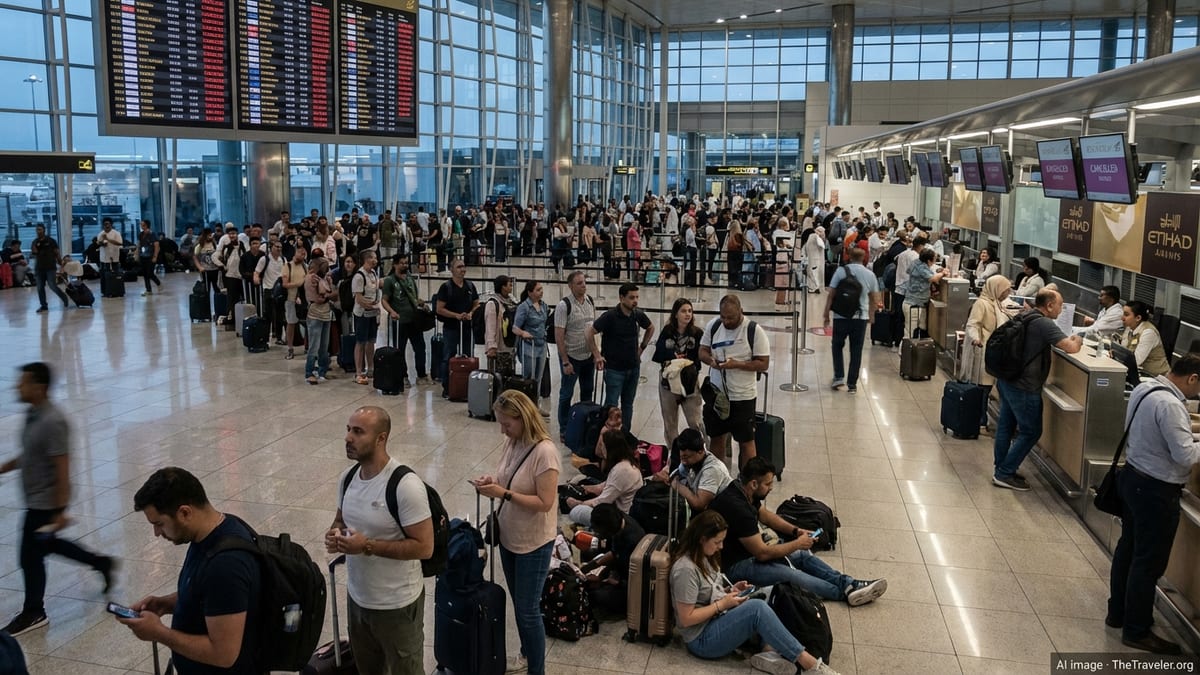
Alongside the suspension of Iranian airlines, travellers are seeing wider schedule disruption across the Middle East, with Dubai, Abu Dhabi and Sharjah reporting a patchwork of delays and cancellations. Flight status boards monitored by regional news outlets on 26 and 27 September show that Emirates, Etihad Airways, flydubai and Air Arabia remain operational but have adjusted a number of regional services.
From Dubai International Airport, publicly available departure information compiled by Gulf-focused media on 27 September shows delays ranging from minor schedule slips to hold-ups of several hours on services operated by Emirates, flydubai and other carriers to destinations including Moscow, Samara, Tashkent and Yekaterinburg. Some flights, such as certain services to Christchurch and Kochi, have been marked as cancelled.
Low-cost operators appear particularly exposed on certain Gulf and Levant routes. Reports indicate that flydubai has cancelled services on its Dubai to Abha route in Saudi Arabia, while Air Arabia has either cancelled or held flights on Abu Dhabi to Kuwait and Abu Dhabi to Bahrain sectors. Additional cancellations and late departures are reported on Air Arabia services from Sharjah to destinations such as Jizan and Kuwait.
Travel news outlets tracking the situation across multiple airports in the UAE describe the overall pattern as one of selective disruption rather than a complete shutdown. Most long haul operations at the major hubs continue, but passengers connecting to regional destinations or flying to countries directly affected by the security situation and sanctions, including Iran, Kuwait and parts of Saudi Arabia, are more likely to face last minute changes.
Impact on Iran–Gulf connectivity and transit passengers
The suspension of Iranian airlines at UAE airports has immediate consequences for point to point travel between Iran and the Gulf, but it also affects a wider group of transit passengers who have relied on Dubai and other Emirati hubs to connect between Iran and Europe, Asia or North America.
Analyses published by regional and international outlets explain that all flights operated by Iranian carriers into the UAE have been cancelled, closing off a key short haul bridge between Iranian cities and Dubai. Prior to the latest sanctions, carriers such as Iran Air and Iran Airtour connected Tehran and other Iranian gateways to Dubai, feeding both leisure and business traffic into the UAE’s larger network carriers.
With those flights halted, travellers originating in Iran are facing fewer options for reaching the UAE or using it as a transit point. Coverage from aviation analysts suggests that some passengers may attempt to reroute via alternative hubs that still accept Iranian carriers or through third countries where services remain available, although these alternatives can add time, cost and uncertainty to itineraries.
The timing of the decision also coincides with continuing security tensions around the Strait of Hormuz and missile activity in parts of the Gulf, factors that have already contributed to heightened caution among airlines planning routes across Iranian and neighboring airspace. The combination of sanctions pressure and security risk has further limited the flexibility of airlines and passengers in arranging travel between Iran, the UAE and other parts of the Middle East.
Advice for affected travellers in Dubai and the wider region
Travel and aviation advisories published over the past week consistently recommend that passengers treat all bookings involving the Gulf as subject to potential change, even when airports remain open. Airlines and airports in the UAE continue to stress, through public information channels, that live flight status tools on their websites and apps are the most reliable way to confirm whether a specific service is operating, delayed or cancelled.
For travellers booked on Iranian airlines to or from the UAE, guidance gathered by regional travel bulletins is clear that those flights are not operating while the suspension is in force. Passengers in this group are being directed to contact their carrier or travel agent to explore options such as rebooking on different routes, requesting refunds where permitted, or postponing trips until there is clarity on when services might resume.
Those flying with Emirates, Etihad, flydubai, Air Arabia and other regional carriers are being advised to monitor their booking reference up to departure, as airlines are using text messages, emails and app notifications to communicate schedule changes. Some carriers have suggested that travellers arrive earlier at the airport than usual if they receive notice of disruption, as check in and transfer desks can become busier when multiple flights are retimed.
International government travel advisories continue to flag the possibility of sudden airspace or schedule changes linked to the broader US Iran confrontation and related conflicts. For leisure and business travellers, that means factoring flexibility into travel plans, including allowing extra connection time, considering travel insurance that covers disruption and remaining prepared for route changes across the wider Middle East.