


More news on this day
The U.S. State Department has issued a heightened security alert for the Middle East, urging Americans to reconsider nonessential travel to the region and advising those already there to be prepared to depart quickly if tensions escalate further.
Get the latest news straight to your inbox!
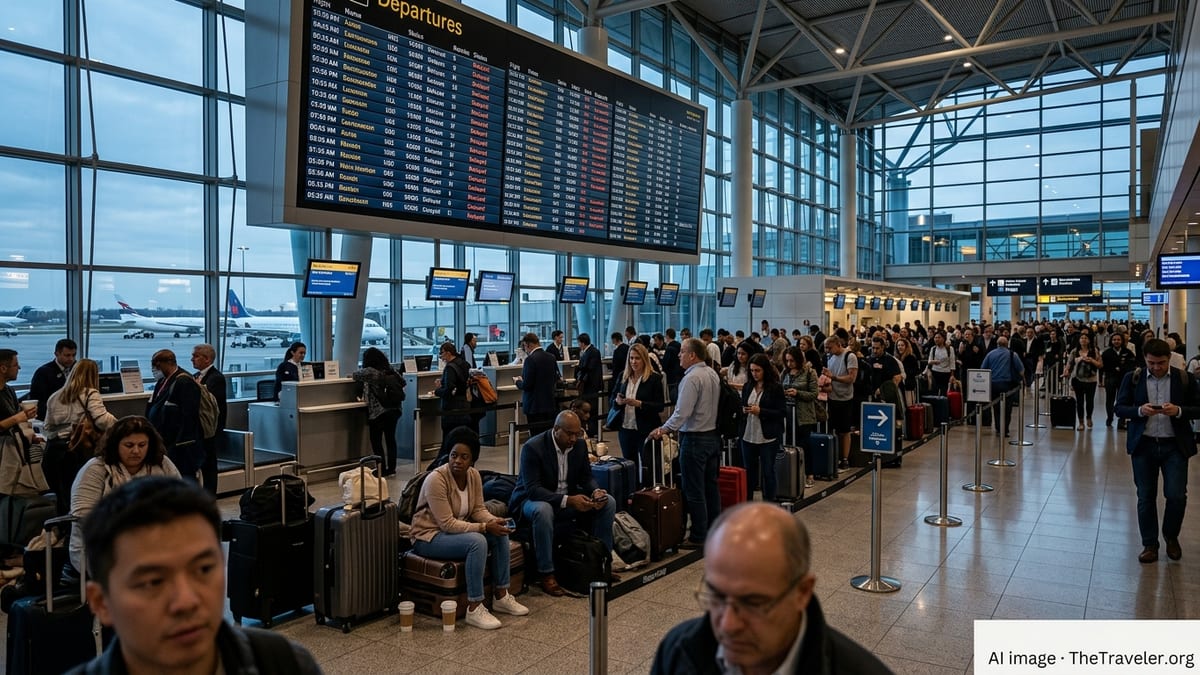
Heightened Alert as Tensions Remain Volatile
Recent updates to U.S. government guidance highlight a rapidly shifting security environment across the Middle East, with publicly available advisories pointing to the risk of sudden escalation, airspace disruptions, and targeted attacks on Western interests. The broad language of the latest alert reflects concern that incidents in one part of the region could quickly affect surrounding countries and key transit hubs.
According to published advisories, the security climate remains complex, with the possibility of short-notice changes to commercial flight schedules and airport operations. Travelers are being warned that local conditions can deteriorate faster than government resources can respond, particularly in areas where conflict or political instability has already strained infrastructure and emergency services.
The new messaging builds on an existing worldwide caution that has been in effect since July 2026, which advises U.S. citizens to exercise increased vigilance in many regions. The Middle East now stands out as a particular focus, with language that goes beyond routine caution and directly raises the prospect of Americans needing to leave on short notice.
Regional observers note that the timing of the advisory aligns with continuing tensions involving Iran and groups aligned with it, as well as ongoing instability in parts of Lebanon, Israel, Iraq, and Syria. Public reporting indicates that U.S. diplomatic facilities and locations associated with American interests have faced elevated risk, increasing the potential for spillover effects on everyday travelers.
“Be Prepared to Depart” for Those Already in the Region
For Americans currently in the Middle East, the State Department’s language is notably direct: publicly available alerts state that citizens in the region should consider departing, or be prepared to depart, in the event of escalation. This marks a shift from standard travel advisories that typically focus on avoiding specific hot spots or border areas.
The guidance emphasizes practical readiness. Travelers are urged to anticipate flight cancellations, temporary airspace closures, and broader disruptions that could make it difficult to leave at short notice. Some airlines have already reduced or adjusted routes in response to perceived risk, and officials have indicated in past crises that government-organized departure options may not accommodate everyone who waits until conditions worsen.
Previous advisories for countries such as Lebanon and Israel illustrate what this can mean in practice. Past guidance in those locations has encouraged U.S. citizens to leave while commercial routes remain available and warned that embassies may have limited capacity to conduct evacuations if security conditions further deteriorate. The latest regional alert appears to apply similar logic on a broader, Middle East-wide scale.
For Americans who choose to remain, earlier country-specific notices have advised maintaining contingency plans, preparing to shelter in place for extended periods, and understanding that consular assistance could be constrained. The new regional language reinforces that travelers should not assume normal levels of support or routine access to transportation if a crisis unfolds.
Nonessential Travel Strongly Discouraged
The advisory does more than speak to people already in the Middle East. It also urges Americans outside the region to “seriously reconsider” travel to or through Middle Eastern destinations that might otherwise serve as popular transit points or vacation spots. This encompasses not only countries with active conflict, but also those whose airports and airspace are critical links between Europe, Asia, and Africa.
Publicly available information shows that the United States continues to maintain high-level warnings for several Middle Eastern countries, including Level 4 “Do Not Travel” advisories in some cases. These are typically reserved for destinations facing persistent security challenges such as armed conflict, civil unrest, terrorism, kidnapping risks, or severe limitations on local emergency response.
Travel analysts note that, even in relatively stable Gulf or Levant hubs, a wider regional confrontation could lead to rapid changes in risk profiles and infrastructure capacity. Commercial carriers might reroute flights away from affected airspace, reduce frequencies, or temporarily suspend operations, complicating plans for both tourists and business travelers.
The advisory’s emphasis on reconsidering nonessential travel reflects a calculus that the potential for disruption and danger may outweigh the benefits of most leisure or discretionary trips at this time. Business travelers are encouraged, in public commentary, to evaluate whether in-person meetings can be replaced with virtual alternatives until conditions are more predictable.
What Travelers Are Being Urged to Do Now
In light of the new alert, American travelers with upcoming plans to the Middle East are being urged, in publicly available guidance, to review itineraries, monitor local news reports, and stay updated on airline communications. Travel insurers and industry observers recommend confirming coverage details, especially provisions that apply to government-issued travel warnings, trip cancellations, and emergency medical or security evacuations.
For those already in the region, practical steps include maintaining a charged mobile phone, keeping travel documents accessible, and identifying more than one route out of the country, whether by air or overland to neighboring states with functioning airports. Past crisis communications have also encouraged Americans abroad to share itineraries with family or trusted contacts and to have a plan for regrouping if communications are disrupted.
Public documentation from previous emergencies illustrates that the U.S. government sometimes arranges limited charter or transit options when commercial flights are unavailable. However, these efforts have typically required travelers to sign repayment agreements and to arrange their own onward travel from third-country hubs. The latest advisory implicitly reinforces the idea that individuals should not rely on such options as a first line of planning.
Observers point out that the State Department’s alert is not intended to predict a specific incident on a specific date, but rather to recognize a pattern of volatility and the potential for miscalculation among regional actors. For travelers, the practical takeaway is clear: discretionary trips to the Middle East carry heightened risk, and those already there should treat the call to be ready to leave as a prompt for immediate, concrete preparation.