


More news on this day
The United States continues to advise its citizens against any travel to Somalia, Sudan, South Sudan and Eritrea, maintaining strict Level 4 “Do Not Travel” advisories for each of the four East African and Horn of Africa states amid persistent conflict, insecurity and limited consular access.
Get the latest news straight to your inbox!
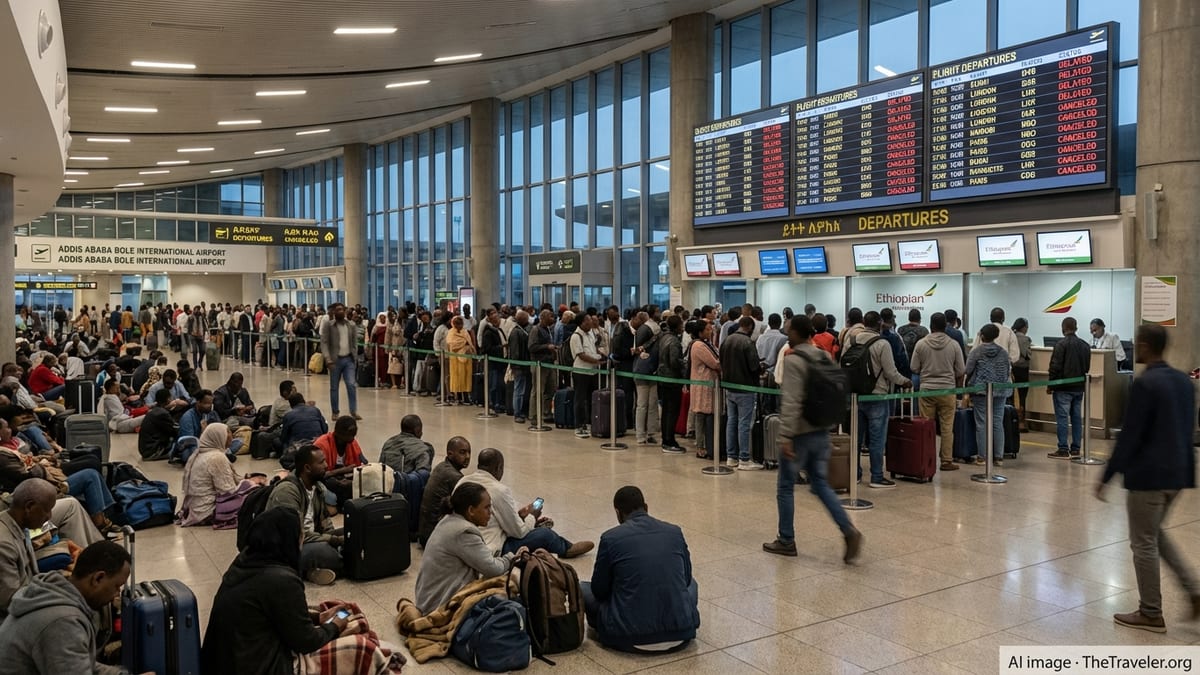
Four neighboring states under the highest U.S. warning
Publicly available information from the U.S. Department of State shows that Somalia, Sudan, South Sudan and Eritrea remain classified at Level 4, the highest tier in Washington’s four-step advisory system that urges citizens not to travel at all. The Level 4 classification is reserved for destinations where the U.S. government indicates it has very limited or no ability to assist travelers in an emergency, often due to active conflict, widespread crime or the collapse of basic services.
The central travel advisory portal lists Somalia as “Level 4: Do Not Travel,” with security concerns that include terrorism, crime, kidnapping, civil unrest and health risks. The notice also highlights that there is no functioning U.S. embassy in the country and that consular support is managed from neighboring Kenya, a factor that further constrains assistance for U.S. nationals in distress.
Sudan appears on the same list with a Level 4 warning that reflects the country’s prolonged internal conflict and the suspension of regular U.S. embassy operations in Khartoum. The advisory notes that severe fighting and lawlessness in multiple regions, combined with damaged infrastructure and closed airports at various periods, have limited options for safe movement and evacuation.
South Sudan is likewise categorized at Level 4, with the advisory citing risks related to armed violence, crime, and sporadic clashes between government and non-state armed groups. The travel notice indicates that U.S. government personnel face restrictions on movement outside limited areas, underscoring the difficulty of providing emergency support to private travelers throughout much of the country.
Eritrea, located along the Red Sea corridor, also carries a Level 4 “Do Not Travel” warning. The State Department’s advisory points to arbitrary detention, severe movement restrictions, the potential for conflict spillover from neighboring states, and a lack of independent information across the country. The notice states that embassy access to detained U.S. citizens can be severely constrained, and exit procedures for foreign nationals may be unpredictable.
Security drivers range from open conflict to opaque controls
Although all four countries share the same advisory level, publicly accessible advisories indicate that the security drivers in each case differ. In Sudan and South Sudan, the primary concerns are linked to open or recurrent conflict, with clashes reported between armed factions, the presence of militias, and recurring humanitarian emergencies affecting large parts of the population.
In Somalia, the Level 4 designation is closely tied to a long-running insurgency, with militant groups active in urban centers and along key road corridors. The advisory highlights incidents of terrorism targeting government facilities, hotels and public spaces, as well as incidents of kidnapping for ransom and piracy in coastal areas. Reports also point to landmines and unexploded ordnance as persistent threats in rural zones.
Eritrea’s warning is driven less by open warfare and more by internal controls and regional tensions. Travel information available to the public notes that authorities maintain tight restrictions on internal movement and exit permits, while independent reporting on security incidents can be limited. Disputes involving military mobilization and border tensions with neighboring states have also contributed to Washington’s risk assessment.
Across all four destinations, the Level 4 advisories reference fragile medical systems and constrained logistics. Evacuation by air or land in a crisis may be difficult or impossible, particularly where airports have closed in past emergencies or where airspace restrictions and checkpoints limit movement. These conditions combine to elevate personal risk for independent travelers and organized tour groups alike.
Implications for travelers and nearby safari and beach hubs
The continued Level 4 status for these four states affects not only would-be visitors to the countries themselves but also planning for trips around the wider region. East Africa is home to some of the continent’s most popular tourism destinations, including Kenya’s Maasai Mara, Tanzania’s Serengeti and Zanzibar, and the gorilla trekking areas of Rwanda and Uganda, all of which carry lower advisory levels on the same U.S. scale.
Travelers heading to major hubs such as Nairobi, Addis Ababa or Dar es Salaam are not directly targeted by the Level 4 notices for Somalia, Sudan, South Sudan and Eritrea. However, airlines, tour operators and insurers may pay close attention to the broader risk picture in the Horn of Africa when planning routes, overflight permissions or expedition-style itineraries that skirt conflict-affected borders.
Published guidance from travel risk consultancies indicates that some carriers reduce or suspend flights to airports in countries with sustained Level 4 ratings, while others adjust schedules or rely more heavily on regional stopovers in safer hubs. In past crises, evacuation flights for foreign nationals in Sudan and South Sudan routed through neighboring countries, highlighting the importance of reliable third-country transit options.
Insurance providers may also treat the four countries differently from the rest of East Africa. Policy summaries reviewed by travel media show that some standard leisure policies exclude cover for destinations under official “Do Not Travel” advisories, requiring travelers with essential business, humanitarian or family reasons to purchase specialist high-risk coverage. Such policies typically cost more and may require pre-approval for any movement outside relatively secure urban areas.
How the U.S. Level 4 advisory fits into the global picture
The sustained Level 4 ratings for Somalia, Sudan, South Sudan and Eritrea place the four states alongside a small group of countries worldwide that the United States considers extremely high-risk. As of early November 2026, the State Department’s advisory page lists a limited number of destinations at Level 4, many associated with major armed conflicts or widespread lawlessness.
Other governments, including those of the United Kingdom, Canada and several European states, use their own advisory scales but often reach similar conclusions about countries in active conflict or deep political crisis. Comparative analyses published by travel security firms show substantial overlap between U.S. “Do Not Travel” destinations and those that other foreign ministries mark as “avoid all travel.”
At the same time, advisory language can differ. Some governments emphasize armed conflict as the core reason to avoid parts of Sudan and South Sudan, while others highlight detention risks and the lack of consular access in Eritrea. For Somalia, foreign travel notices frequently note that conditions can vary between regions, but that many areas, including parts of Mogadishu and several federal member states, remain subject to a high risk of terrorist attacks and kidnapping.
Travel industry analysts indicate that such warnings have a measurable effect on demand, particularly for non-essential leisure trips. Tour operators and cruise lines generally avoid countries with Level 4 or equivalent ratings, focusing instead on neighboring destinations with more stable security conditions. When advisories remain at the highest level for multiple years, they can further discourage investment in large-scale tourism infrastructure.
Monitoring changes and planning around high-risk zones
The advisory status of high-risk countries is periodically reviewed and occasionally updated, but there has been no recent downgrade for Somalia, Sudan, South Sudan or Eritrea from Level 4 to a lower level. Travelers with essential reasons to engage with organizations or family in these countries are therefore advised, in publicly available guidance, to monitor the State Department’s travel advisory page and local media outlets closely for any sign of changing conditions.
Security experts interviewed in open-source research materials recommend that individuals who must approach the borders of Level 4 countries, even from the territory of safer neighbors, factor in potential spillover effects. These can include refugee flows, crowded border posts, the presence of armed groups and sudden closures of land crossings, all of which have been documented at various times along the frontiers of Sudan, South Sudan and Somalia.
For most leisure travelers, the practical response to the sustained Level 4 warnings is to concentrate itineraries on East African destinations that maintain functioning tourism industries and lower advisory levels. Safari circuits in Kenya and Tanzania, trekking routes in Ethiopia’s less affected regions, and beach resorts along the Swahili coast continue to feature in tour operator programs, often with added emphasis on security briefings, reputable local guides and flexible routing.
While the four states under the strictest U.S. warning remain effectively off-limits for discretionary travel, the wider region continues to adapt. Aviation networks, tour itineraries and insurance policies are being shaped by the need to route around conflict and highly controlled environments, even as neighboring countries seek to reassure visitors that their parks, heritage sites and beaches remain open and accessible.